How Long Should You Sign an Agency Contract For
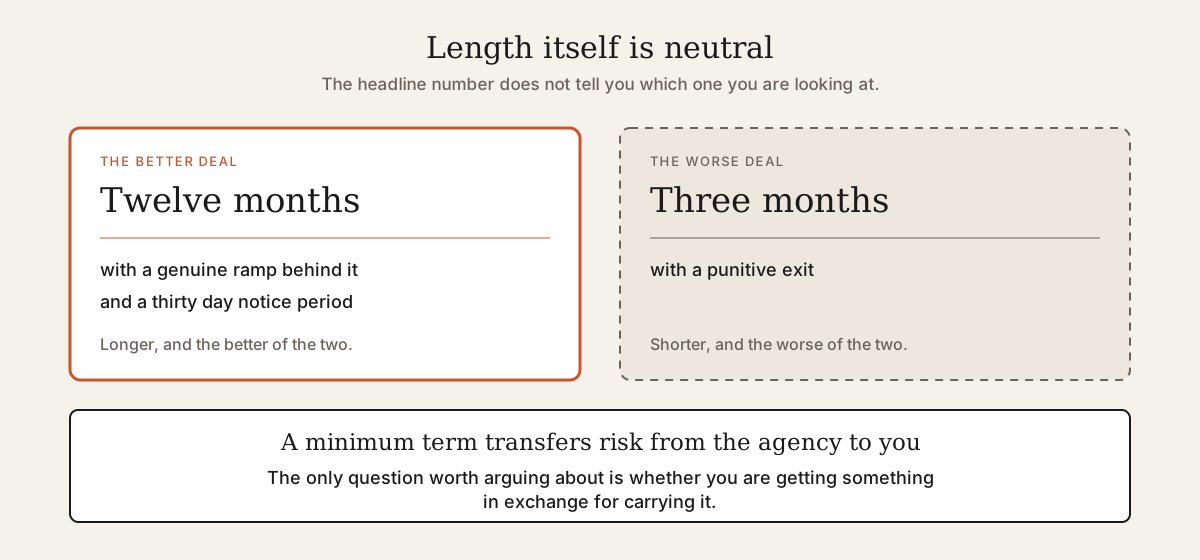
A minimum term transfers risk from the agency to you, and the only question worth arguing about is whether you are getting something in exchange for carrying it. What you should be getting is enough runway for the work that gets your business named when a customer asks. Length itself is neutral. A twelve month commitment with a genuine ramp behind it and a thirty day notice period is a better deal than three months with a punitive exit, and the headline number does not tell you which you are looking at.
What a minimum term is actually for
The legitimate reason is that the first months of a content programme cost more to deliver than they return. Research, planning, technical review and the first production run are front-loaded, and an agency that invests that and is dismissed in month two has funded your setup.
That is a real economic problem and a minimum term is a reasonable answer to it. The test is whether the term matches the shape of the investment: a programme with two months of heavy setup justifies asking for a run long enough to get past it, not a run long enough to make leaving inconvenient.
The illegitimate reason is retention. A term that exists so that a client who has stopped seeing value keeps paying is a term doing the job that results should be doing.
Telling the two apart before signing
Ask what the ramp actually costs. An agency asking for length because of front-loaded investment can describe that investment specifically. One asking because everyone does can only describe it as standard.
Ask what happens in month four. If the term is about ramp, there is a point at which the ramp is complete. Ask when that is, and why the term extends past it.
Ask whether a shorter term is available at a higher rate. This is the cleanest test in the whole negotiation. An agency pricing for real setup cost will usually say yes and quote a number. One that will not offer any shorter option at any price is not pricing risk, it is requiring commitment.
What to negotiate instead of length
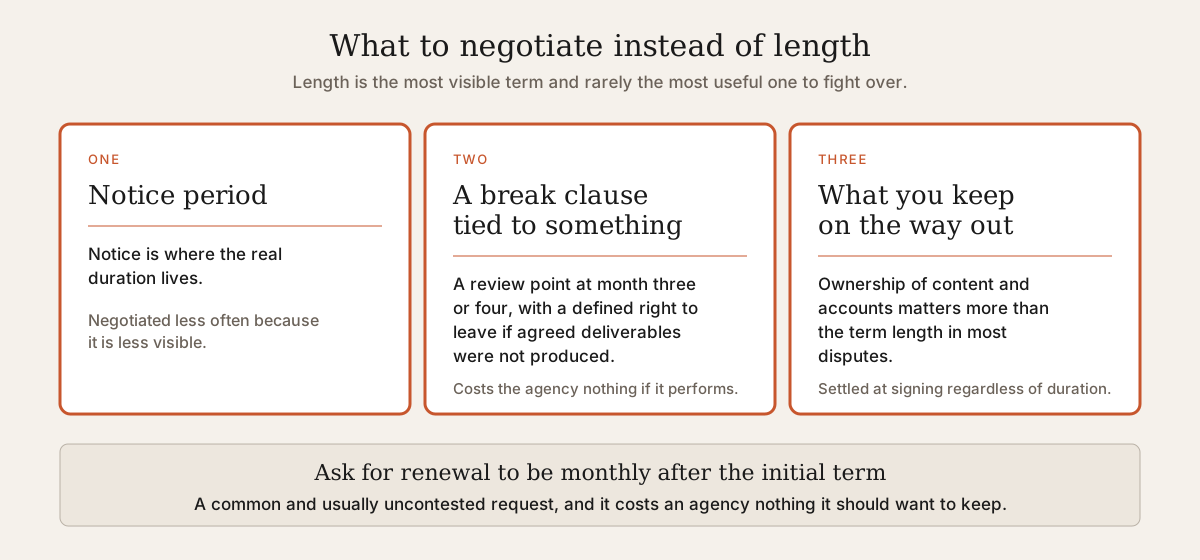
Length is the most visible term and rarely the most useful one to fight over. Three others do more work.
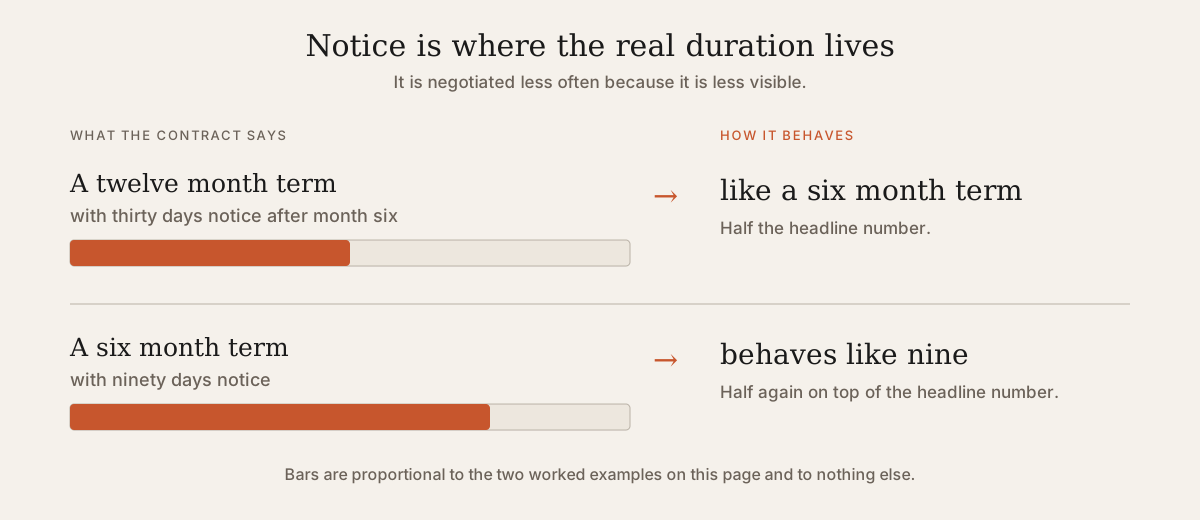
Notice period. A twelve month term with thirty days notice after month six behaves like a six month term. A six month term with ninety days notice behaves like nine. Notice is where the real duration lives, and it is negotiated less often because it is less visible.
A break clause tied to something. A review point at month three or four, with a defined right to leave if agreed deliverables were not produced. This is easier to obtain than a shorter term because it costs the agency nothing if it performs.
What you keep on the way out. Ownership of content and accounts matters more than the term length in most disputes, and it is settled at signing regardless of duration.
The mechanics of leaving, notice, renewal and offboarding, are a separate decision made on the way out and are covered on their own page. This one is about what to agree on the way in.
Auto-renewal deserves its own answer
A term that renews automatically for another full term is the clause most likely to be regretted, because it converts a single decision into a recurring one that only goes one way. A twelve month contract auto-renewing for twelve months with sixty days notice gives you a narrow window once a year to make a decision you may have wanted to make in month fourteen.
Ask for renewal to be monthly after the initial term. This is a common and usually uncontested request, and it costs an agency nothing it should want to keep.
What length suits which situation
An untested vendor, whatever the category. The shortest term available, and pay for it if a premium is offered.
A programme with genuine heavy setup. A term matching the ramp, with a break clause at the point the ramp ends.
A vendor you have already worked with successfully. Length is much less risky here and is worth trading for a better rate.
Any arrangement where you cannot get the exit terms in writing. No term at all, because the length is not the problem.
Our terms
We work month to month with a thirty day notice period and no minimum term, and we do not auto-renew because there is nothing to renew. That suits how we work rather than being a universal virtue: our setup is lighter than a programme involving development or advertising management, so we carry less unrecovered cost when someone leaves early.
An agency with heavier setup asking for a minimum term is not doing anything wrong, and the questions above are the way to check which kind you are dealing with. Term is the figure that turns a monthly price into a total, so it belongs with cost and charging model rather than on its own. Where all three sit against the exit terms is the part that decides what leaving costs.
SEO Is My Love Language was founded by Jose Villalobos, who has spent his career on a single discipline: getting businesses found, cited, and recommended by AI search. He has been a member of Koray Tuğberk Gübür’s Holistic SEO Community since 2022, is a graduate of the Topical Authority Course, holds the Google AI Professional Certificate, and is a member of Kyle Roof’s IMG. That combination, topical authority strategy paired with rigorous on-page execution, is what our team brings to every business we work with.
Our own terms and what each tier includes are set out with the prices, so this page can be held against them rather than read as advice we exempt ourselves from.
Frequently asked questions
How long should an SEO contract be?
Long enough to cover genuine front-loaded setup and no longer. The stated length matters less than the notice period and the renewal mechanism, since a twelve month term with thirty days notice after month six behaves much like a six month term.
Why do agencies want long contracts?
The legitimate reason is that early months cost more to deliver than they return, so an agency dismissed in month two has funded your setup. The illegitimate reason is retention, where the term exists so a client who has stopped seeing value keeps paying.
How can I tell which reason applies?
Ask what the ramp costs specifically, ask what happens in month four and why the term extends past the ramp, and ask whether a shorter term is available at a higher rate. An agency pricing real setup cost will usually quote that number. One that refuses any shorter option at any price is requiring commitment rather than pricing risk.
What should I negotiate instead of the term length?
The notice period, which is where effective duration actually lives, a break clause at a review point tied to agreed deliverables, and what you keep on the way out. A break clause is often easier to obtain than a shorter term because it costs a performing agency nothing.
Should I accept automatic renewal?
Ask for renewal to be monthly after the initial term. A term that auto-renews for another full term converts one decision into a recurring one with a narrow annual window, and monthly renewal is a common request that costs an agency nothing it should want to keep.
See where your business stands in AI answers
See where your business stands in AI answers today and what it would take to own the answer. Book a strategy call and we will show you.