Who Actually Does the Work at a Marketing Agency
The person who sells the engagement is usually not the person who does it, and the gap between those two people is the single largest unadvertised variable in an agency relationship. That gap sits between the pitch you heard and the pages written to get your business found and named. Nothing in a proposal is required to disclose it, and the answer changes what you receive more than the price does.
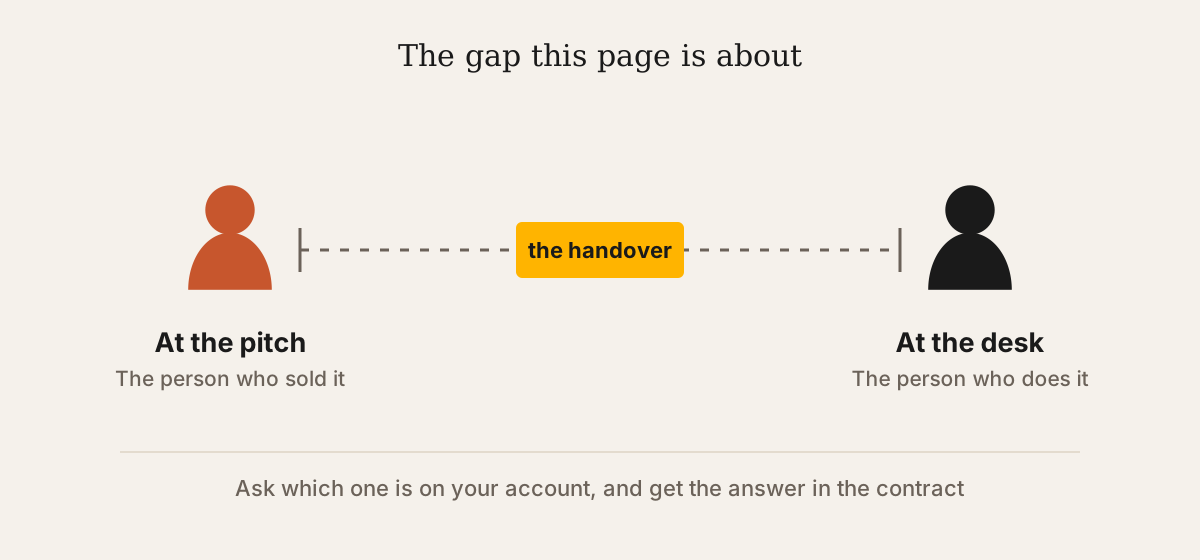
The four arrangements
Agency work is delivered under one of four arrangements, and which one you are buying decides how much of the judgement you were sold survives to the page. The four are the practitioner who sold it, an in-house junior under senior review, an offshore team, and a subcontracted specialist.
The practitioner who sold it. Common in small firms and rare above a certain size, because it does not scale. The work carries one judgement throughout and the person on the call has read your content.
In-house junior with senior review. The standard arrangement in a mid-sized agency, and a good one when the review is real. The question that settles it is who reviews, how long they spend, and whether they have authority to send work back.
Subcontracted to a specialist. Legitimate and often better than in-house for a narrow skill, since a specialist doing one thing repeatedly is usually good at it. The risk is coordination rather than quality, and a second risk in the contract chain covered separately below.
Offshored to a lower-cost team. Also legitimate, and it changes what you get in a specific way rather than making it worthless. Where the work is writing for a domestic audience, the constraint is idiom and local knowledge rather than competence.
None of these is disqualifying. What is disqualifying is not being told which one applies.
What each arrangement changes about the output
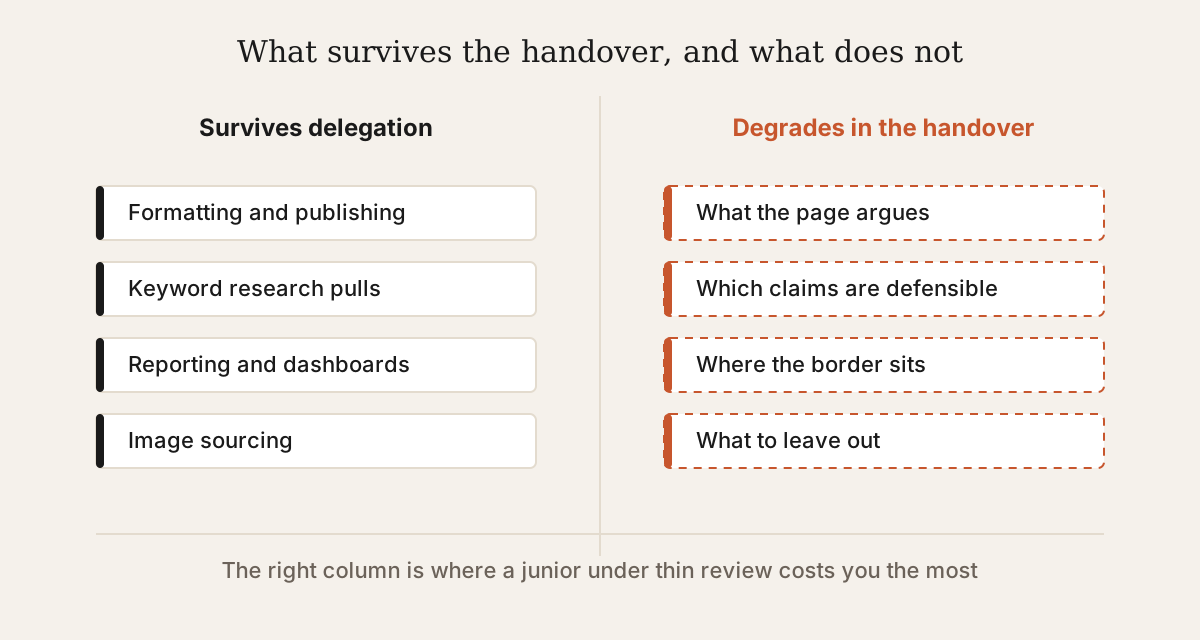
Staffing shows up in the work in predictable places. Judgement-heavy tasks degrade fastest when they move down a seniority tier: deciding what not to write, noticing that a brief is aimed at the wrong reader, recognising that a trade term means something else to a practitioner.
Execution-heavy tasks travel much better. Producing a page against a good brief, implementing a technical fix, formatting and publishing are all reasonably robust to being done by a more junior or more distant person.
So the useful question is not whether anything is delegated, but which half is delegated. An agency that keeps the judgement and delegates the execution is doing what it should. One that delegates the judgement and keeps the account management has inverted it.
The account manager layer
An account manager is a translation layer, and translation layers are useful when the thing being translated is complex and expensive when they are the only channel available.
Ask whether you can speak to the person doing the work, and how often. An arrangement where every question routes through someone who cannot answer it without asking adds a day to every exchange and removes the practitioner’s contact with your business, which is where most of the useful small decisions get made.
A named account manager is not a warning. A named account manager as the only permitted contact usually is.
The contract chain, which is the part nobody checks
Subcontracting has a consequence beyond quality. An agency can only assign to you what it holds itself, so where production is subcontracted and the subcontractor never assigned the rights, the ownership chain is broken before it reaches you. This is invisible from the client side and is dealt with in full on the content ownership page.
The short version for this decision: if any part of the work is subcontracted, the contract needs a warranty that the agency holds all rights necessary to assign.
Getting the answer in writing
Three questions, all answerable in a sentence, and all worth having in the agreement rather than in an email.
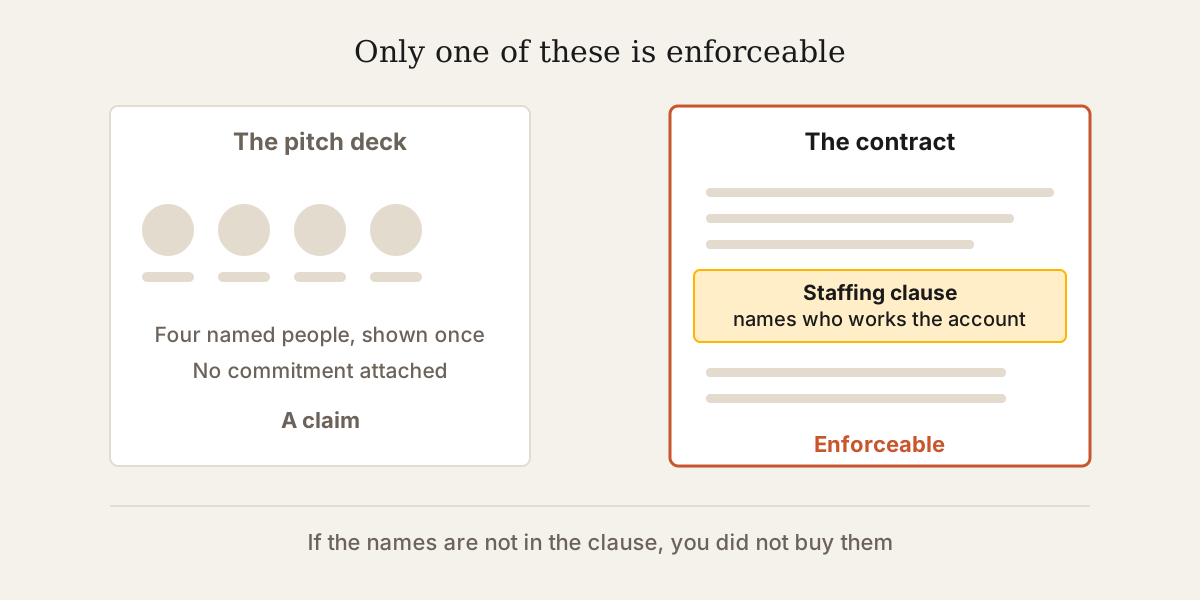
Who does the work, by role and seniority. Not the name, since people leave. The role, and whether it is employed or contracted.
Who reviews it before it reaches us, and can they reject it. Review without authority to reject is proofreading.
What happens if that person leaves. Every agency has turnover. An agency that has thought about continuity answers immediately.
A proposal that names a team in the pitch and no roles in the contract has told you which of those two documents is binding.
Our answer
The person who sells the work does the work. Every piece is written and reviewed by Jose Villalobos, and nothing is subcontracted or offshored, which is a genuine constraint on how much we can take on rather than a marketing position.
The honest cost of that arrangement is capacity: it is the reason our pricing starts where it does and the reason we take on few clients at a time. A buyer who needs a large volume of production quickly is better served by an agency built to deliver it, and should ask that agency the three questions above. Staffing is one of the three questions that settle capability, and capability is deliberately the first thing to settle in the five checks a buyer can run before signing, because it is the cheapest to run and the fastest to end a conversation.
SEO Is My Love Language was founded by Jose Villalobos, who has spent his career on a single discipline: getting businesses found, cited, and recommended by AI search. He has been a member of Koray Tuğberk Gübür’s Holistic SEO Community since 2022, is a graduate of the Topical Authority Course, holds the Google AI Professional Certificate, and is a member of Kyle Roof’s IMG. That combination, topical authority strategy paired with rigorous on-page execution, is what our team brings to every business we work with.
Three categories we publish maps for run on the identical question, asked of a clinic instead of an agency: the med spa version, where the injector is never named, who in a veterinary building is actually licensed, and who actually operates, and who the website shows, and the law firm version, where the question is which lawyer actually handles the matter rather than which one signed you.
Frequently asked questions
Do marketing agencies outsource their work?
Some do, through subcontracted specialists or offshore teams, and both arrangements are legitimate. What matters is which half is delegated: execution travels well, while judgement tasks such as deciding what not to write degrade fastest when they move down a seniority tier.
Should I ask who will actually do my work?
Yes, and ask for it by role and seniority rather than by name, since people leave. Ask who reviews the output and whether they have authority to reject it, and ask what happens if that person leaves. All three belong in the agreement rather than in an email.
Is it bad if an agency uses junior staff?
Not on its own. Junior production with genuine senior review is the standard arrangement and works well. The question that settles it is whether the reviewer actually has the authority and the time to send work back, because review without the power to reject is proofreading.
What is wrong with having an account manager?
Nothing, unless they are the only permitted contact. A translation layer is useful when the subject is complex and costly when every question routes through someone who cannot answer it without asking, which adds delay and removes the practitioner from contact with your business.
What happens to content ownership if work is subcontracted?
An agency can only assign what it holds, so if a subcontractor never assigned the rights the ownership chain is broken before it reaches you, and it is invisible from the client side. Where any production is subcontracted, the contract needs a warranty that the agency holds all rights necessary to assign.
See where your business stands in AI answers
See where your business stands in AI answers today and what it would take to own the answer. Book a strategy call and we will show you.