Who Owns the Content an Agency Writes for You
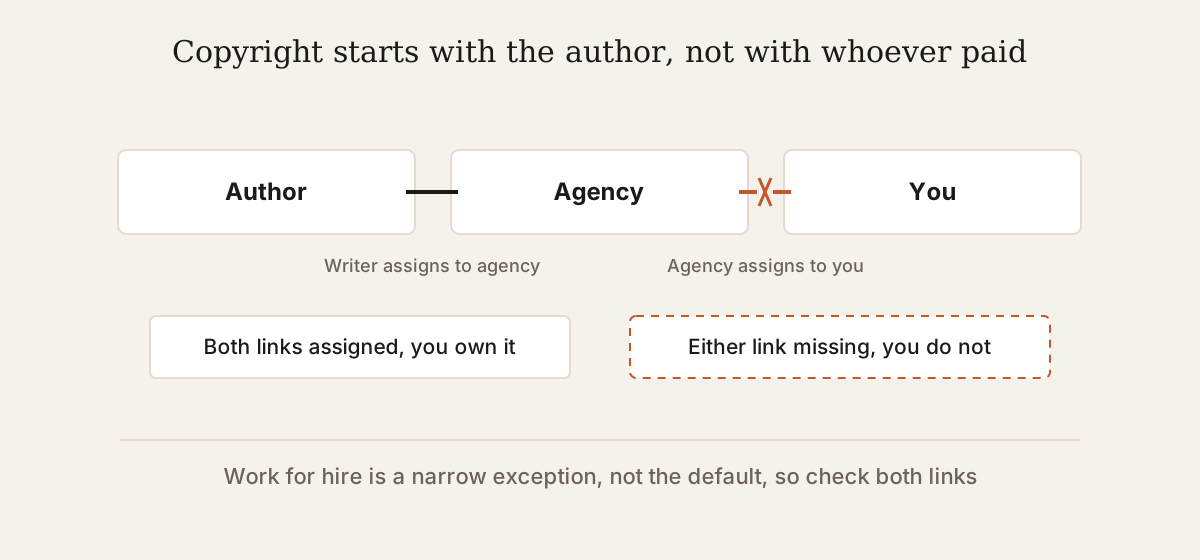
Content an agency writes for you belongs to you only if the contract says so, because the default position in most jurisdictions gives copyright to the author rather than the payer. Those pages are part of how a customer searching for your trade ends up seeing your business named, so the question is not academic. A commissioned article is not automatically yours. It becomes yours through an assignment clause, and the absence of that clause is common enough that it is worth checking before anything else in the agreement.
Assignment against licence
An assignment transfers ownership; a licence grants permission to use while ownership stays elsewhere. Both appear in agency contracts and they read similarly to anyone not looking for the difference. A licence can be perpetual and still be revocable on termination, which means the content comes down when the relationship ends.
The clause to look for names the works, states that ownership transfers on payment, and says the transfer survives termination. Transfer on payment matters because it fixes what happens if a final invoice is disputed. Survival matters because a clause silent on termination has been read both ways.
Accounts and data are separate from content
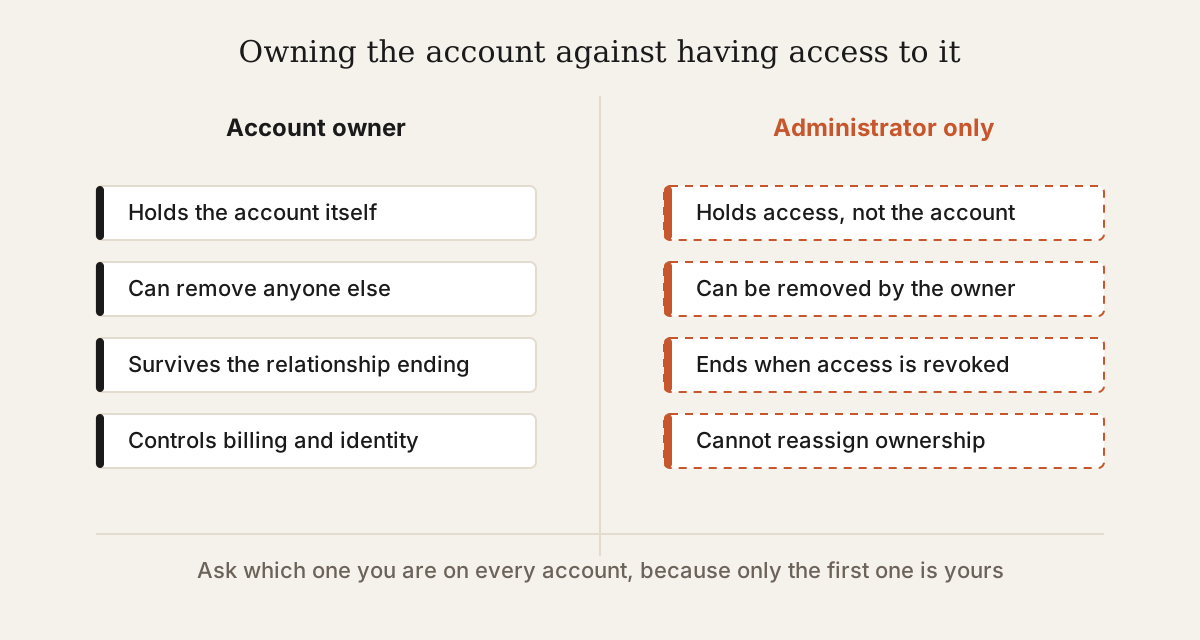
Ownership of the writing is a different question from ownership of the accounts and the data, and the accounts are the more common failure. An agency that creates your analytics property, your search console access or your advertising account under its own umbrella can leave with them.
Ask whose email address the accounts are registered to. Ask to be made owner rather than administrator, since an administrator can be removed by the owner. This costs nothing to arrange at the start and is sometimes impossible to arrange later.
What subcontracting does to the chain
An agency can only assign what it holds, so if the writing was subcontracted and the subcontractor never assigned it, the chain is broken before it reaches you. This is invisible from the client side and is common where production is outsourced.
The workable protection is a warranty that the agency holds all rights necessary to make the assignment. That does not repair a broken chain, and it puts the consequence on the party that broke it.
Our position
Every article we produce is assigned to the client on payment, and the assignment survives termination. Accounts we touch are registered to the client and we hold administrator access, not ownership. The order a departure actually runs in is notice, handover, then accounts, and ownership decides what survives it. If the relationship ends, the content stays up and the access transfers, because a programme that only works while you keep paying is a rental agreement with a content shaped label. Ownership is settled at the start or not at all, which is why it belongs to the exit check, last in the sequence and first in the contract.
SEO Is My Love Language was founded by Jose Villalobos, who has spent his career on a single discipline: getting businesses found, cited, and recommended by AI search. He has been a member of Koray Tuğberk Gübür’s Holistic SEO Community since 2022, is a graduate of the Topical Authority Course, holds the Google AI Professional Certificate, and is a member of Kyle Roof’s IMG. That combination, topical authority strategy paired with rigorous on-page execution, is what our team brings to every business we work with.
Ownership is a term, not a courtesy, so ours is stated alongside what each engagement includes.
Frequently asked questions
Do I automatically own content I paid an agency to write?
No. In most jurisdictions copyright belongs to the author rather than the payer, so a commissioned article is not automatically yours. It becomes yours through an assignment clause, and the absence of that clause is common enough to be worth checking first.
What is the difference between an assignment and a licence?
An assignment transfers ownership. A licence grants permission to use while ownership stays elsewhere, and a licence can be perpetual and still be revocable on termination, which means the content comes down when the relationship ends. The two read similarly to anyone not looking for the difference.
What should the ownership clause actually say?
That it names the works, that ownership transfers on payment, and that the transfer survives termination. Transfer on payment fixes what happens if a final invoice is disputed. Survival matters because a clause silent on termination has been read both ways.
Who should own the analytics and advertising accounts?
You should, as owner rather than administrator, because an administrator can be removed by the owner. An agency that creates these under its own umbrella can leave with them. This costs nothing to arrange at the start and is sometimes impossible to arrange later.
What happens if the agency subcontracted the writing?
An agency can only assign what it holds, so if a subcontractor never assigned the work the chain is broken before it reaches you, and this is invisible from the client side. The workable protection is a warranty that the agency holds all rights necessary to assign, which puts the consequence on the party that broke the chain.
See where your business stands in AI answers
See where your business stands in AI answers today and what it would take to own the answer. Book a strategy call and we will show you.