How to Leave a Marketing Retainer
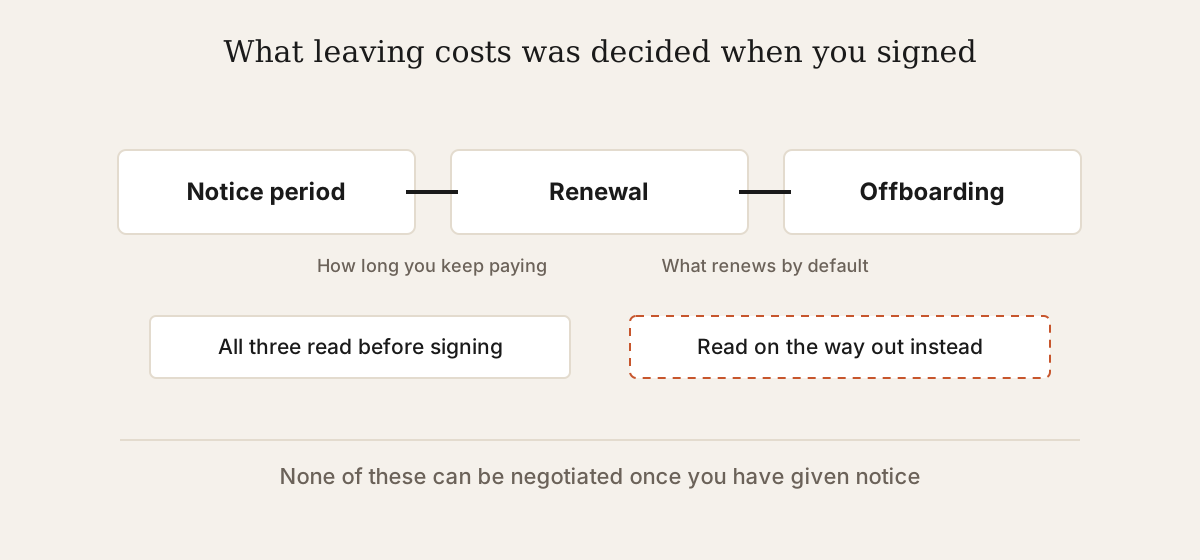
The cost of leaving a marketing retainer is decided by clauses you agreed to on the way in, not by the conversation you have on the way out. They also decide whether the pages that got your business found stay up and keep it named after you go. Notice period, renewal mechanism and offboarding obligations are usually settled before any work begins, and they are the three that determine whether you walk away with what you paid for.
Notice and the renewal trap
A notice period is workable; an auto-renewal that restarts a full term is the clause that catches people. Thirty days notice against a rolling month is ordinary. Thirty days notice against a twelve month term that renews automatically means missing the window by a day commits you to another year.
Ask when the renewal date falls and whether notice must land before it or before a separate cut-off. Ask whether notice has to be in writing and to whom. These sound like formalities and they are the mechanism by which an intended exit becomes an accidental renewal.
What leaves with you
The question is not only whether you can stop paying but what remains yours afterwards, and the answer splits into three: the published work, the accounts, and the record of what was done. Published work stays up if ownership was assigned. Accounts stay yours if they were registered to you. The record is the one people forget.
If reporting lived in a dashboard tied to the agency’s subscription, the history of what was measured disappears when access does. Ask for the underlying data in a portable form on the way out, and preferably arrange it on the way in.
The offboarding period nobody specifies
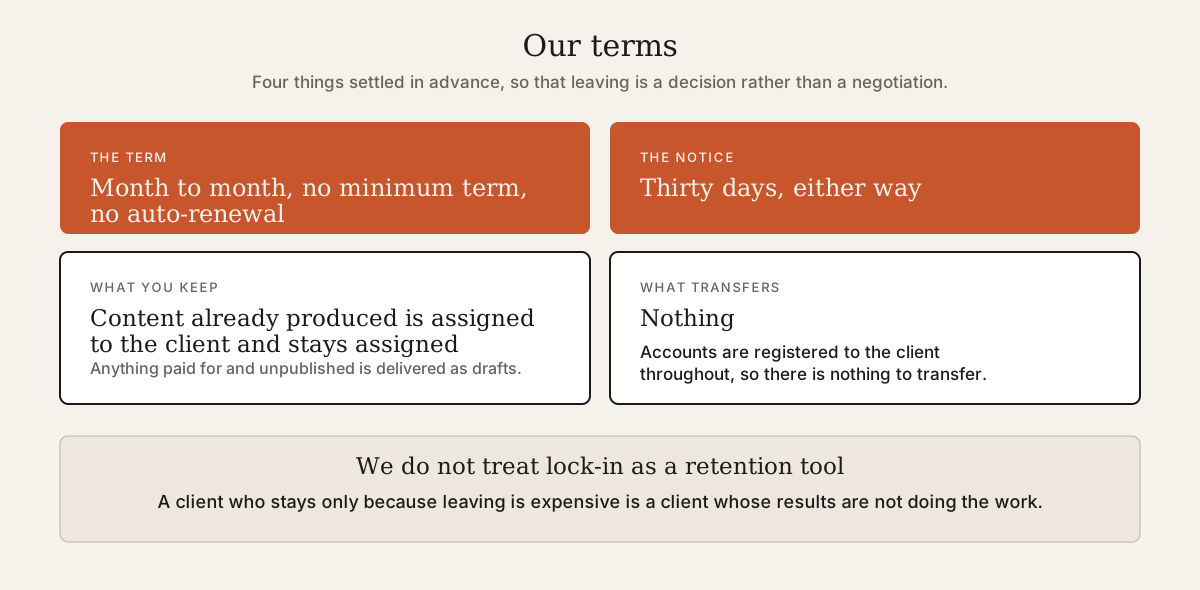
Most contracts describe how work starts and very few describe how it stops, which leaves the handover to goodwill at the least cooperative moment in the relationship. A specified offboarding is a short list: transfer of account ownership, export of data, delivery of any unpublished work already paid for, and a date by which each happens.
Work in progress is the ambiguous case. If four articles were paid for and two are published, the other two are usually owed as drafts. Contracts rarely say so, which makes it worth agreeing in advance.
Our terms
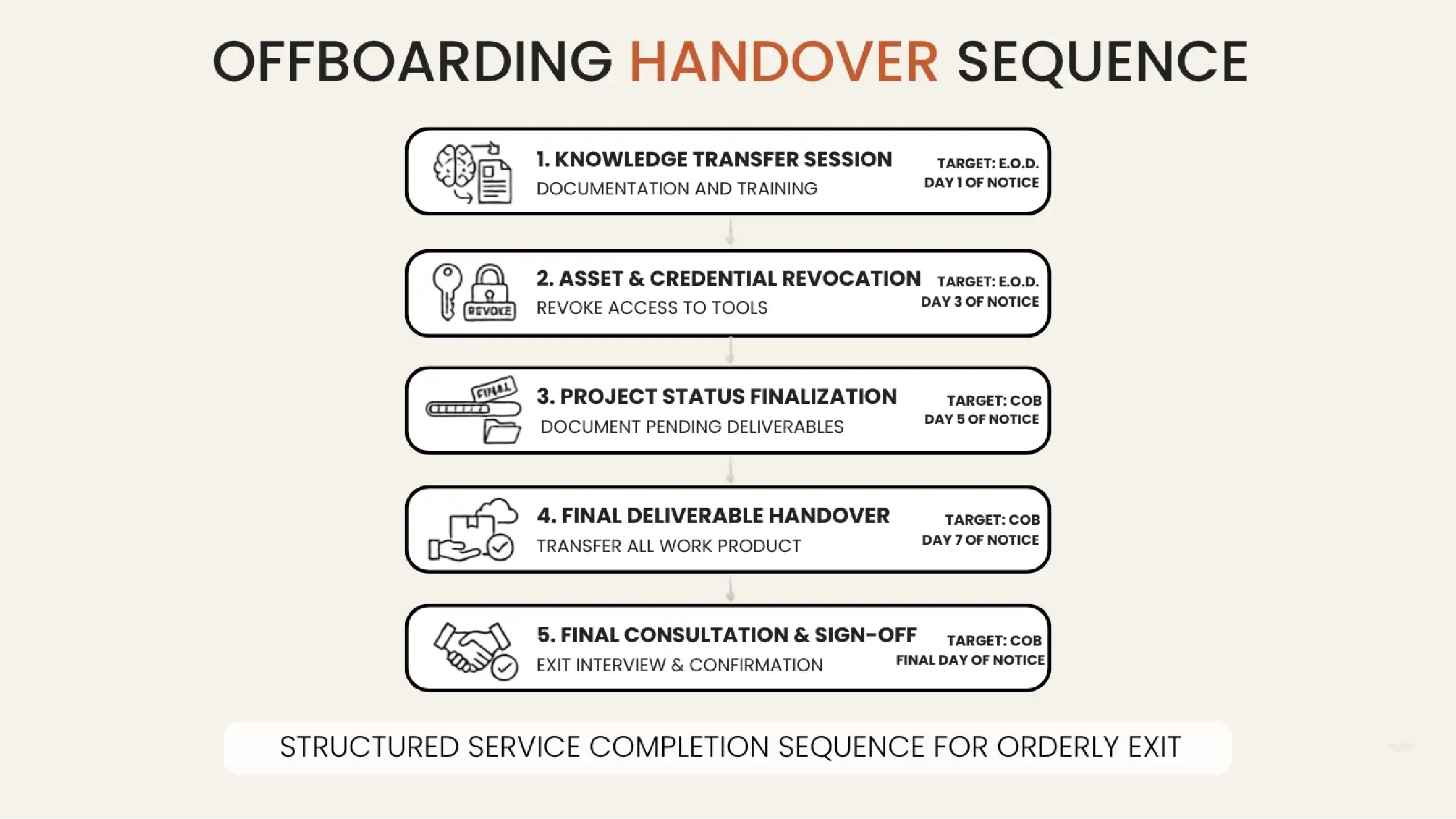
We work month to month with no minimum term and no auto-renewal, and thirty days notice either way. Content already produced is assigned to the client and stays assigned. What an assignment clause actually has to say is the part worth reading before signing, not on the way out. Accounts are registered to the client throughout, so there is nothing to transfer. Anything paid for and unpublished is delivered as drafts within the notice period.
We do not treat lock-in as a retention tool, because a client who stays only because leaving is expensive is a client whose results are not doing the work. Leaving is the fifth and final check, and the one most buyers reach only after signing. The four that come before it are the ones that decide whether it ever needs running.
SEO Is My Love Language was founded by Jose Villalobos, who has spent his career on a single discipline: getting businesses found, cited, and recommended by AI search. He has been a member of Koray Tuğberk Gübür’s Holistic SEO Community since 2022, is a graduate of the Topical Authority Course, holds the Google AI Professional Certificate, and is a member of Kyle Roof’s IMG. That combination, topical authority strategy paired with rigorous on-page execution, is what our team brings to every business we work with.
What we would be handing over, and on what notice, sits with our tiers and prices rather than in a contract you only see after signing.
Frequently asked questions
What actually decides the cost of leaving a marketing retainer?
Clauses agreed on the way in rather than the conversation on the way out. The notice period, the renewal mechanism and the offboarding obligations are settled before any work begins, and those three determine whether you leave with what you paid for.
What is the difference between a notice period and an auto-renewal trap?
Thirty days notice against a rolling month is ordinary. Thirty days notice against a twelve month term that renews automatically means missing the window by a day commits you to another year. Ask when the renewal date falls, whether notice must land before it or before a separate cut-off, and in what form notice has to be given.
What should leave with me when a retainer ends?
The published work, if ownership was assigned; the accounts, if they were registered to you; and the record of what was done. The record is the one people forget, because reporting held in a dashboard tied to the agency’s subscription disappears when your access does. Ask for the underlying data in a portable form.
Who owns work that is paid for but not yet published?
Usually it is owed to you as drafts, but most contracts do not say so, which makes it worth agreeing in advance. If four articles were paid for and two are published, the remaining two should be delivered rather than withheld.
What are SIMLL’s own cancellation terms?
Month to month, no minimum term, no auto-renewal, thirty days notice either way. Content already produced stays assigned to the client, accounts are registered to the client throughout so there is nothing to transfer, and anything paid for and unpublished is delivered as drafts within the notice period.
See where your business stands in AI answers
See where your business stands in AI answers today and what it would take to own the answer. Book a strategy call and we will show you.