Chiropractic Marketing: When the Recommendation Is Also the Invoice
Chiropractic marketing runs into a structural problem no amount of copy can style away: the person recommending a course of care is the person billing for it. How a practice handles that problem shapes whether it gets named when a patient searches for a chiropractor. That conflict is not an accusation, it is how the model works, and a practice that names it plainly is in a stronger position than one that hopes nobody notices.
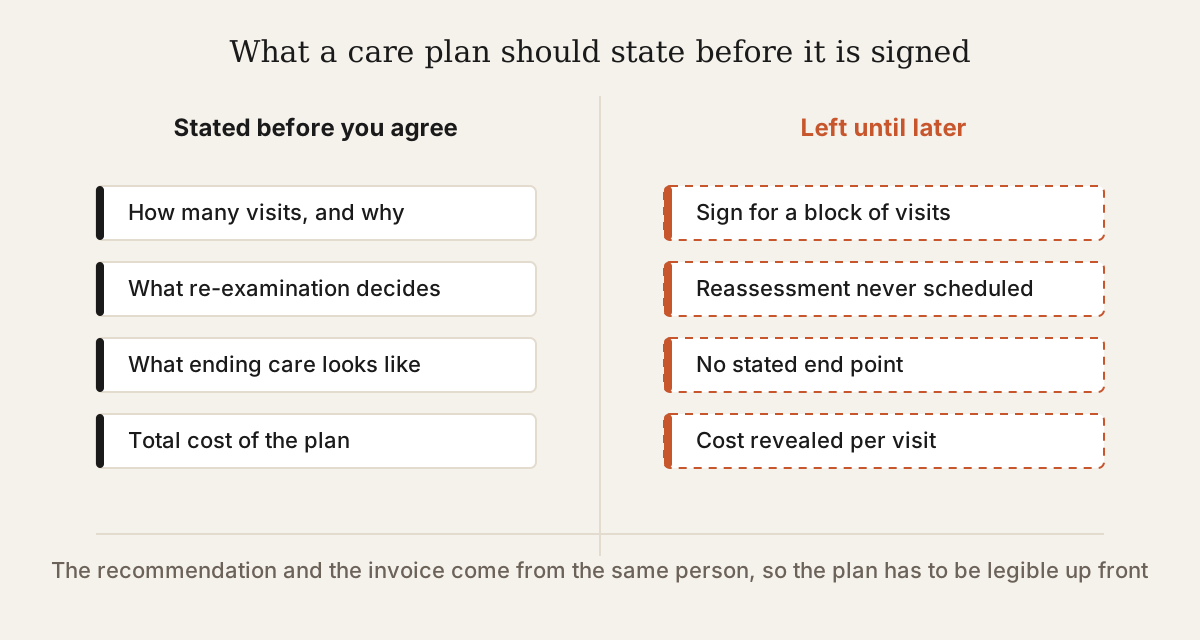
The recommendation and the invoice come from the same person
In most healthcare the person advising and the person billing are separated by an insurer, a referral or an institution. In a chiropractic practice they are usually the same person in the same room, which means a recommendation for twenty four visits is simultaneously a clinical judgement and a sales proposal.
The practices that handle this well do it by making the plan legible before it is agreed. Stating how many visits, what will be re-examined and at what point, what ending care looks like and what the total costs are, converts an open-ended commitment into something a patient can evaluate. The conflict does not disappear, it becomes visible and therefore manageable.
The vocabulary does not transfer from other categories
Marketing playbooks built for other local service categories break here. The language of packages, memberships and lifetime value reads differently when applied to a course of clinical care, and a practice that imports it wholesale ends up describing treatment in the vocabulary of a gym.
This is one of the clearest cases we know of where category experience actually matters. An agency that has run campaigns for a plumber and assumes the same words will work is not making a small error of tone, it is describing a clinical relationship in commercial terms that a cautious patient will read as a warning.
What a care plan should say before anyone signs
We would publish the shape of a plan rather than only its benefits. How many visits and on what basis, what a re-examination is for and when it happens, what discharge looks like, and what the whole thing costs. A practice willing to publish that is describing a real clinical process, and one that avoids it is asking for trust it has not earned in writing.
We would also publish who is not a candidate and what gets referred out. In a category where the recommendation carries a financial interest, naming the cases you decline is the strongest available evidence that assessment is clinical.
Why we hold ourselves to the same test
We argue that performance-based pricing creates a conflict, because the party measuring the outcome is the party paid on it. A chiropractic care plan is the same structure inside a single clinical sentence. We publish our own pricing and our own measured position for that reason, because an argument about somebody else’s conflict is worth nothing from a business that hides its own. Our own pricing runs from $2,000 to $5,750 a month, and the last reading we took of our own AI search visibility found us named zero times across 18 responses to 6 questions, on 31 July 2026.
Chiropractic shares its hardest publishing problems with three categories here. Claims about what treatment achieves run into the limits described in what a practice can publish as a result, the credential question matches dental licensure and credentials, and the referral boundary is the one in what a dental practice refers out.
Frequently asked questions
Is naming the conflict bad for a practice?
No, and avoiding it is worse. Patients already sense the tension, so a practice that names it and shows how the plan is checked reads as confident, while one that never mentions it reads as hoping the question does not come up.
What should a care plan publish?
Visit count and the reasoning, what re-examination assesses and when, what ending care looks like, and total cost. Those four turn an open commitment into something a patient can agree to knowingly.
Why does generic marketing language fail here?
Because package and membership vocabulary describes a commercial subscription, and a course of care is not one. Applied to treatment it signals that the practice thinks of visits as revenue units.
Does publishing referral criteria lose patients?
It loses a few and strengthens the rest. Naming what you refer out is the clearest signal that a recommendation to treat is a clinical judgement rather than a default.
How does this help with AI search?
Assistants answer from stated facts. Care plan structure and referral criteria are among the least published facts in the category, so a practice that states them is quotable where its competitors are not.
Get Found by AI Search
The chiropractic practices that win their markets in the next few years will be the ones the AI answer names when a patient asks who to trust with a plan of care, not the ones whose recommendation and invoice are impossible to tell apart. Being explicit about that is what makes a practice quotable. See how we would get your practice found, cited and recommended by AI search. Book a strategy call and we will show you where you stand today and what it would take to be the answer.