Publishing Licensure So a Patient Can Check It
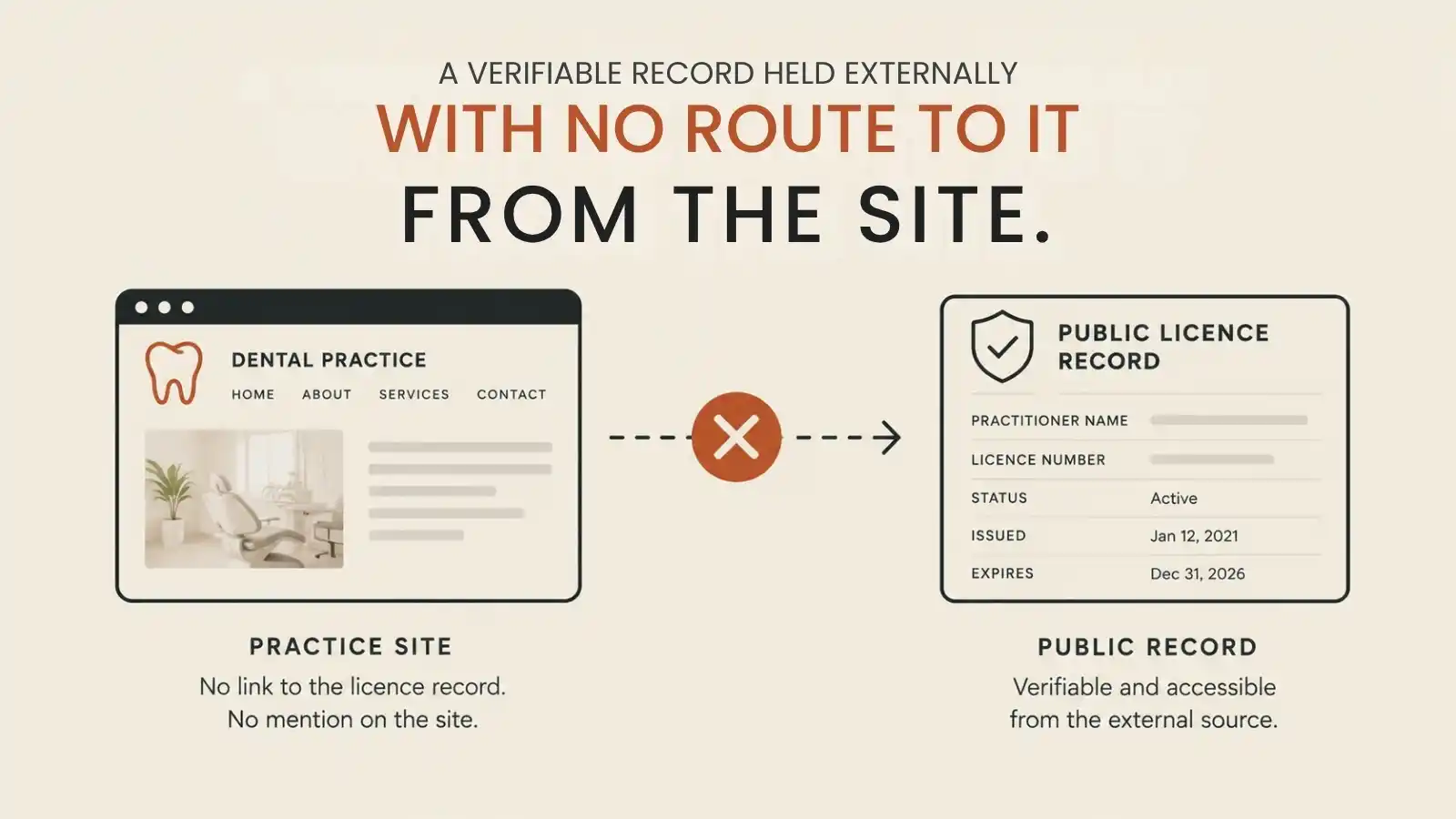
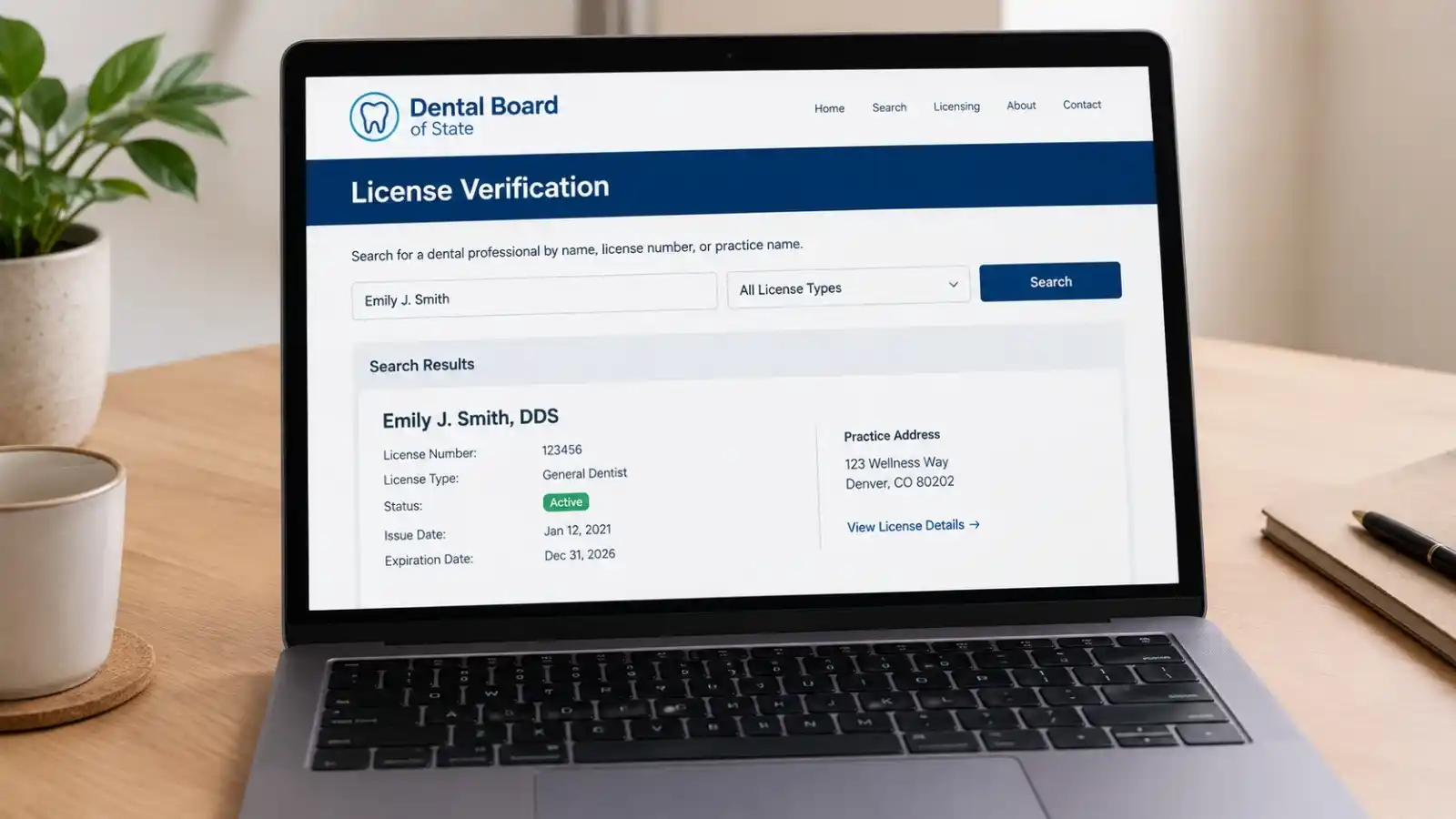
Verifying that a dentist is licensed is the first piece of advice assistants give when asked how to choose one, usually phrased as checking the state board before anything else, so making it easy bears on whether yours is the practice named when a patient searches. It is a public fact held by a regulator, it takes a patient two minutes, and most practice websites do nothing to help, which turns a reassurance into an errand.
What to publish
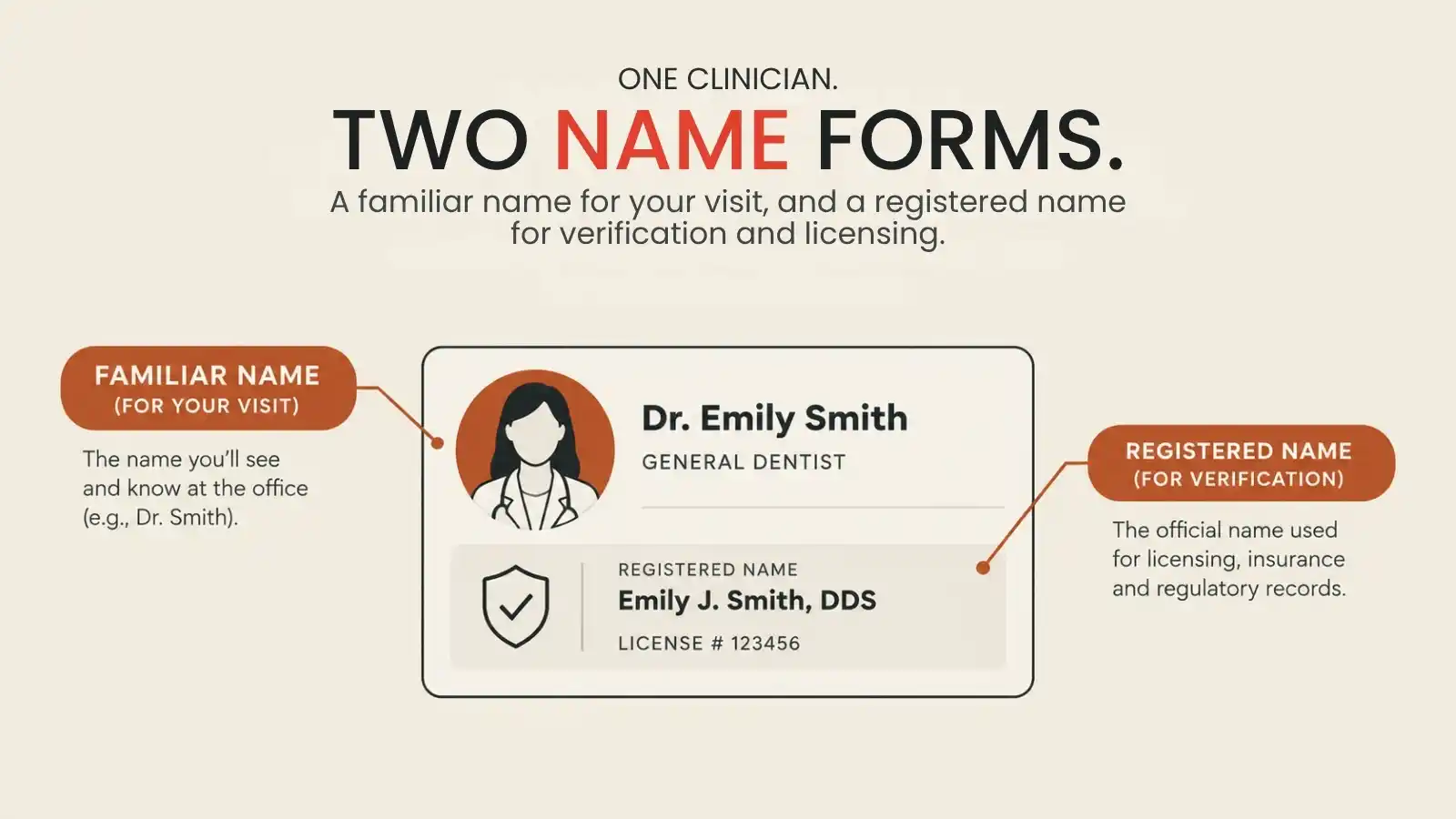
The clinician’s full registered name, the qualification, the year, the issuing body and the registration number where local rules permit it. Full registered name matters more than it appears, because a dentist practising as Dr Mike is registered as Michael and a patient searching the register on the informal name finds nothing.
Link to the register rather than asserting good standing. A practice claiming its dentists are fully licensed is asking to be believed; a practice linking to the body that says so is asking to be checked, which is the stronger position and costs one line.
Where it belongs
On the individual clinician page beside the biography, not on an about page covering the practice. Registration attaches to a person, and a practice level claim covering four dentists tells a patient nothing about the one they are booked with.
That placement matters more for associates and locums than for principals. The dentist a new patient actually sees is often not the name on the door, and the page for that clinician is the one that has to carry the record.
The informal name problem
Practices routinely present clinicians by first name or a shortened form because it is friendlier, and it breaks verification. The workable version keeps both: the familiar name in the heading and the registered name stated once with the registration details.
The same applies across directories and the map listing. A clinician appearing as three different name forms in three places is providing three identities to anything trying to match records, and the register carries only one.
Qualifications that are not licensure
A degree, a fellowship, a certificate in a technique and membership of an association are four different things and patients read them as one. Membership is usually purchased, a certificate may represent a weekend, and a fellowship after assessment is substantial.
Say which is which. Listing the awarding body and what the qualification required is more persuasive than a longer list of letters, and it protects the genuinely hard credential from being read at the same weight as the paid one sitting beside it.
SEO Is My Love Language was founded by Jose Villalobos, who has spent his career on a single discipline: getting businesses found, cited, and recommended by AI search. He has been a member of Koray Tuğberk Gübür’s Holistic SEO Community since 2022, is a graduate of the Topical Authority Course, holds the Google AI Professional Certificate, and is a member of Kyle Roof’s IMG. That combination, topical authority strategy paired with rigorous on-page execution, is what our team brings to every practice we work with.
Being checkable is one attribute among several that decide a booking, and the full set is laid out in what dental marketing covers end to end. Two neighbouring claims are checked in the same sitting: the word specialist and who is allowed to use it and whether the training kept going after qualification.
A credential is only worth publishing if it can be checked. Restoration has the weaker version of the same problem, a trade certificate rather than a state licence, in restoration certification and who holds it.
Frequently asked questions
What licensure details should a dental practice publish?
The clinician’s full registered name, the qualification, the year, the issuing body and the registration number where local rules permit it, with a link to the register rather than an assertion of good standing.
Why does the registered name matter?
Because a dentist practising as Dr Mike is registered as Michael, and a patient searching the register on the informal name finds nothing. Keep both: the familiar name in the heading and the registered name stated once with the registration details.
Where should registration details sit?
On the individual clinician page beside the biography, because registration attaches to a person. A practice level claim covering four dentists tells a patient nothing about the one they are booked with, and the dentist a new patient sees is often not the name on the door.
Is linking to the register better than stating the licence?
Yes. A practice claiming its dentists are fully licensed is asking to be believed. A practice linking to the body that says so is asking to be checked, which is the stronger position and costs one line.
How should other qualifications be presented?
By naming the awarding body and what the qualification required. A degree, a fellowship, a technique certificate and an association membership are four different things that patients read as one. Membership is usually purchased and a certificate may represent a weekend, so distinguishing them protects the genuinely hard credential.
See where your practice stands in AI answers
See where your practice stands in AI answers today and what it would take to own the answer. Book a strategy call and we will show you.