Saying Whether You Are Accepting New Patients
Whether a practice is accepting new patients is the first thing a prospective patient has to resolve, and most practice websites never say. Saying it plainly is part of whether you are named when someone searches for a dentist taking new patients. Assistants advising someone how to choose a dentist raise new patient availability directly, usually as something to confirm before anything else, which means the reader arrives looking for an answer the site does not give.
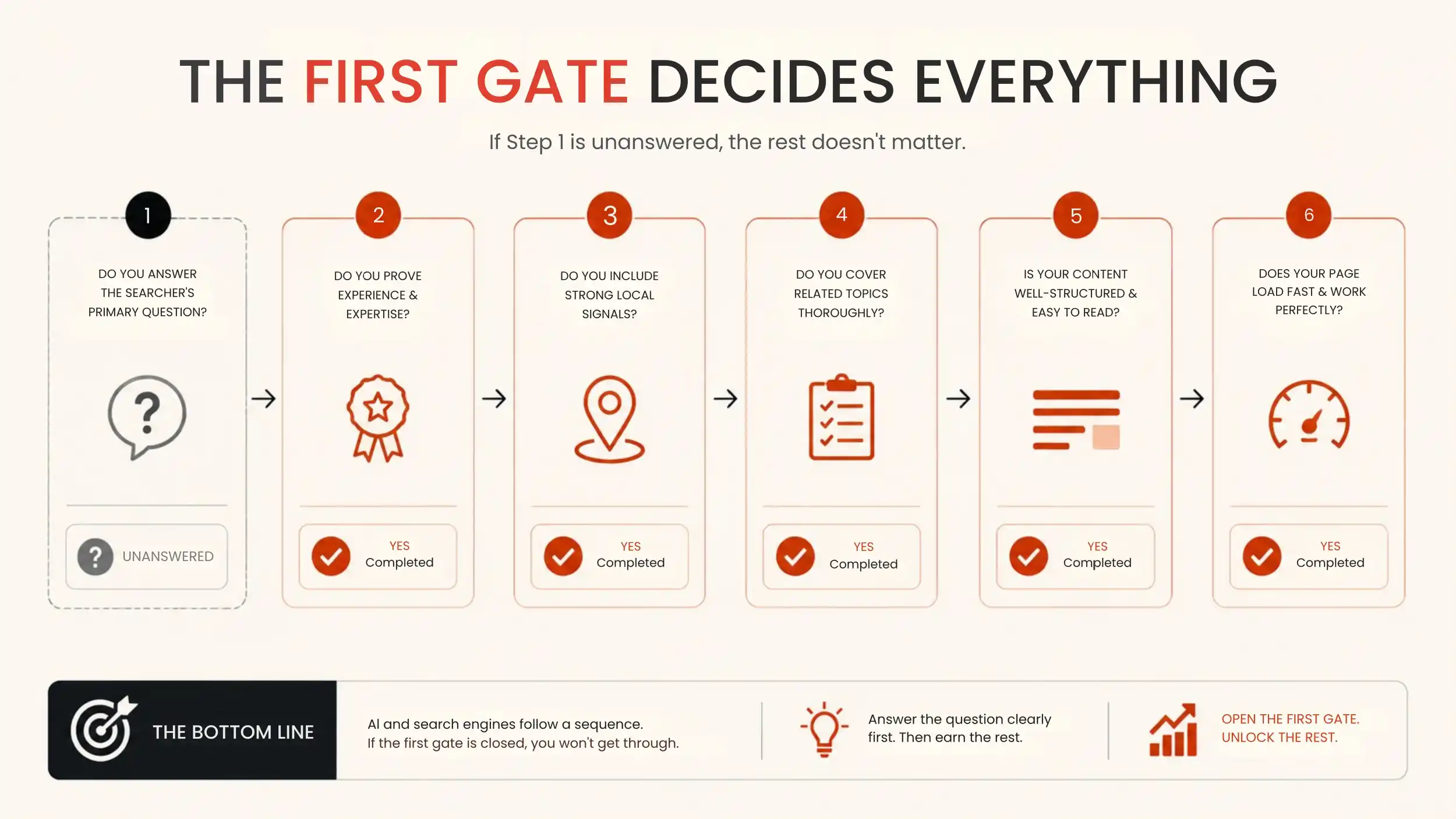
Why silence is read as no
A practice that says nothing is assumed to be either full or indifferent, and both readings lose the enquiry. A patient who has already been turned away once reads an unanswered site as a repeat of that experience and moves on rather than calling to check.
The cost is asymmetric. Publishing that you are open costs a sentence. Not publishing it costs the patients who would have called, and you never learn how many because they leave no trace.
What to publish when the answer is yes
Say it plainly, say what a first visit involves, and say roughly when it can happen. Those three together answer the question behind the question, which is not only whether the practice is open but whether it is open to me, soon, without a process.
Where a new patient exam has a defined cost or an insurance path, state it here rather than on a separate fees page. The reader deciding whether to call is resolving access and cost together, and separating them means they resolve neither.
What to publish when the answer is no
Say that too, and say when it changes. A practice at capacity that publishes a date, a waiting list, or the categories it can still take is more useful than one that leaves the reader to discover it on the phone.
There is a commercial argument for it as well. A patient told honestly that a practice is full remembers being dealt with straight, and a practice that reopens to new patients has a list of people who already tried. A silent full practice has neither.
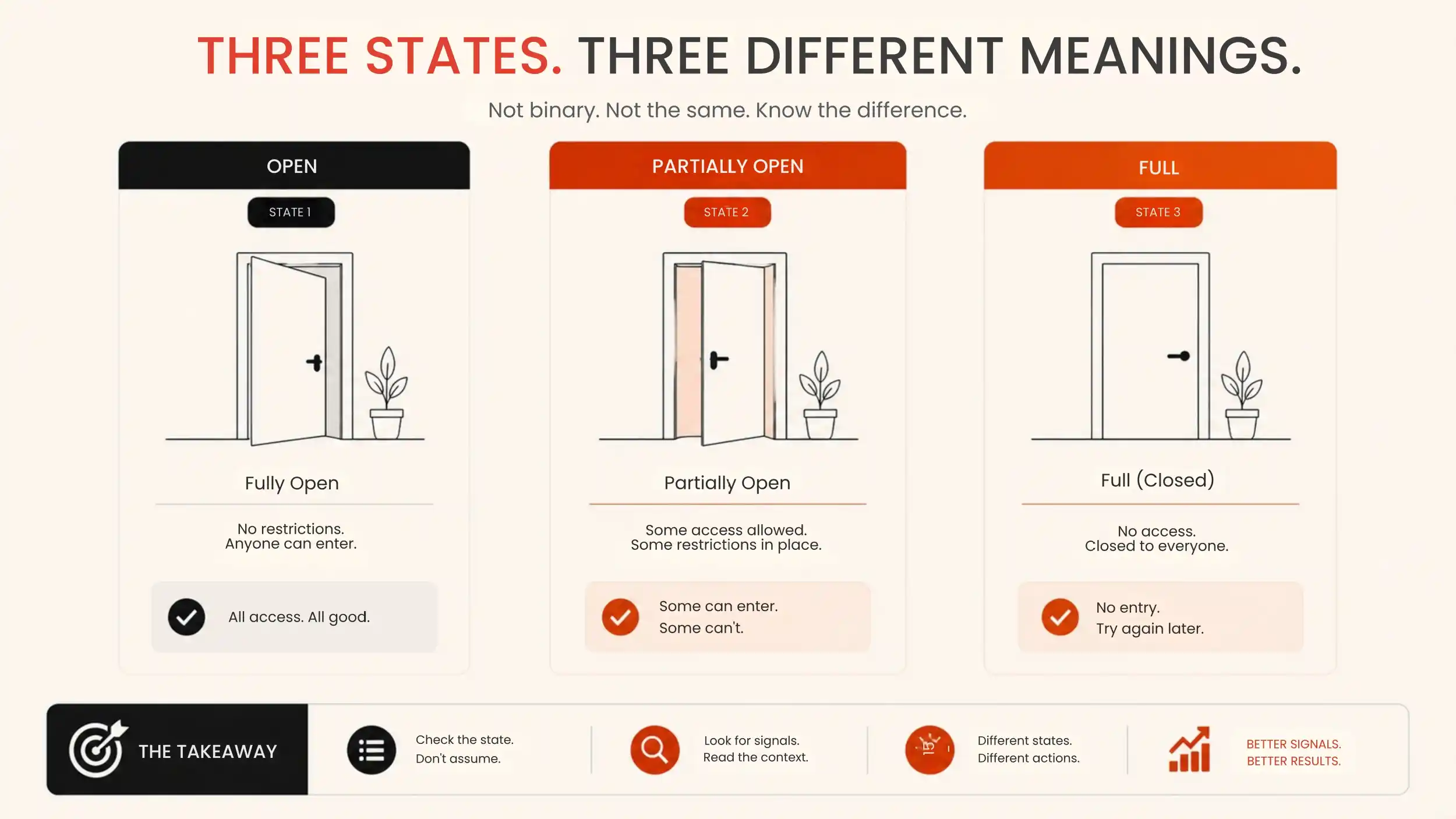
The partial answers most practices actually have
Few practices are simply open or closed. More often they are taking new patients for hygiene but not for a specific clinician, or accepting children, or open to patients with one insurance and not another. Those distinctions are exactly what a reader wants and they are almost never published.
Stating them costs nothing and prevents the mismatched enquiry, which is the expensive one. A caller who wanted a named dentist and is offered anybody has a worse experience than one who knew before dialling.
Keeping it true
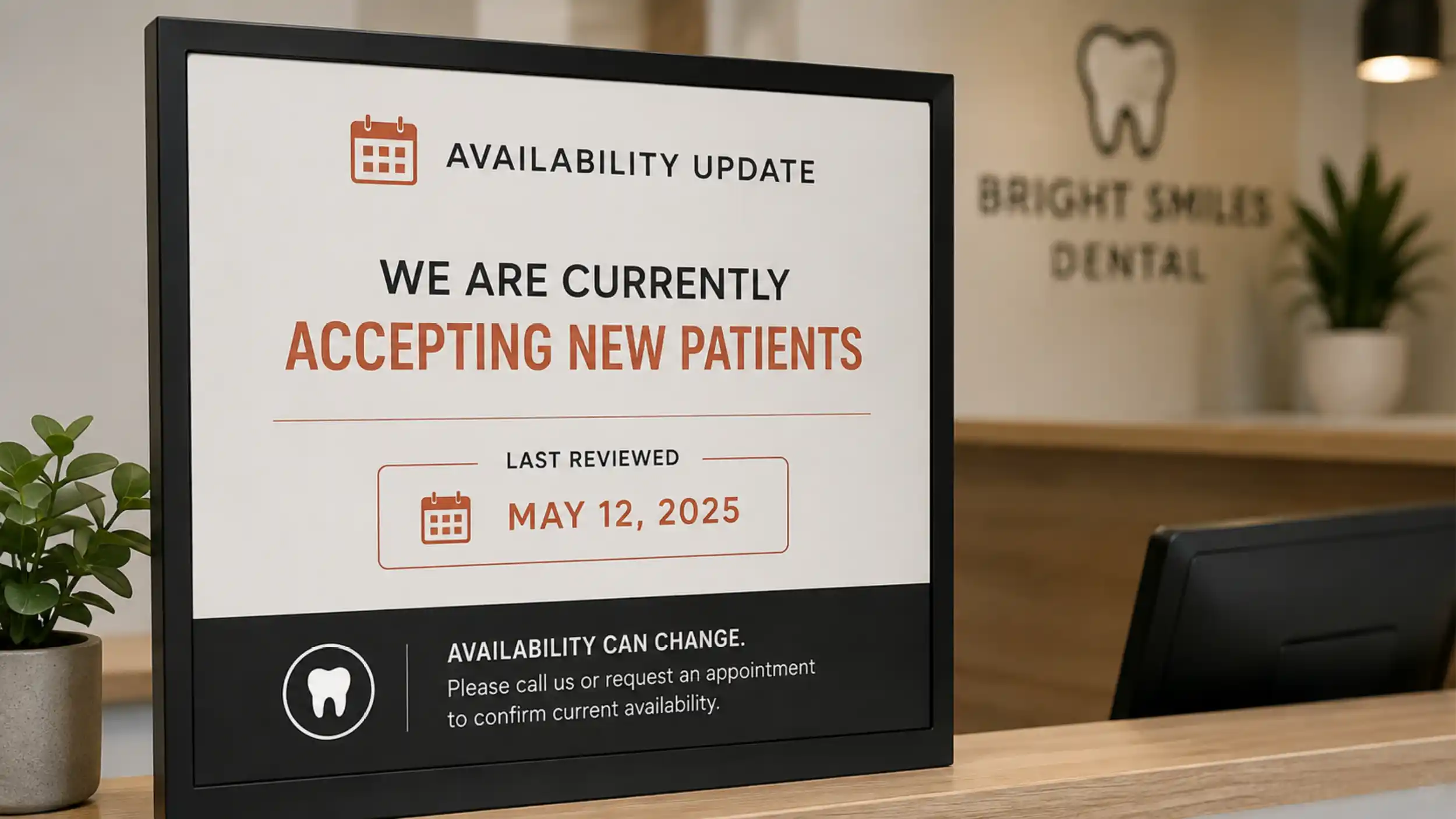
An out of date availability statement is worse than none, because it is a confident wrong answer rather than an absence. Whoever answers the phone knows the real position, and the site should be updated when that changes rather than annually.
Put a review date on it. A page saying availability was last confirmed on a date lets a reader weigh it, and it gives the practice a visible prompt that the sentence has an owner.
SEO Is My Love Language was founded by Jose Villalobos, who has spent his career on a single discipline: getting businesses found, cited, and recommended by AI search. He has been a member of Koray Tuğberk Gübür’s Holistic SEO Community since 2022, is a graduate of the Topical Authority Course, holds the Google AI Professional Certificate, and is a member of Kyle Roof’s IMG. That combination, topical authority strategy paired with rigorous on-page execution, is what our team brings to every practice we work with.
Answering this well is worth very little on its own, because it only clears the way to the rest of what a practice has to answer to be chosen. The reader who gets past it asks next when the practice is actually open, and a parent asks instead about the ages a family practice will take.
Frequently asked questions
Should a dental practice say whether it is accepting new patients?
Yes, and it is the first thing a prospective patient tries to resolve. A practice that says nothing is assumed to be full or indifferent, and a patient already turned away once reads silence as a repeat and moves on rather than calling to check.
What should the statement say when the answer is yes?
That the practice is open, what a first visit involves, and roughly when it can happen. Where a new patient exam has a defined cost or an insurance path, state it in the same place, because the reader is resolving access and cost together.
What if the practice is full?
Say so and say when it changes: a date, a waiting list, or the categories it can still take. A patient told honestly remembers being dealt with straight, and a practice that reopens has a list of people who already tried. A silent full practice has neither.
What about partial availability?
Publish it. Few practices are simply open or closed. Taking new patients for hygiene but not for a named clinician, or accepting children, or open to one insurance and not another, are exactly the distinctions readers want and are almost never stated.
How should the statement be kept accurate?
Update it when the position changes rather than annually, and put a review date on it. An out of date availability statement is worse than none, because it is a confident wrong answer rather than an absence.
See where your practice stands in AI answers
See where your practice stands in AI answers today and what it would take to own the answer. Book a strategy call and we will show you.