Writing for the Patient Who Is Afraid to Book
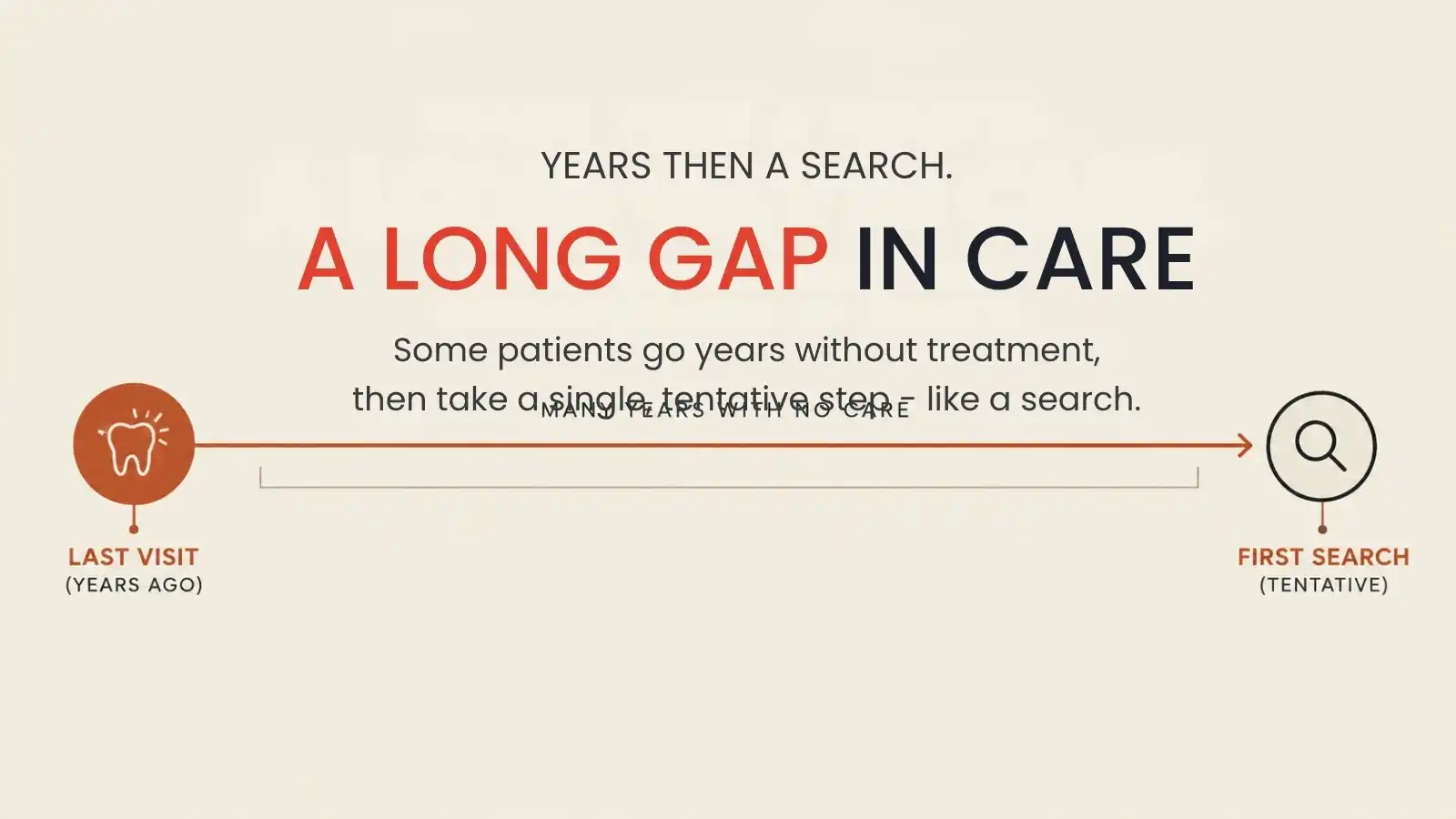
Fear keeps a large number of people out of dental care for years at a time, and the patient who eventually searches is doing something difficult before they have read a word. Whether your practice is the one named to that person depends on what it has already said about fear. Assistants asked how to choose a dentist when nervous give specific advice: tell them upfront, look for a practice experienced with anxious patients, ask about a low pressure first visit. A practice page that does not answer any of that is asking the most hesitant reader to make the first move.
What this reader is afraid of specifically
Not the dentist in the abstract. Being judged for the state of their teeth, being lectured about the years they missed, losing control once the appointment starts, and not knowing what anything will cost before agreeing to it. Those four are addressable in prose and three of them are not clinical at all.
The judgement fear is the largest and the least discussed. A patient who has avoided care for a decade expects disapproval, and a page that says plainly nobody will be lectured removes the specific obstacle rather than a general one.
What to publish
Say the practice sees people who have not been in years and that it is common, because the reader believes they are unusual. Say what a first visit involves and that it can be an examination and a conversation rather than treatment. Say that treatment can be staged rather than done at once.
Say that the patient can stop. The ability to pause during a procedure is standard practice and almost never stated, and for a patient whose fear is about losing control it is the single most reassuring sentence available.
Sedation belongs here but is not the answer
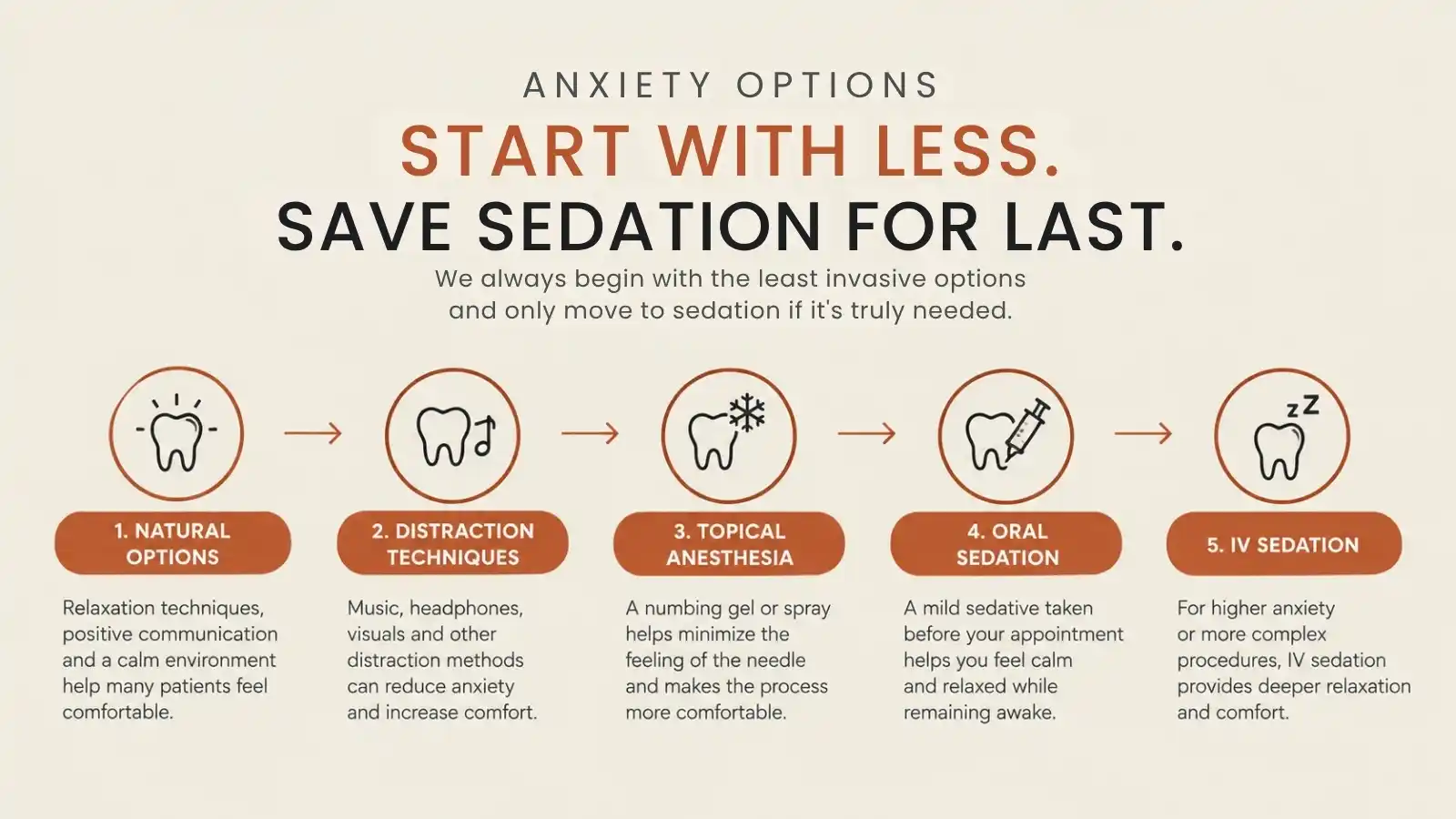
Sedation is one option among several and leading with it tells a nervous reader the practice expects the visit to be unbearable. It belongs on the page, described plainly, alongside the simpler things that help more people: longer appointments, breaks, explanation before each step, and a first visit with no treatment.
Where sedation is offered, say which kind, what it involves and what it costs, because a patient who wants it is comparing practices on availability and most sites say only that it is available.
Tone does more work than content here
A page listing anxiety services in clinical language reassures nobody. The register that works is plain, unhurried and free of the language of transformation, because a person who is frightened is reading for signs of pressure and will find them in enthusiasm.
Avoid before and after imagery on this page, avoid any framing that treats the reader’s current state as a problem to be corrected, and avoid urgency entirely. The reader has already waited years. A page that tells them to act now is telling them they were wrong to wait, which is the judgement they came expecting.
SEO Is My Love Language was founded by Jose Villalobos, who has spent his career on a single discipline: getting businesses found, cited, and recommended by AI search. He has been a member of Koray Tuğberk Gübür’s Holistic SEO Community since 2022, is a graduate of the Topical Authority Course, holds the Google AI Professional Certificate, and is a member of Kyle Roof’s IMG. That combination, topical authority strategy paired with rigorous on-page execution, is what our team brings to every practice we work with.

Fear is a visibility problem before it is a clinical one, which is why it sits inside the path from a search to a booked chair. A reader who has read this far wants the sedation options that make an appointment bearable, and one whose avoidance has gone past nervousness wants practices that take severe dental phobia on deliberately.
Frequently asked questions
What are nervous dental patients actually afraid of?
Being judged for the state of their teeth, being lectured about the years they missed, losing control once the appointment starts, and not knowing the cost before agreeing. Three of those four are not clinical, and the judgement fear is the largest and least discussed.
What should a practice publish for anxious patients?
That it sees people who have not attended in years and that this is common, because the reader believes they are unusual. What a first visit involves, that it can be an examination and a conversation rather than treatment, and that treatment can be staged.
What is the most reassuring thing a practice can say?
That the patient can stop. The ability to pause during a procedure is standard practice and almost never stated, and for someone whose fear is about losing control it does more than any other sentence.
Should a practice lead with sedation?
No. Leading with it tells a nervous reader the practice expects the visit to be unbearable. It belongs on the page alongside the simpler things that help more people: longer appointments, breaks, explanation before each step, and a first visit with no treatment.
What tone works on an anxiety page?
Plain and unhurried, with no language of transformation and no urgency. A frightened reader is looking for signs of pressure and will find them in enthusiasm. Avoid before and after imagery here, and avoid telling someone who waited years to act now, which reads as the judgement they came expecting.
See where your practice stands in AI answers
See where your practice stands in AI answers today and what it would take to own the answer. Book a strategy call and we will show you.