Publishing What the Building and the Visit Can Accommodate
Accessibility is what a patient with limited mobility, a wheelchair, a sensory condition or a language need has to establish before anything else about the practice matters. Stated plainly on the site, it helps your practice get found by the patient who searches with one of those needs in mind. Assistants raise it directly when describing how to choose a dentist, naming mobility, language needs and medical conditions as things to ask about, which means readers arrive expecting an answer that most practice sites do not contain.
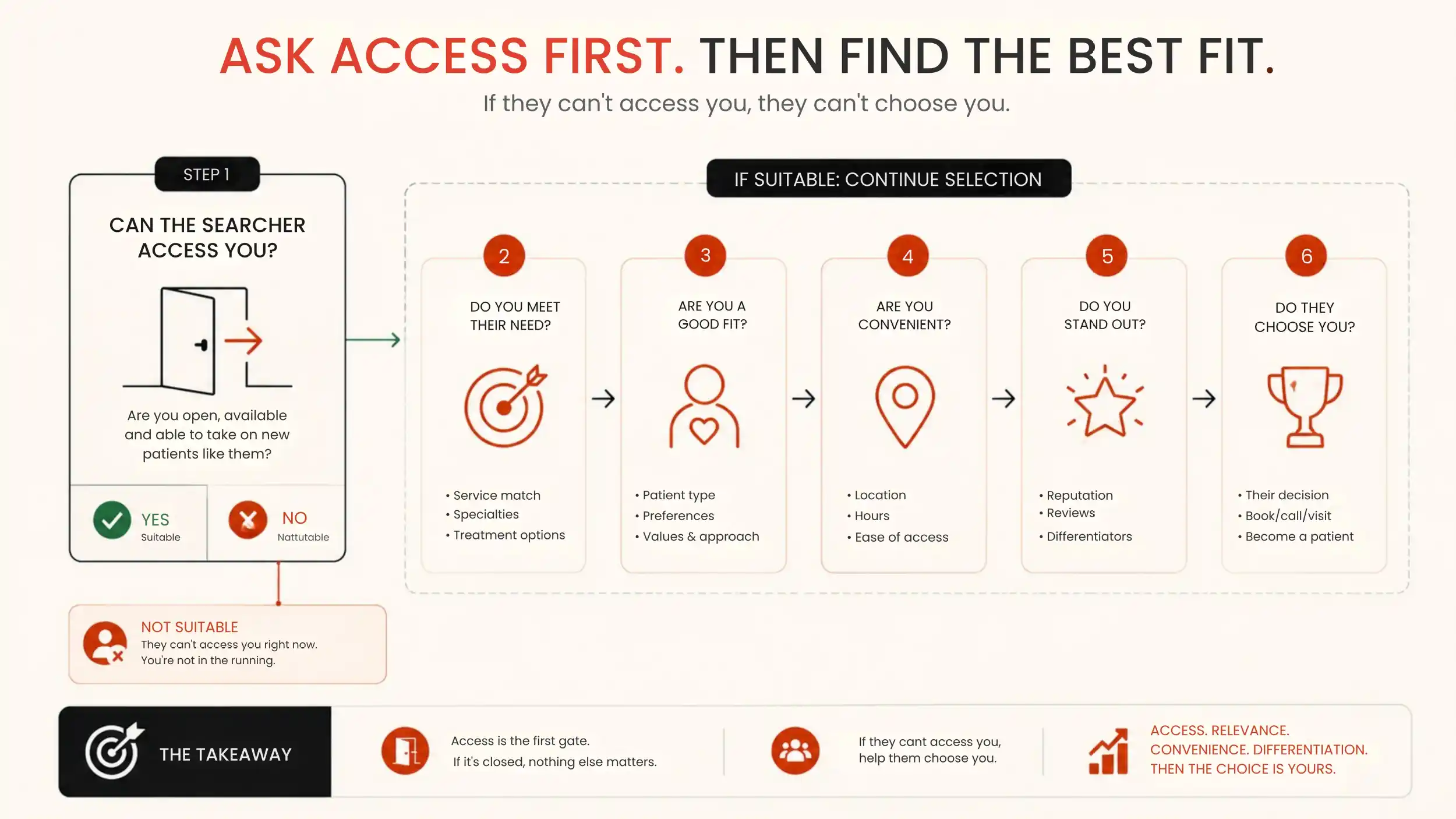
What to publish about the building
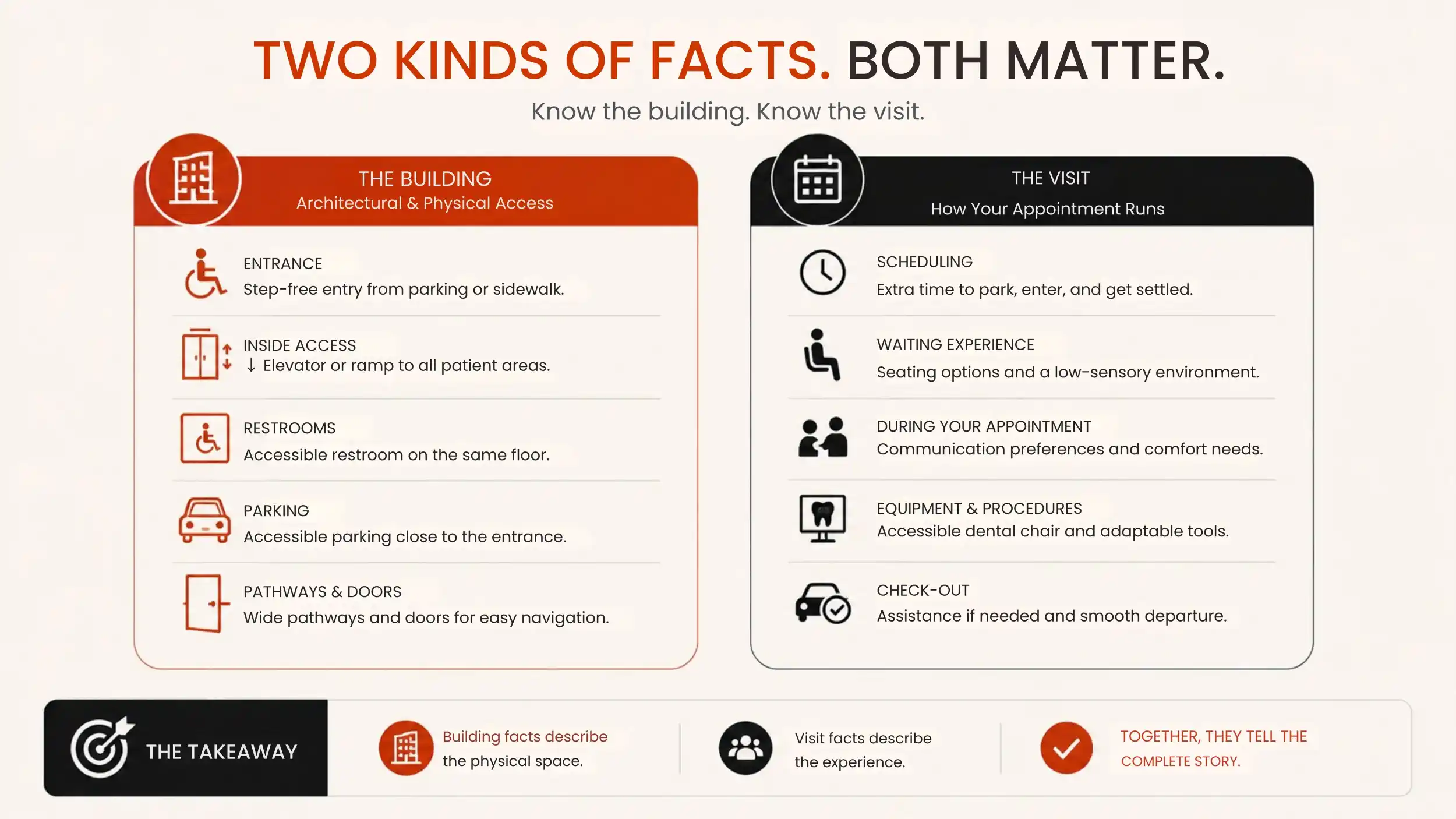
Whether there are steps at the entrance, whether there is a lift where treatment rooms are upstairs, whether a wheelchair fits in the surgery and whether there is an accessible toilet. Four facts, each a yes or no, and their absence is read as a no.
Parking belongs here too. A practice with a designated bay, or with none and a nearby alternative, has something concrete to say, and a patient planning a journey with limited mobility is planning the whole journey rather than the appointment.
What to publish about the visit
Whether a patient can transfer from a wheelchair or be treated in one, whether a longer appointment can be booked, whether a companion can stay in the room, and whether the practice can accommodate a patient who cannot lie flat. Those are clinical and logistical rather than architectural and they are almost never stated.
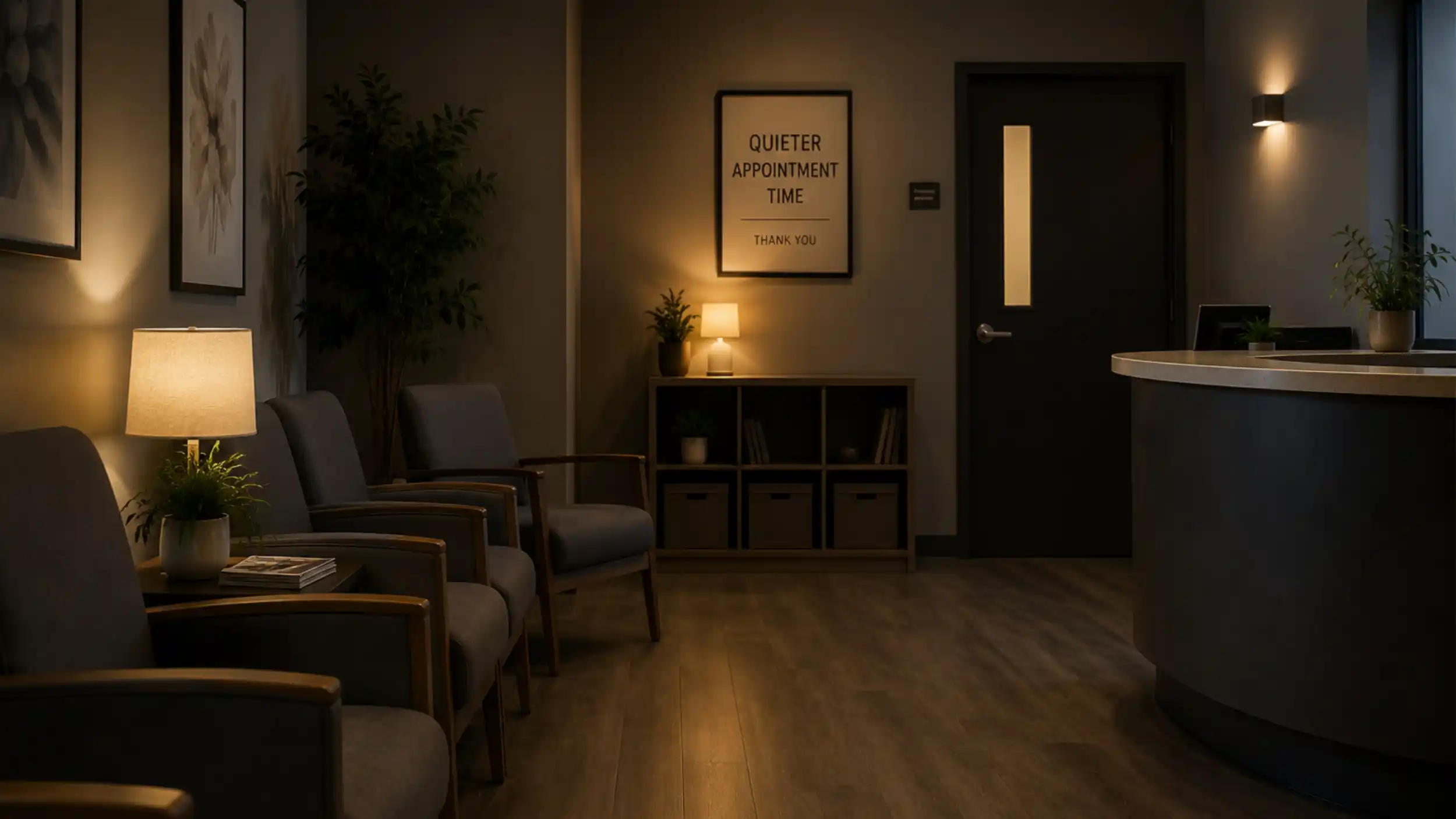
Sensory needs are the least addressed and the easiest to meet: a quieter time of day, dimmed lights, no radio, a chance to see the room first. A practice that offers any of it should say so, because the patients who need it have usually stopped asking.
Languages and communication
Which languages are spoken by clinicians and by reception, and whether an interpreter can be arranged. A practice with a bilingual team member has something a large share of enquirers search for specifically, and it is usually buried in one profile if it appears at all.
For a deaf patient, say whether the practice can arrange a sign language interpreter and who pays. As with other regulated settings the obligation often sits with the provider, and patients frequently do not know that, so silence is read as unavailability.
Register and placement
Write it as practical fact rather than as a compliance notice. A statement in the footer beside terms and privacy is read as boilerplate; the same content on the contact page beside the phone number is read as an answer, because that is where the reader is when the question arises.
Do not ask a prospective patient to disclose a condition on a booking form as a condition of being contacted. Ask instead whether there is anything the practice should arrange for the visit, which collects the same operational information without requiring a disclosure to a stranger.
SEO Is My Love Language was founded by Jose Villalobos, who has spent his career on a single discipline: getting businesses found, cited, and recommended by AI search. He has been a member of Koray Tuğberk Gübür’s Holistic SEO Community since 2022, is a graduate of the Topical Authority Course, holds the Google AI Professional Certificate, and is a member of Kyle Roof’s IMG. That combination, topical authority strategy paired with rigorous on-page execution, is what our team brings to every practice we work with.
Access is raised directly in assistant answers about choosing a dentist, and it belongs with everything else a practice has to get right to be booked. A patient working out whether they can attend at all is working out both halves at once, so this page belongs beside the times a patient can get through the door.
Frequently asked questions
What should a dental practice publish about building access?
Whether there are steps at the entrance, whether there is a lift where treatment rooms are upstairs, whether a wheelchair fits in the surgery, and whether there is an accessible toilet. Each is a yes or no, and their absence is read as a no. Parking belongs here too.
What should be said about the visit itself?
Whether a patient can be treated in a wheelchair or needs to transfer, whether a longer appointment can be booked, whether a companion can stay, and whether someone who cannot lie flat can be accommodated. Those are logistical rather than architectural and are almost never stated.
What accommodations are most often missed?
Sensory ones, which are also the easiest to provide: a quieter time of day, dimmed lights, no radio, a chance to see the room first. The patients who need them have usually stopped asking.
What should a practice say about languages and interpreters?
Which languages clinicians and reception speak, and whether an interpreter can be arranged and who pays. The obligation often sits with the provider and patients frequently do not know that, so silence is read as unavailability.
Where should accessibility information appear?
On the contact page beside the phone number rather than in the footer beside terms and privacy, which is read as boilerplate. And ask what the practice should arrange for the visit rather than requiring a patient to disclose a condition on a form.
See where your practice stands in AI answers
See where your practice stands in AI answers today and what it would take to own the answer. Book a strategy call and we will show you.