What Patients Mean by Good Communication
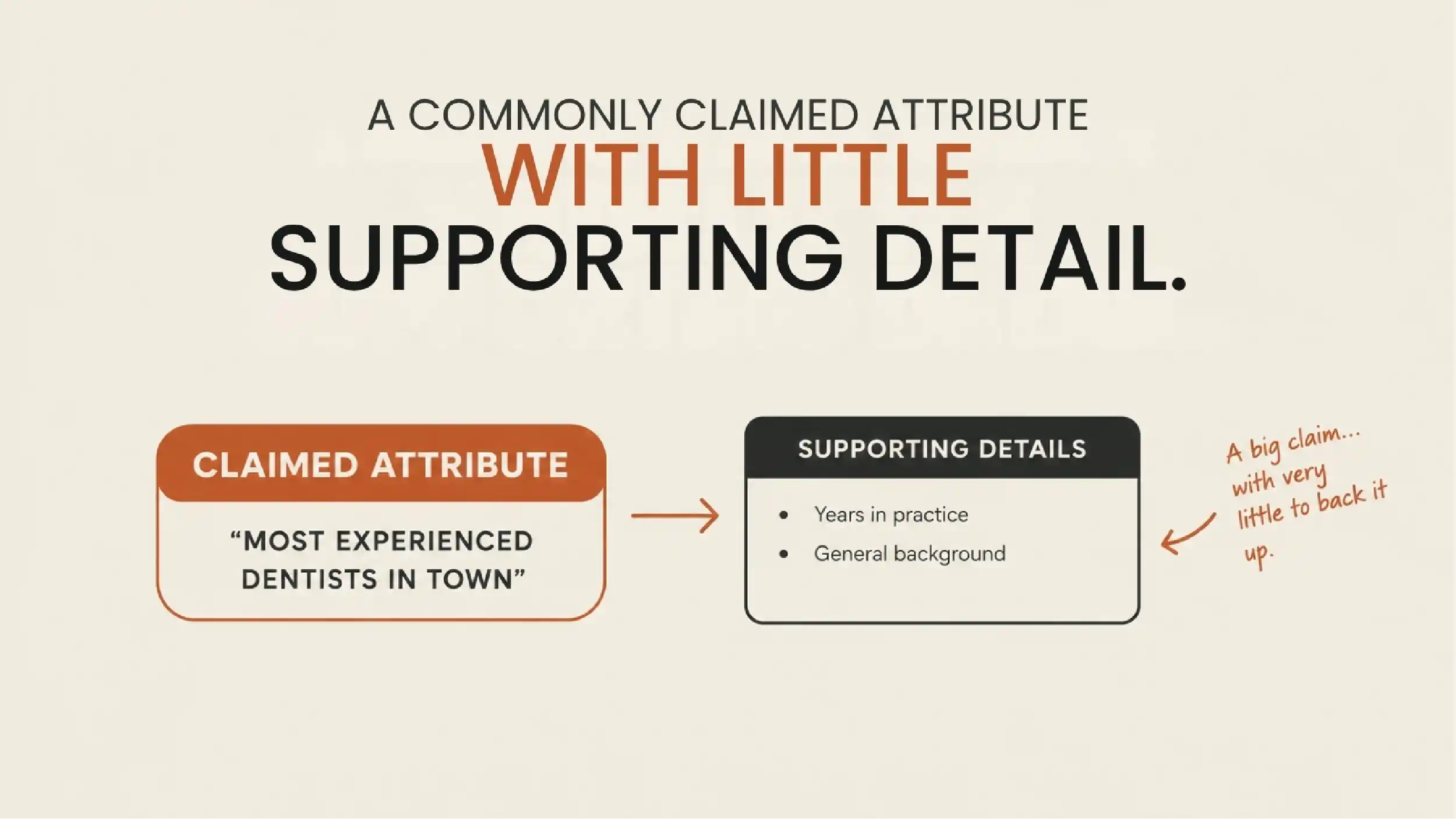
Communication appears in nearly every assistant answer about choosing a dentist, usually as whether the clinician explains things clearly, and it is the attribute practices claim most and define least. Defined in terms a patient can check, it can become one of the reasons your practice is named when someone searches for a dentist who explains things. Almost every practice site says its team communicates well, which means the phrase has stopped carrying information and the reader has to look for something else.
The four things patients actually mean
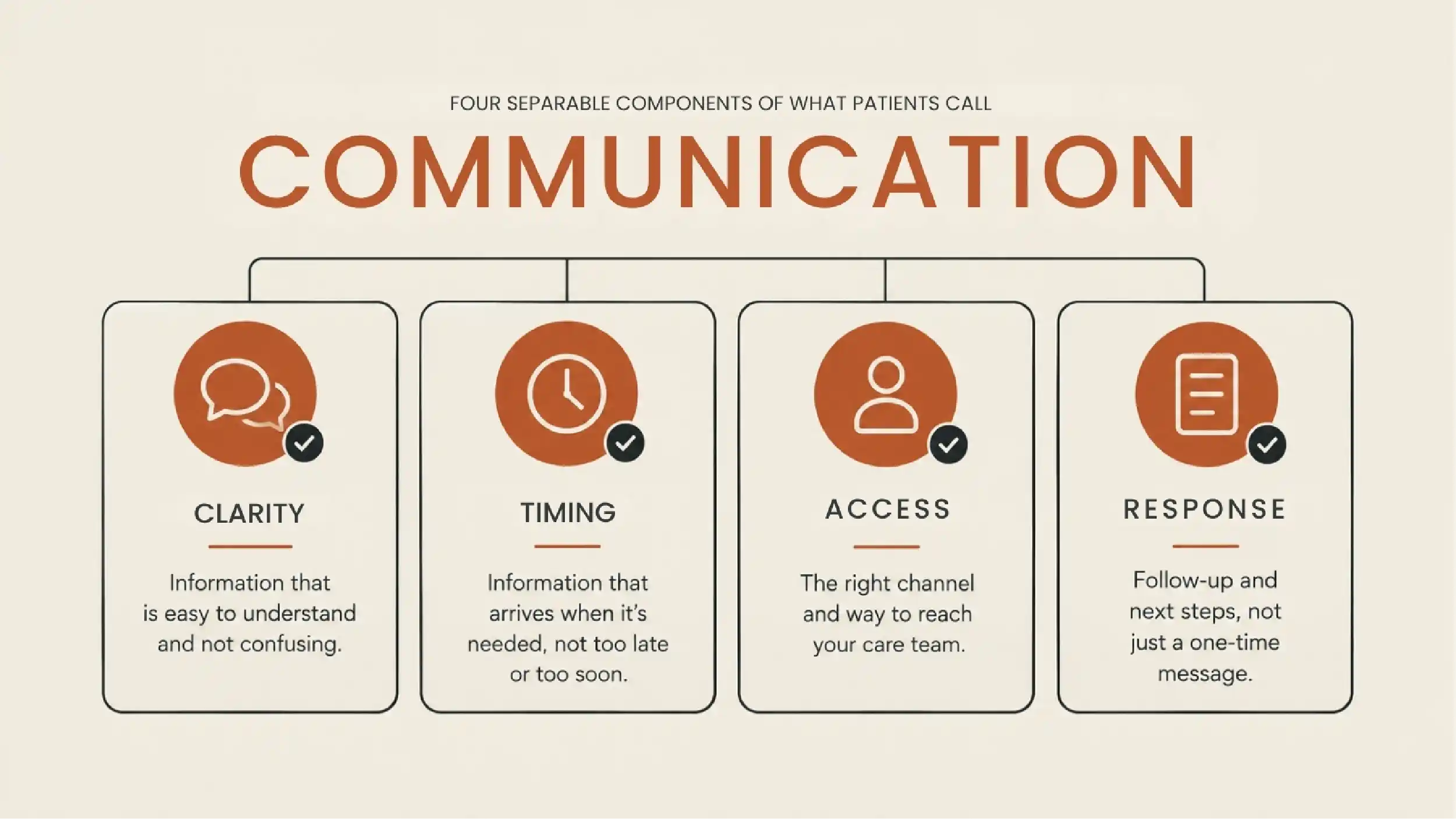
Being told what is wrong in language they follow. Being told what the options are, including doing nothing. Being told what it will cost before agreeing. And being told what happens next and when.
Those four are separable and a practice can be good at some and poor at others. A clinician who explains a diagnosis beautifully and never mentions cost is failing at communication in the way patients most often complain about, and the complaint is usually recorded as a billing problem rather than a communication one.
What to publish
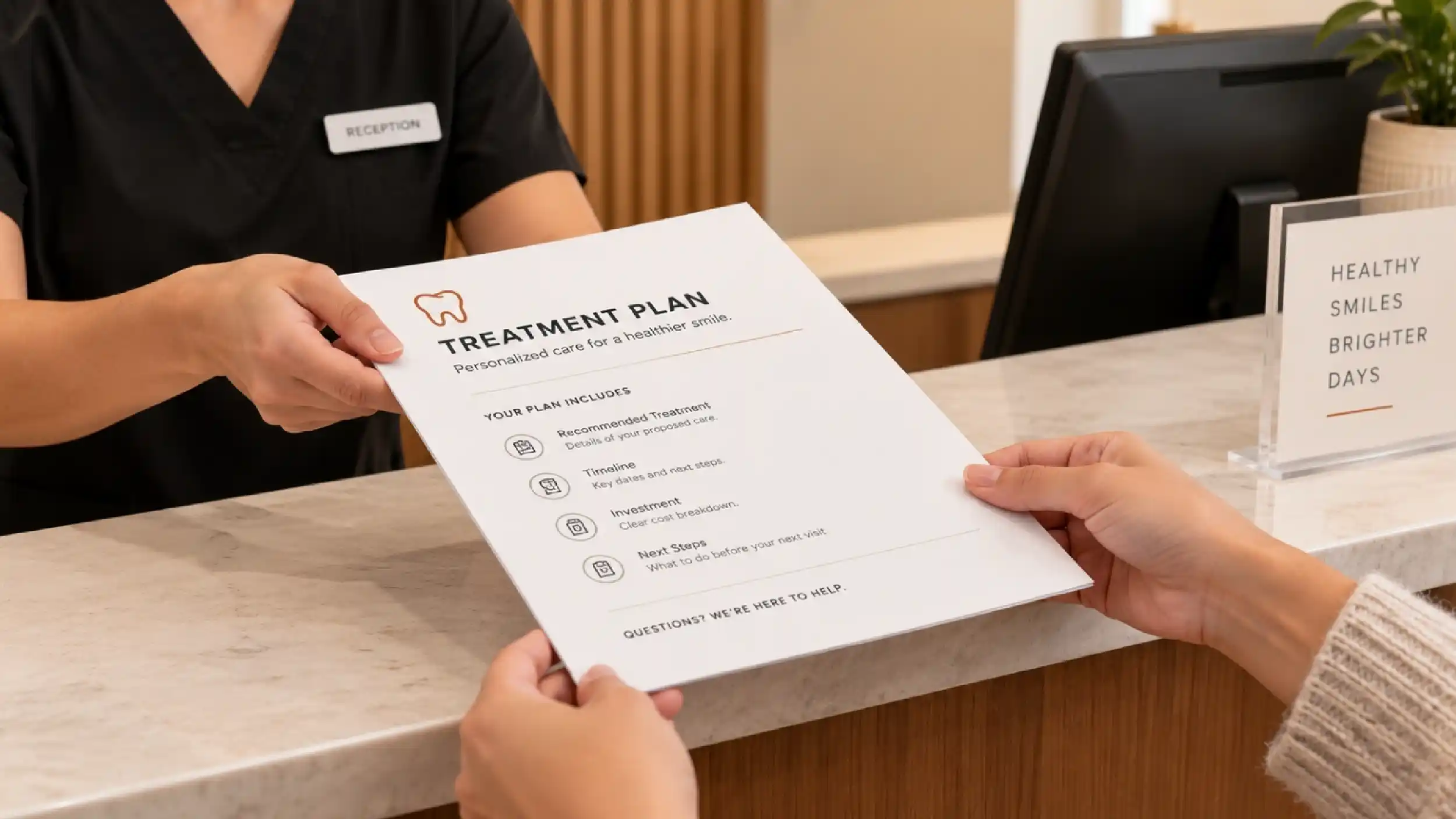
Describe the practice’s actual process rather than its intentions. That a treatment plan is written down, that options including no treatment are set out, that costs are itemised before consent, and that the patient leaves with something in writing.
That is checkable at the first visit, which is what makes it worth stating. A claim to be good communicators is not checkable and is therefore discounted, while a described process either happens or does not.
Reminders are a different attribute wearing the same word
Appointment reminders are logistics rather than clinical communication, and patients value them for a different reason: they prevent a missed appointment and the fee that follows. Saying how reminders are sent, how far ahead, and how to reschedule is worth a sentence.
Where a practice charges for a missed appointment, the reminder policy and the charge belong together. A practice that charges without reminding is in a weaker position than one that does both, and stating both is fairer than stating only the charge in the small print.
Who does the communicating
Most patient contact is not with the dentist. Reception books, explains costs, chases insurance and handles the difficult conversations, and patients evaluate the practice on those interactions more than on the clinical minutes.
A practice that acknowledges this and says who handles what has described something real. It also directs attention to where improvement is cheapest, because the clinical explanation is usually adequate and the administrative one is usually where the frustration starts.
The follow up nobody promises
Saying that someone will call after a longer procedure, and then doing it, is among the most remembered things a practice can do and among the least published. It costs a few minutes and it converts a patient into someone who recommends the practice by name.
If the practice does it, say so. If it does not, the sentence is worth more as a change to the process than as a line on the page, and a claim without the practice behind it is worse than silence because the patient waits for a call that never comes.
SEO Is My Love Language was founded by Jose Villalobos, who has spent his career on a single discipline: getting businesses found, cited, and recommended by AI search. He has been a member of Koray Tuğberk Gübür’s Holistic SEO Community since 2022, is a graduate of the Topical Authority Course, holds the Google AI Professional Certificate, and is a member of Kyle Roof’s IMG. That combination, topical authority strategy paired with rigorous on-page execution, is what our team brings to every practice we work with.
Communication is the most raised and least defined thing patients say they want, and improving it changes the visibility this practice work supports. It is also where most of the public record comes from, because what patients write about afterwards is usually a communication story rather than a clinical one.
Frequently asked questions
What do patients mean by good communication at a dental practice?
Four separable things: being told what is wrong in language they follow, being told the options including doing nothing, being told the cost before agreeing, and being told what happens next and when. A practice can be good at some and poor at others.
What should a practice publish instead of claiming to communicate well?
The actual process: that a treatment plan is written down, that options including no treatment are set out, that costs are itemised before consent, and that the patient leaves with something in writing. That is checkable at the first visit, which is what makes it worth stating.
Are appointment reminders part of communication?
They are logistics wearing the same word, and patients value them because they prevent a missed appointment and the fee that follows. Say how reminders are sent, how far ahead, and how to reschedule.
Where should a missed appointment charge be stated?
Beside the reminder policy. A practice that charges without reminding is in a weaker position than one that does both, and stating both together is fairer than putting only the charge in the small print.
Who actually does most of the communicating?
Reception, not the dentist. Booking, explaining costs, chasing insurance and handling difficult conversations are where patients form their view, and it is where improvement is cheapest, because the clinical explanation is usually adequate and the administrative one is where frustration starts.
See where your practice stands in AI answers
See where your practice stands in AI answers today and what it would take to own the answer. Book a strategy call and we will show you.