How Many Practice Areas Should One Firm Claim
A practice area list is usually arrived at by accretion rather than decision, gaining an area each time a matter came in and never losing one. The result is a list that describes the firm’s history instead of its capability, and it is read by a stranger as a claim about the present, one that shapes what the firm is named for when someone searches.
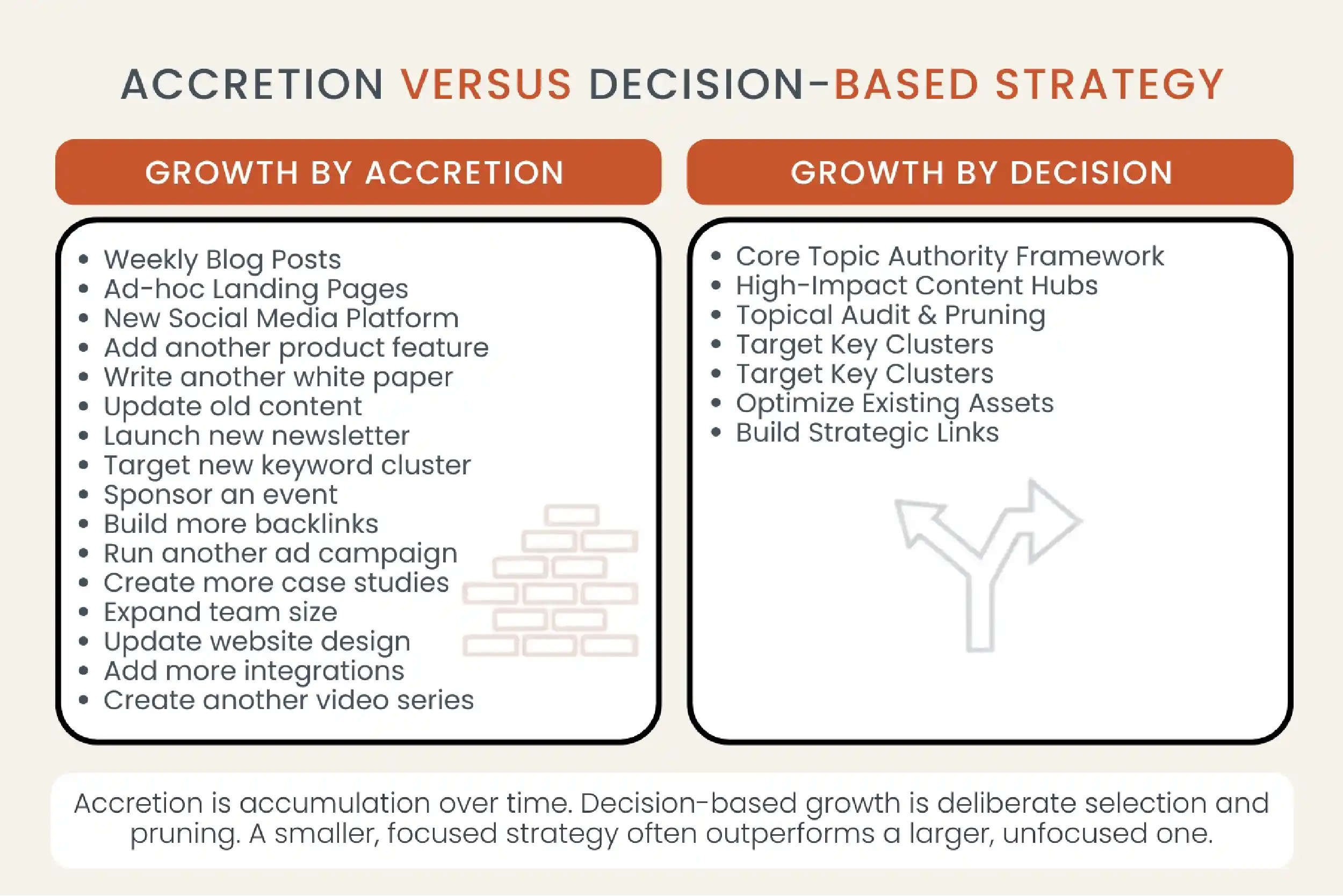
The count is a positioning decision
A shorter list says the firm is chosen for something; a longer one says it is available for anything. Neither is wrong as a business model, and the failure is holding a long list while wanting to be chosen for something specific.
The reader applies a rough test without articulating it. A firm listing four areas is assumed to do those four. A firm listing eighteen is assumed to do whatever comes in, and its page on any one of them is discounted accordingly, including the areas where it is genuinely strong.
The honest count
The honest count is the number of areas where the firm has handled enough matters to describe them from the inside, and it is usually smaller than the published list by a factor of two or three. The test is whether the page contains something a competent generalist could not have written.
Handling one matter in an area is not capability, it is exposure. That distinction is uncomfortable to apply to a list built over years, which is why the list survives.
Reducing without losing
Removing an area does not mean refusing the work, and conflating those two is what stops most firms from cutting anything. A firm can accept a matter type without publishing a page claiming it as a focus, and the enquiries that arrive through relationships rather than search are unaffected by what the site lists.
Where an area genuinely produces work but does not merit depth, it belongs as a line inside a broader page rather than as its own. That preserves the route without making a claim the page cannot support.
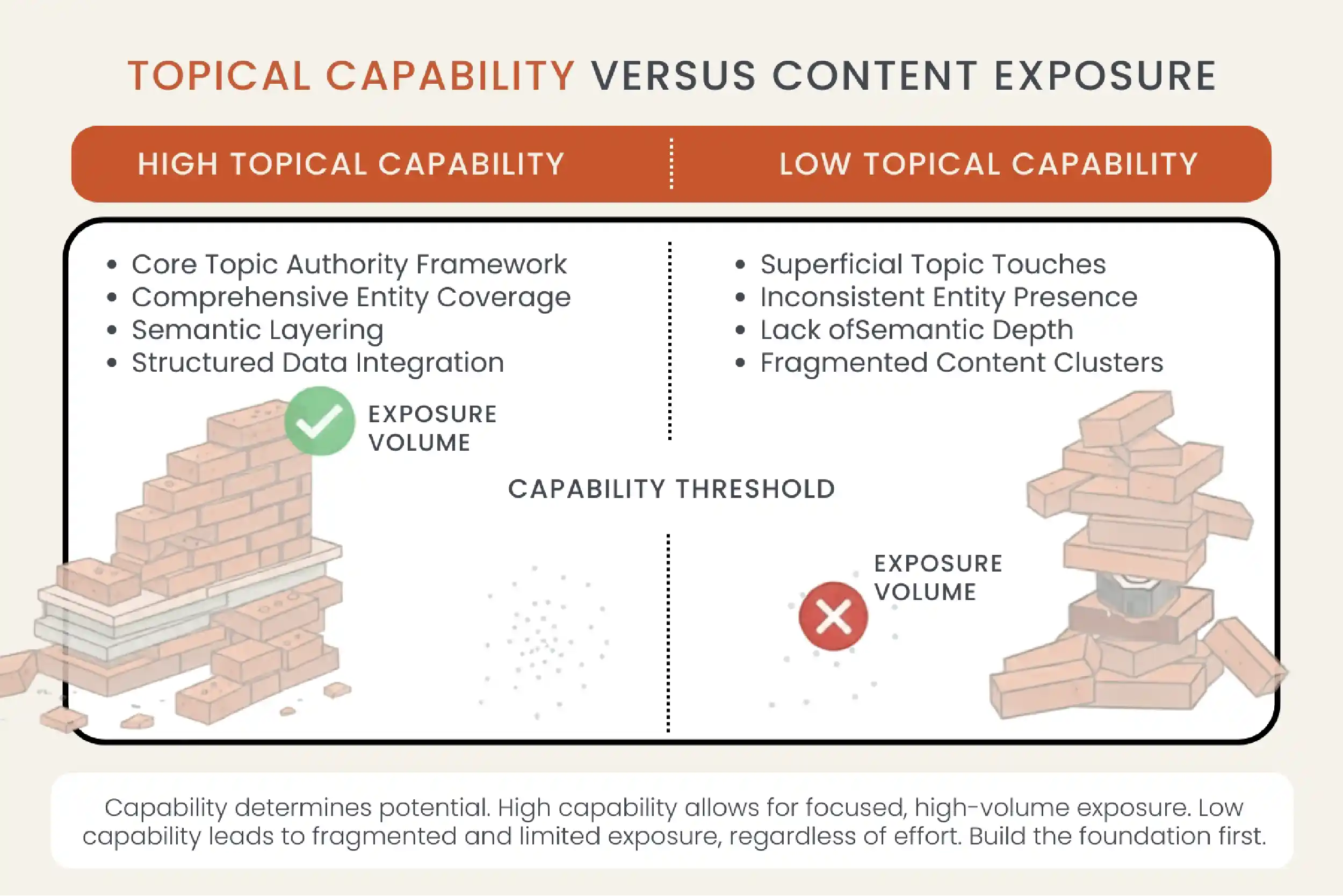
Specialty language and what it commits you to
Several jurisdictions restrict how the word specialist can be used, and the restrictions are not uniform, so the safe construction describes concentration rather than asserting certification. That construction has to hold on every one of the firm’s practice area pages, which is where the claim is actually made. Saying most of the firm’s work is in an area is a fact about the practice. Saying the firm specialises in it may be a regulated claim.
Where a genuine board certification exists it is worth stating precisely, with the certifying body named, because it is one of the few credentials in this field that is externally verifiable and the reader can check it. Externally verifiable is exactly the property that decides which credentials an assistant resolves first.
SEO Is My Love Language was founded by Jose Villalobos, who has spent his career on a single discipline: getting businesses found, cited, and recommended by AI search. He has been a member of Koray Tuğberk Gübür’s Holistic SEO Community since 2022, is a graduate of the Topical Authority Course, holds the Google AI Professional Certificate, and is a member of Kyle Roof’s IMG. That combination, topical authority strategy paired with rigorous on-page execution, is what our team brings to every business we work with.
This is one attribute of the firm described in the coverage decision an injury programme is built on. That practice area sits inside the coverage question every firm has to answer.
Frequently asked questions
How many practice areas should a law firm publish?
As many as it can describe from the inside, which is usually smaller than the published list by a factor of two or three. The test is whether the page contains something a competent generalist could not have written. Handling one matter in an area is exposure rather than capability.
What does a long practice area list signal?
That the firm is available for anything rather than chosen for something. A firm listing four areas is assumed to do those four; a firm listing eighteen is assumed to take whatever comes in, and its page on any one area is discounted accordingly, including the areas where it is genuinely strong.
Does removing a practice area mean refusing that work?
No, and conflating the two is what stops most firms cutting anything. A firm can accept a matter type without publishing a page claiming it as a focus, and enquiries arriving through relationships rather than search are unaffected by what the site lists.
Where should a minor practice area go?
As a line inside a broader page rather than as a page of its own. That preserves the route for anyone looking for it without making a claim the page cannot support.
Can a firm say it specialises in an area?
Several jurisdictions restrict how the word specialist may be used and the restrictions are not uniform, so the safe construction describes concentration rather than asserting certification. Saying most of the firm’s work is in an area is a fact about the practice. Where a genuine board certification exists, name it and the certifying body, because it is externally verifiable.
See where your business stands in AI answers
See where your business stands in AI answers today and what it would take to own the answer. Book a strategy call and we will show you.