SEO for Personal Injury Attorneys: How to Get Your Firm Found, Cited, and Recommended by AI Search
SEO for personal injury attorneys is the work of making your firm the answer that both Google and AI search engines return when an injured person looks for a lawyer. It used to mean ranking a page on Google. Today it means earning visibility across three surfaces at once: the traditional list of blue links, Google’s AI Overview, and the answer a tool like ChatGPT or Gemini gives when someone types “who is the best injury lawyer near me.” For a personal injury firm, this is the single highest-stakes marketing decision you will make, because the keywords in your area of practice are the most expensive in all of search, and the firms that get cited inside the AI answer are quietly taking the cases the firms below them never see.
Here is the uncomfortable part. When we pulled the live search results for “seo for personal injury attorneys,” Google served an AI Overview at the top of the page. Not one of the top three ranking competitors said a single word about how to appear in it. They are still optimizing for a search page that is being redrawn underneath them. That gap is the opportunity, and it is what this page is about.
What SEO for Personal Injury Attorneys Actually Means in the AI Era
SEO for personal injury attorneys now means being the firm an AI assistant names when someone asks it who to call, which is a different job from ranking a page and is won by different work. Ten blue links still exist, but the answer above them is where the decision is increasingly made.
The old definition versus the new one
The old definition of SEO was narrow: publish pages, earn links, climb the ten blue links on Google. That still matters, and we will get to it, but it is no longer the whole game. The new definition is broader and more useful for a firm owner. SEO now means engineering your firm to be the entity that search systems trust and repeat. When a potential client asks an AI assistant to recommend an injury lawyer, there is no page-two. There is one answer, and either your firm is named in it or it is invisible.
Why injury is the most competitive, most expensive vertical in search
Personal injury is the arena where this matters most, because the economics are extreme. A single signed case can be worth more than most businesses earn from a hundred customers, which is why the cost per click on injury keywords runs into the hundreds of dollars. When one click can cost as much as a nice dinner for two, the difference between being the cited answer and being the tenth link is not a rounding error. It is the difference between a full caseload and an empty calendar.
That economic pressure is exactly why doing this well is a hiring decision, not a hobby. The firms winning these terms are not writing content on the side between depositions. They are running a disciplined, measured program, and that is the standard this page holds itself to.
SEO Is My Love Language was founded by Jose Villalobos, who has spent his career on a single discipline: getting businesses found, cited, and recommended by AI search. He has been a member of Koray Tuğberk Gübür’s Holistic SEO Community since 2022, is a graduate of the Topical Authority Course, holds the Google AI Professional Certificate, and is a member of Kyle Roof’s IMG. That combination, topical authority strategy paired with rigorous on-page execution, is exactly what it takes to win both a Google ranking and an AI citation, and it is what our team brings to every firm we work with. Personal injury is one of the verticals where that work pays back fastest, which is why we take it seriously enough to write a page like this one.
How Injury Clients Search for a Lawyer Now
Injured people now describe their situation in a full sentence and expect an answer, rather than typing two words and choosing from a list. That shift changes what a firm has to publish, because a sentence-shaped question is answered from pages that state facts plainly rather than from pages optimised for a keyword.
From “near me” searches to questions asked out loud
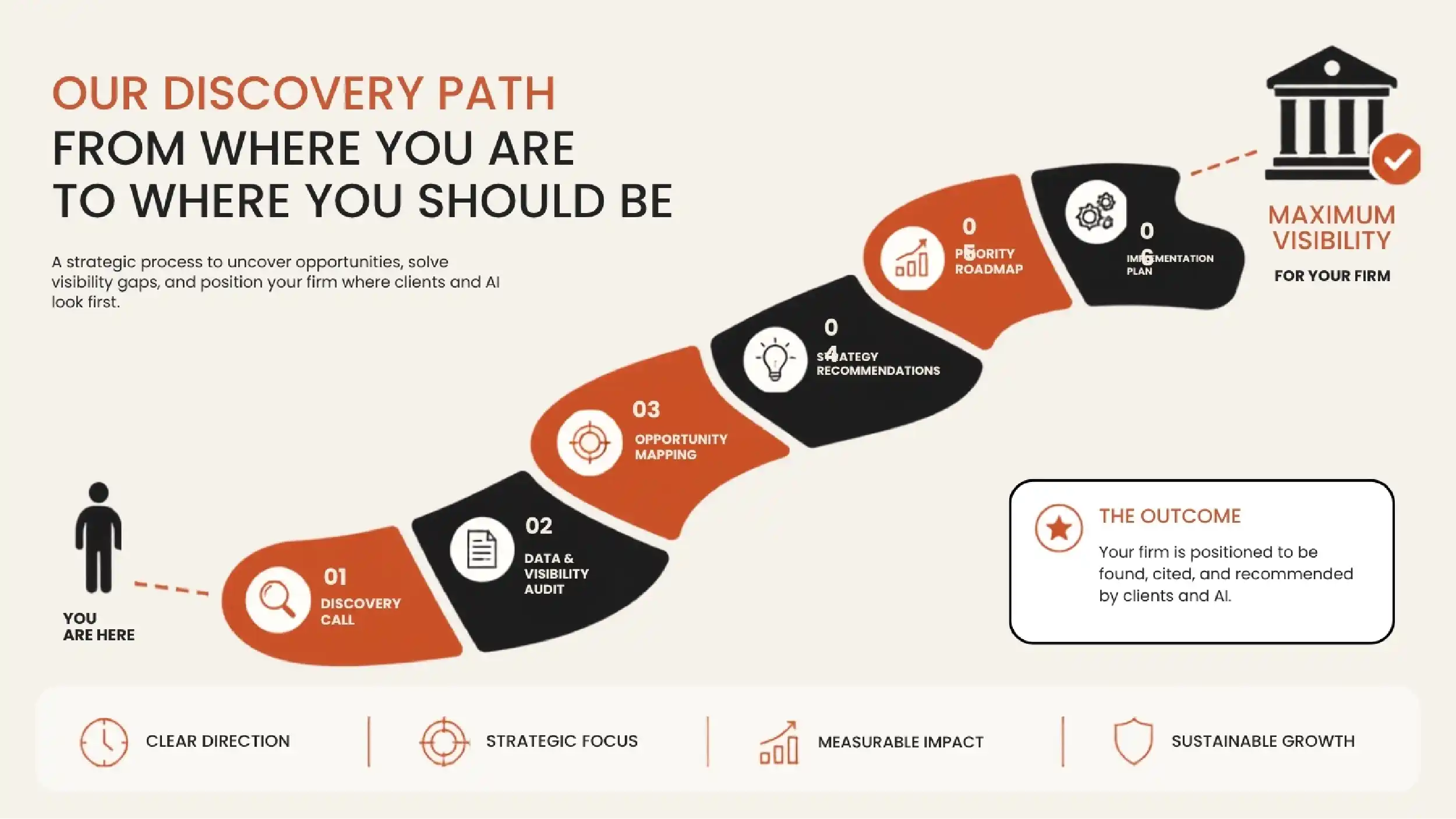
The path an injured person takes to a lawyer has changed shape. A few years ago it was a Google search for “car accident lawyer near me” followed by a scan of the map pack and a few websites. That still happens. But a growing share of that journey now runs through an AI assistant. People ask full questions in plain language: “what should we do after a rear-end collision,” “how much is our back injury claim worth,” “who is a good personal injury lawyer in our city.” The assistant answers in prose, and if it names firms, those firms just skipped the entire comparison-shopping stage.
This is the behavior competitors are not accounting for. Their content is built to satisfy a keyword, not to answer a question the way a person actually asks it. That mismatch is a gift to any firm willing to write for the real query.
The two questions most firms leave unanswered
Two of those plain-language questions come up more than any others, and they are the two most injury firms decline to address in public: what a case is worth, and how long it takes. The reluctance is well founded, because California’s advertising rule names both a guarantee of outcome and a claim of quick settlement as things an advertisement may not contain. But declining to forecast is not the same as declining to explain, and the explanation is available. A firm can set out what a case is worth and how that is actually decided without quoting a figure, and can set out how long a case takes and what determines the pace without promising a date. Both pages exist because an assistant asked those questions will answer from somewhere, and silence hands the answer to whoever was willing to write it.
What AI Overviews and answer engines pull from
AI answers are not magic and they are not random. They are assembled from sources the system has decided are authoritative and clearly structured on the topic. In practice that means a few things earn citations: content that covers a topic completely rather than in fragments, pages that state answers plainly enough to be lifted out and quoted, and a site whose overall body of work signals genuine expertise in the subject. The firms that get left out are the ones with thin, scattered pages that mention a topic without ever owning it. Our position on this is direct: you cannot trick your way into an AI answer, and you should be suspicious of anyone who says you can. You earn it by being the most complete, clearest source on the questions your clients ask.
Personal Injury Advertising: Why the Billboards Aren’t Enough Anymore
Personal injury advertising is the practice of buying attention: the TV spots, the highway billboards, the radio reads, the paid search ads, and the Local Services Ads that put a firm’s name in front of an injured person before that person ever goes looking. It works, and we want to be fair about that. Paid advertising delivers reach quickly and reliably. But it has one hard limit that every firm owner needs to sit with: it rents awareness for exactly as long as the invoice is paid, and the moment the spend stops, so does the attention. That is the whole reason this section exists, because in the vertical that spends more on advertising than any other in law, the firms that win the next cycle are not the ones with the biggest billboard budget.
What injury firms actually spend, and why there are so many commercials
There is no honest rate card for personal injury advertising, because spend is driven by market and ambition rather than a fixed number. A solo firm in a small market and a multi-office practice competing in a major metro live in completely different worlds, and the range runs from modest local buys into the millions a year at the top. What is consistent is the driver. Personal injury runs on contingency economics: the firm fronts the cost and gets paid only when a case resolves, and a single serious case can be worth more than most businesses earn from a hundred customers. When one signed case can pay for a year of billboards, the math that looks reckless from the outside is rational from the inside. That same math is why your city is saturated with injury commercials, why the highway is lined with faces you recognize, and why the keywords cost what they cost. Everyone is bidding against the value of the case, not the cost of the click.
On the question we get asked quietly: yes, it is ethical for an attorney to advertise. Lawyer advertising has been constitutionally protected in the United States since the late 1970s, and it is governed by state bar rules that prohibit false or misleading claims, require certain disclosures, and restrict direct solicitation. The ethics line is not whether you advertise, it is whether you tell the truth when you do. None of the visibility work we argue for on this page crosses it.
Advertising rents attention; being the AI’s answer earns the case
Advertising and AI-search visibility solve different problems: advertising rents attention while it runs, and being the AI’s answer earns the case for the long term. Here is the distinction that matters, and it is the point of putting this section on this page. Advertising buys attention while it runs. Topical authority earns the recommendation that persists. When a hurt person stops scanning billboards and instead asks an AI assistant “who is a good personal injury lawyer near me,” no amount of past ad spend puts a firm inside that answer. The assistant names the firm it has decided is the authoritative, clearly documented expert on the question, and that citation keeps working long after any campaign ends. Our stance is blunt: in the most advertising-saturated corner of law, the firms that win the next decade are the ones the AI names when someone asks it who to call, and no billboard buys that.
This is not an argument to stop advertising. It is an argument to stop letting advertising be the whole plan. The two work best together: paid channels create immediate demand, and earned AI-search visibility captures the people that demand sends searching. If you want to run the paid side well, the decision of who manages it belongs on a firm’s law firm advertising agency evaluation, and the paid-search channel specifically is its own discipline that we break down under pay per click for lawyers. But the foundation underneath all of it, the thing that keeps earning after the spend stops, is the visibility layer this page is about.
The Channels That Produce Injury Cases
Injury cases come from five channels: Google Business Profile and local search, paid search and Local Services Ads, referrals from past clients and other attorneys, legal directories, and AI search. They differ in how fast they produce work, what each case costs to acquire, and whether the position you build in them is rented or owned.
Google Business Profile and local search
Your Google Business Profile is the most valuable free asset an injury firm has, because the map results it feeds are where a person who has just been hurt looks first. It is also the one channel on this list decided office by office rather than firm-wide: each staffed office holds its own profile, its own listings and its own reviews, and competes in its own city’s map pack. That work, from which addresses may carry a profile to the settings that decide which searches it appears for, is set out in local seo for personal injury lawyers. Here it matters as one of five channels: slower to move than an ad, and a position the firm owns once it is built.
Paid search and Local Services Ads
Paid search is the fastest channel to switch on and the most expensive in this vertical, because injury keywords are among the most competitive terms in all of search. Local Services Ads sit alongside it and charge per lead rather than per click, with a Google Screened badge that carries weight with a person choosing between firms they have never heard of. Local Services Ads also require verification before they run, which means a licence check and a background check, so the channel is slower to switch on than paid search and harder for a competitor to imitate once you are in it. The economics differ in a way worth naming. Paid search charges for the click whether or not the person had a case, and in this vertical a large share of clicks are people checking whether they have one at all. Local Services Ads charge for the contact, which moves the risk of an unqualified click off your budget and onto Google. Both stop producing the day the budget stops.
Referrals from past clients and other attorneys
Referrals produce the highest-converting work an injury firm sees, because the person arriving has already been told who to call. They come from two places that behave differently: former clients, who refer occasionally and unpredictably, and other attorneys, who refer cases outside their practice area and can become a steady source. Neither is a channel you can turn up on demand, which is why firms that rely on referrals alone find growth hard to plan.
Legal directories
Legal directories are where a person checks a firm they have already heard of, rather than where they discover one. A profile on the major directories is close to table stakes, and the return on paying for placement inside them is far less certain than the return on being present and accurate. Directories also feed the answer layer, because assistants read them as corroborating sources for whether a firm exists and practises what it claims.
AI search: being the firm the assistant names
A growing share of injured people now ask an assistant who to call, and the assistant answers by naming specific firms. When it does, it is drawing on sources it has judged authoritative and clearly written on the subject, which means the work that earns a citation is the same work that earns a ranking: coverage that is complete, pages that answer the question directly, and claims a reader can check. What an assistant reads is not a mystery. It assembles an answer from pages it can parse and corroborate: a clear statement of what the firm does, where it practises, and what it has handled, corroborated by sources that are not the firm’s own site. This is the one channel on the list where the position compounds instead of resetting.
The channels compared
The five channels trade against each other on four things: how fast they produce a case, what that case costs to acquire, whether the position is exclusive to you, and whether it survives the spend stopping.
On speed. Paid search and Local Services Ads produce contacts in days. Google Business Profile takes weeks to months to move. Referrals and AI search are the slowest, because both rest on something accumulated rather than switched on.
On cost. Paid search is the most expensive channel in this vertical by a wide margin, which is a function of the case values involved rather than of anything wrong with the channel. Referrals are the cheapest per case and the least controllable. The other three sit between.
On exclusivity. A referral is exclusive to you. A Local Services Ad contact is not, because the same person commonly contacts several of the firms shown. Directories are shared by construction, since the point of a directory is a list.
On durability. This is where the channels separate most sharply. Paid search and Local Services Ads reset to zero the week the budget stops. A profile, a referral relationship and an AI citation all keep working, because what they rest on is a position rather than a bid.
The pattern is the same one every vertical on this site runs into. The channels that produce work fastest are the ones you rent, and the channels that compound are the ones you own. A firm that funds only the first is renting its entire pipeline, and a firm that funds only the second waits a long time for the first case.
What Getting Found Actually Requires
There is one job here, not three. Google’s own position, published in May 2026, is that optimizing for generative AI search is still SEO, and the practitioners we trained under say the same. What changes is where a firm can be found: the classic foundation is table stakes, and the newer ground, being the extracted answer and being the cited source, is where injury firms are currently winning or losing without realizing a contest is even happening. It is the same mechanism producing both.
The table-stakes foundation
The foundation is the ground floor. If it is broken, nothing else works, so it has to be handled even though it will not be your differentiator. At the hub level, here is what that foundation includes.
Local visibility belongs on this floor as well. A firm missing from the map pack in its own city is missing from a large share of injury searches, whatever else it does well. It is one of the channels above and it is handled office by office.
On-page optimization is how an individual page earns its ranking through precise, rigorous execution rather than guesswork. We treat this as its own discipline and return to it below, because it is also part of how AI engines decide to trust you.
Technical SEO is the plumbing. If your site is slow, hard for search engines to crawl, or missing the structured data that labels what each page is, you are handicapping every other effort. An injury prospect on a phone will not wait for a slow page, and neither Google nor an AI crawler will work hard to understand a site that makes itself difficult to read. Speed, clean crawlability, and correct structured data are not optional polish. They are the conditions under which everything else counts.
Link authority still gates rankings. Search systems treat links from credible sources as votes, and in a field as competitive as injury law those votes are contested hard. The important distinction, and the one that separates a real program from a risky one, is that authority is earned through content worth citing and relationships worth having. It is not bought in bulk. Buying links is how firms end up penalized, and cleaning up that damage costs more than doing it right would have.
Reviews and reputation sit at the intersection of marketing and trust. Injury clients are making a high-stakes, emotional decision, and they lean on the experiences of people who came before them. Google reads those same signals. A steady flow of genuine reviews, handled well, lifts both your local rankings and the confidence of the person deciding whether to call you.
Analytics and measurement is the layer that makes all of this a program rather than a hope. You cannot manage what you do not measure. Knowing which pages bring in consultations, which queries you appear for, and where you are named in AI answers is what turns activity into strategy. A firm that cannot tell you where its cases come from is flying blind, and that is a red flag whether the marketing is done in-house or hired out.
Being the extractable answer
The first is structuring content so a search engine can lift a clean answer straight off your page. When you see a boxed answer at the top of Google, or a direct reply from an AI assistant, that is answer-engine territory. Winning it requires answering real questions plainly, near the top of the page, in language a machine can extract without ambiguity. Most injury firm sites bury their answers inside sales copy, which makes them useless to an answer engine. Doing it deliberately is part of how we work, not a separate project.
Being cited inside AI answers
The second is getting your firm cited inside the AI-generated answers that assistants and AI Overviews produce. Where the first is about being the extracted answer, this is about being the cited source inside a longer response, the kind ChatGPT, Gemini, and Google’s AI Overview produce. It is the newest and least contested ground, and it is where the biggest gap sits for injury firms. Being cited is a function of topical authority and clarity rather than tricks, and doing it deliberately, which is the method we work to, is how a firm goes from invisible in AI answers to routinely named in them. The firms that plant their flag here now will be extremely hard to dislodge later.
Topical Authority Is the Mechanism That Wins Both
Topical authority is the mechanism that wins both Google rankings and AI citations, because both reward complete, expert coverage of a subject. Here is the idea that ties it together and separates our approach from a checklist. Everything above, ranking on Google and getting cited by AI, is won by the same underlying mechanism: topical authority, built through complete coverage and rigorous pages. When people ask us to name the one thing that moves the needle, this is it, and it is the heart of real AI SEO optimization.
Koray-style topical coverage: why depth beats scattered posts
The topical authority approach our founder trained in under Koray Tuğberk Gübür holds that search systems reward sources that cover a subject completely, not sources that publish a scattered pile of posts. A personal injury firm that thoroughly covers its practice areas, the questions clients ask at every stage, and the full landscape of its niche becomes the source the system trusts. A firm with ten disconnected blog posts does not. Depth beats volume, and structured depth beats random depth. This is precisely the coverage that AI engines read when they decide whom to cite, which is why the same work pays off on both the Google and the AI side.
Kyle-Roof-style on-page rigor: why the page has to earn it
On-page rigor is the discipline of building each page precisely so it earns its ranking on the merits. Topical coverage sets the strategy. On-page rigor, the discipline our founder certified in through Kyle Roof’s IMG program, wins the individual page. This is the discipline of getting the on-page signals right with precision instead of superstition: the structure, the headings, the way the target subject is expressed on the page so a search engine understands exactly what the page is about. In a vertical this competitive, the margins are thin, and a page that is merely pretty loses to a page that is correctly built. We treat every page as something that has to earn its ranking on the merits, not something we publish and hope for.
How this same foundation is what AI engines cite
Complete topical coverage plus rigorous on-page work produces exactly what an AI engine cites: a clear, trustworthy, comprehensive source. The payoff of doing both is that you are not running two programs. You are running one. Complete topical coverage plus rigorously built pages produces the exact thing an AI engine looks for when it decides whom to quote: a clear, trustworthy, comprehensive source. This is why we reject the idea that AI search is a separate bolt-on service. Do the foundational work correctly and the AI citations follow, because they are drawn from the same well.
What “Done for You” Looks Like
For a firm owner, the honest question is not “what are all these tactics” but “who is going to do this, correctly, so we can practice law.” That is what done-for-you means here, and it is worth being specific about at the hub level before you look at the individual services.
Publish-ready content with complete metadata
Done for you means content that arrives ready to publish, not a draft that creates more work. Every piece arrives complete and ready to publish, already optimized to compete for both a Google ranking and an AI citation, with none of the technical setup left for your team. The point is that nothing is left as an exercise for your team. You approve it and it goes live already optimized to compete for both a Google ranking and an AI citation.
Where local and services work fits
The personal injury hub page stays at the level of strategy, while local SEO and specific services are covered on their own dedicated pages. This page is the front door to the vertical, so it stays at the level of strategy and decision. The specific execution lives in the pages built for it. When you are ready to look at the full scope of engagement, our personal injury lawyer marketing agency page lays out the services, and firms evaluating a shortlist of providers can compare personal injury lead generation companies against what a genuine AI-search program delivers.
How to Choose an AI-Search Partner for Your Injury Firm
Choosing an AI-search partner for an injury firm comes down to whether they can get you into AI answers, measure real results, and show a system rather than promises. Because this is a hiring decision, the most valuable thing this page can give you is a way to evaluate the people asking for your business. Injury marketing attracts a lot of vendors, and not all of them are practicing the discipline they sell.
Questions to ask before you sign
Ask any prospective partner how they plan to get you visibility in AI Overviews and AI assistant answers, not just on Google. If they do not have a clear response, they are selling last decade’s service. Ask how they measure success, and expect a concrete answer about consultations and query visibility, not vanity traffic. Ask to see how they build topical coverage, and look for a system rather than a promise to “post more.” Ask who writes the content and how the on-page work is done. The answers separate practitioners from resellers quickly.
Red flags
The clearest red flag in an AI-search partner is any guarantee of a number-one ranking, since no one controls the algorithm. A few warning signs should end the conversation. Any partner who guarantees a number-one ranking is either naive or dishonest, because no one controls the algorithm. Any partner who talks about buying links in volume is exposing you to penalties. Any partner who cannot tell you how they will make you appear in AI answers is optimizing for a search landscape that is already changing. And any partner who cannot show you how they measure results is asking you to spend on faith. In a vertical where a single case pays for a year of good work, faith is too expensive.
Injury is one practice area, and the same work applies across the others. How a firm gets found, called and retained more generally covers the channels, the intake and the trust signals that are not specific to injury.
Frequently Asked Questions
Is SEO worth it for personal injury attorneys?
Yes, and it is arguably the highest-return marketing investment available to an injury firm, precisely because the stakes are so high. A single signed case can be worth more than a year of the marketing spend that produced it. The caveat is that worth-it assumes it is done correctly. Thin, scattered SEO wastes money in this vertical because the competition is too fierce for half-measures. Done as a disciplined program that also targets AI search visibility, it is the difference between a full pipeline and an empty one.
How do personal injury clients choose a lawyer online?
Injured people typically move through a few steps: they search for information about their situation, they look for lawyers who handle their type of case in their area, and they weigh trust signals like reviews, reputation, and how authoritative a firm seems. Increasingly, an AI assistant compresses those steps by naming firms directly. That is why being the source the AI trusts matters so much. If your firm is the answer the assistant gives, you often skip the comparison stage entirely and arrive as the recommended choice.
How long does SEO take to work for a personal injury law firm?
Meaningful results in personal injury typically take several months, and full traction can take a year or more, because it is one of the most competitive niches in search. Anyone promising overnight rankings is not being straight with you. The more useful way to think about it is that the work compounds. Early months build the foundation of topical coverage and technical health, and momentum accelerates as that authority accumulates. AI-search visibility can sometimes move faster than traditional rankings, because the citation layer is less contested today than it will be next year.
How is being named by an AI different from ranking on Google?
Ranking puts your page in Google’s list of results. Being named puts your firm inside the answer an AI system gives or cites, whether that is Google’s AI Overview or an assistant like ChatGPT. They are two outcomes of one job rather than two disciplines, and they do not always arrive together: you can rank on Google and still be absent from the AI answer sitting above your ranking. A complete program aims at both, because clients now use both, and the same foundation of topical authority produces each.
How is personal injury SEO pricing structured, and what drives the cost?
Personal injury SEO is usually structured as an ongoing engagement rather than a one-time project, because visibility has to be built and then defended in a competitive field. The main cost drivers are the competitiveness of your market, the scope of coverage required to establish topical authority, the volume of content produced, and whether the work is a continuing retainer or a defined project. A firm in a saturated metro competing for the most valuable case types requires more coverage, and therefore more investment, than a firm in a smaller market. The right way to evaluate cost is against the value of the cases the work brings in, not as a line item in isolation, because in this vertical the return on a single signed case can dwarf the spend that produced it.
Get Found by AI Search
The firms that win personal injury in the next few years will be the ones cited inside the AI answer, not just listed below it. That advantage is being built right now, quietly, by the firms that understood the shift early. See how we would get your firm found, cited, and recommended by AI, and how we would get recommended by AI for the cases that matter most. Book a strategy call and we will show you exactly where you stand today and what it would take to own your market.
What AI assistants look for before they name a law firm
We asked Gemini, Perplexity and Claude sixty questions about how to choose a personal injury lawyer, and recorded only what they raised on their own. Eighteen things came up. Check off the ones your site already states.
On your own site
Sixteen things an assistant reads directly from pages you control.
A page stating the firm handles personal injury, naming the case types it takes. Not a services menu with twelve practice areas of which injury is one line.
Raised in 27 of 60 responses, across 17 questions and 3 engines.
A sentence stating the firm works on contingency, in plain words, on a page an assistant can retrieve. Not buried in a fee agreement PDF.
Raised in 26 of 60 responses, across 13 questions and 3 engines.
A stated way to make contact and the hours it is staffed, identical on the website, the Google Business Profile and every directory. An assistant can check a stated method against other sources. It cannot check a promise.
Raised in 25 of 60 responses, across 13 questions and 3 engines.
The states and counties the firm is admitted to practise in, named explicitly, because law and procedure vary and assistants say so.
Raised in 18 of 60 responses, across 11 questions and 3 engines.
Bar admission stated with the licensing state and, where possible, the bar number, so it is verifiable against the state bar's own search tool.
Raised in 18 of 60 responses, across 10 questions and 3 engines.
Good standing stated, and nothing on the site that contradicts the state bar record an assistant can check.
Raised in 14 of 60 responses, across 8 questions and 3 engines.
The cities and counties served, named. Local familiarity with courts and adjusters is the reason assistants raise it.
Raised in 13 of 60 responses, across 11 questions and 3 engines.
A statement of whether the firm tries cases or settles them, with evidence of verdicts if it claims trial experience.
Raised in 10 of 60 responses, across 5 questions and 3 engines.
Past results with the case type, the outcome and the year. A results page with figures and no context satisfies nothing. Check your state bar's advertising rules on required disclaimers.
Raised in 9 of 60 responses, across 6 questions and 3 engines.
A number that connects, a short form, click to call or booking, rather than a generic contact page. The same number and address everywhere, since assistants check consistency across sources.
Raised in 8 of 60 responses, across 6 questions and 3 engines.
Whether the client works with the named attorney or a case manager, stated rather than implied by a photograph.
Raised in 7 of 60 responses, across 6 questions and 2 engines.
Whether the consultation is free, stated as a fact rather than as a banner.
Raised in 7 of 60 responses, across 4 questions and 3 engines.
Years in practice, or the founding year, stated once and consistently.
Raised in 6 of 60 responses, across 5 questions and 3 engines.
The deadline for your state and the claim types you handle, stated with the qualification that exceptions apply, that tolling and discovery rules can move it, that claims against government bodies carry far shorter notice periods, and that it is general information rather than legal advice. The qualification is part of the requirement.
Raised in 6 of 60 responses, across 4 questions and 3 engines.
A plain statement of what is owed if the case is lost, including whether case costs are separate from the fee.
Raised in 4 of 60 responses, across 2 questions and 3 engines.
That the firm runs a conflict check, and when in the process it happens, so a prospective client knows before investing time in a first call.
Raised in 3 of 60 responses, across 2 questions and 3 engines.
Off your site, where you have less control
Two things assistants read from platforms you do not own. They still decide whether you get named.
Reviews present and current on the profiles assistants actually read, the Google Business Profile and the legal directories. Testimonials quoted on your own site do not substitute.
Raised in 28 of 60 responses, across 14 questions and 3 engines. The single most raised item in the study.
Directory profiles that exist and are current on Avvo, Super Lawyers, Martindale or Justia, since assistants name those destinations by name.
Raised in 18 of 60 responses, across 12 questions and 3 engines.
Method. Sixty responses from Gemini 2.5 Flash, Perplexity Sonar and Claude Sonnet 4.6, measured 31 July 2026. Questions were asked the way a person looks for a lawyer, and an item counts only where an engine raised it without being asked about it. One observation means one distinct response, not one keyword match. ChatGPT is not in this study, so every figure describes those three engines and no others. Satisfying this list is not a guarantee of being named. It is the set of things the engines check for.
This is a self-assessment against a published study, not an audit of your site. Two items, what the client owes if the case is lost and conflicts of interest, rest on two questions each and are thinner than the rest.