Plastic Surgery Marketing: One Board Is Named and the Rest Are Not
Plastic surgery marketing has a peculiarity that decides how a practice should write about itself: patients are told to check one specific certifying board, so board certified without naming the board is not a weaker version of the claim, it is a different claim. Getting it right bears on whether the surgeon is found, and then named, in the answer a patient reads. The distinction is the first thing a careful patient looks for.
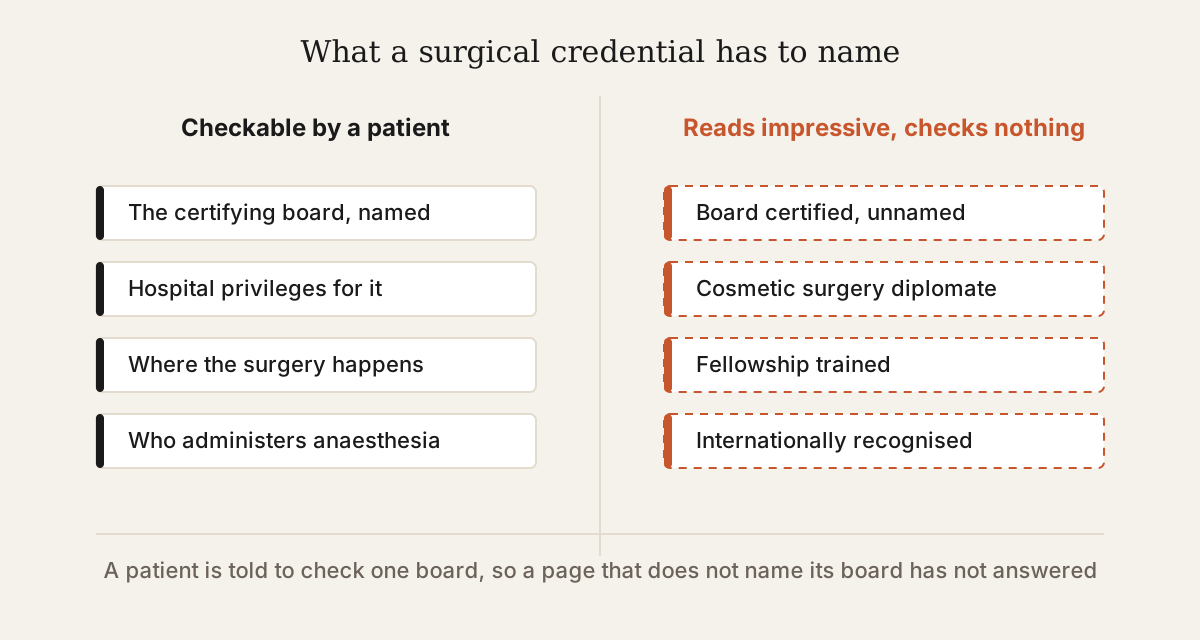
One board is named, and the rest are not
Patients researching a surgeon are consistently directed to verify certification against one specific board, and the guidance is specific enough that a practice which does not name its board has effectively not answered. Other credentials exist and some are meaningful, but they do not satisfy the check the patient was told to run.
The practical consequence is that a page should name the board, name the surgeon it applies to, and make the claim checkable rather than decorative. A badge is not an answer, because a badge cannot be quoted back and cannot be verified from the page.
Who operates is often not who the website shows
Practices frequently present a team, a founder and a set of before and after galleries without stating who performs a given procedure. In a category where the outcome is permanent and the recovery is managed over months, that is the single most consequential unstated fact on most sites.
This is the same structural question we ask of a marketing agency, where the person in the pitch is often not the person on the account. In surgery the gap between who is shown and who operates is not a service quality issue. It is the thing the patient is actually buying.
The record has to outlast the result
Surgical outcomes are assessed over years, which means the published record has to survive longer than the marketing campaign that produced it. Before and after galleries, revision policies and follow up commitments are read by patients as evidence about the future rather than the past.
We take the same view of our own measurement. We publish a reading of our position including the unflattering parts, because a record assembled only from favourable moments tells a reader nothing about what happens when things do not go well. A revision policy stated plainly does more for a surgical practice than another gallery.
What we would publish instead
We would name the certifying board and the surgeon it belongs to, state where the surgery is performed and whether the facility is accredited, name who administers anaesthesia, and publish the revision policy and what follow up is included. Every one of those is a fact the practice already knows and rarely writes down.
We would also state who is not a candidate. In an elective category it is the clearest evidence available that assessment is clinical rather than commercial.
Where to go from here
Choosing who does this work is a separate question from what the work is, and it is the same question in every trade, so we answer it once: how to take a reference call, what a scope of work has to name, and who owns the content once it is written. The guides hold the rest.
If you want to see the deliverable instead of read about it, the published maps are complete programmes for five trades, and our method is how they get built.
Plastic surgery sits beside two categories here that carry the same constraints. The advertising rules run like a med spa’s, publishing an outcome faces the problem set out in what a practice can publish as a result, and the specialist-title question is the one in dental specialist status and titles.
Frequently asked questions
Why does naming the board matter so much?
Because patients are directed to check one board specifically. An unnamed claim does not satisfy that check, and an assistant asked about certification has nothing verifiable to quote.
What should a practice say about who operates?
Which surgeon performs the procedure, and whether anyone else is involved. A team page does not answer it, and it is the most consequential fact a surgical site can state.
Why publish a revision policy?
Because it is what a careful patient wants to know and almost nobody publishes. Stating it plainly is both reassuring and quotable, and avoiding it reads as an absence rather than an oversight.
Does publishing who is not a candidate reduce enquiries?
It reduces some and improves the rest. In elective surgery it is the strongest available signal that assessment is clinical.
How is this different from ordinary plastic surgery SEO?
Ordinary plastic surgery SEO targets procedure and location keywords. This starts from the verification a patient has been told to perform, which is where most sites are silent.
Get Found by AI Search
The plastic surgery practices that win their markets in the next few years will be the ones the AI answer names when a patient asks who is board certified and in what, not the ones relying on a word that several boards can claim. Naming the certifying board is what makes a practice quotable. See how we would get your practice found, cited and recommended by AI search. Book a strategy call and we will show you where you stand today and what it would take to be the answer.