What a Scope of Work Has to Name
A scope of work is enforceable when it names four things: how many, how big, reviewed by whom, and by when. Those four let you check that the work meant to get your business found by a customer is actually happening. A scope missing any one of them cannot be checked at the end of a month, which means there is no version of that month in which the agency has failed to deliver.
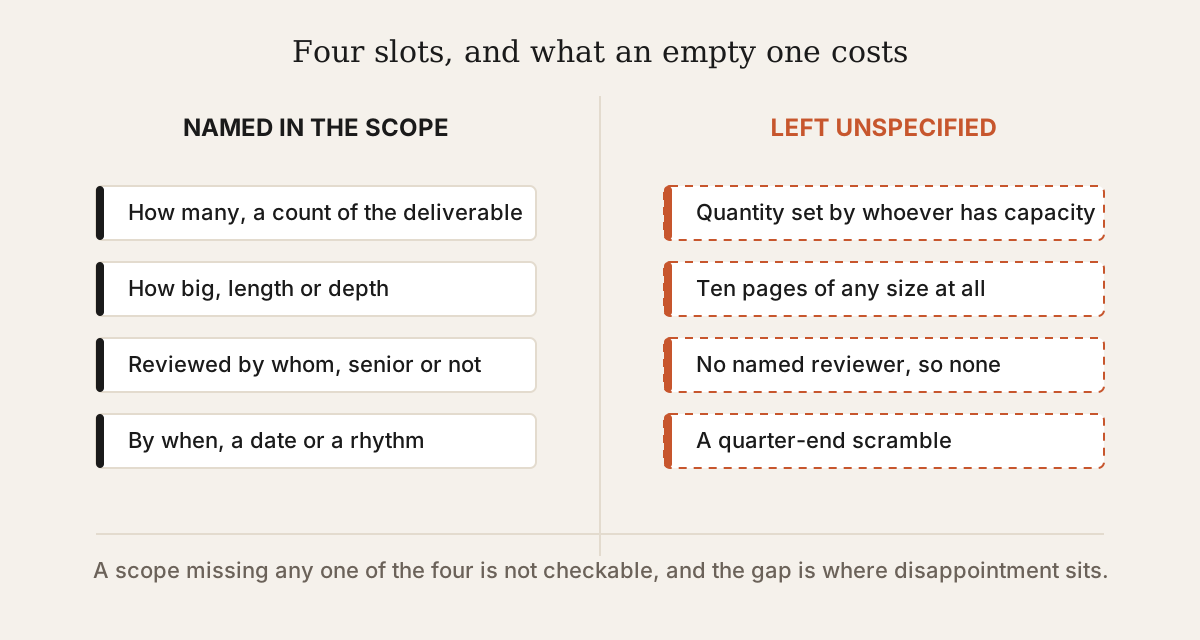
The four things, and what each one prevents
How many. A count of the deliverable: pages, articles, audits, sessions. Without a number the quantity is decided monthly by whoever has capacity.
How big. Length, depth, or the equivalent for non-writing work. Ten pages is not a specification until the pages have a size, since ten short pages and ten researched ones are different orders of work.
Reviewed by whom. Whether output passes a senior person before it reaches you. This is the difference most visible in the finished work and least visible in the proposal.
By when. A date or a rhythm. Continuous work without a rhythm accumulates into a quarter-end scramble, which is the shape most disappointing engagements take.
The phrases that make a scope unenforceable
Certain formulations appear across proposals because they describe activity without committing to an amount of it. They are not dishonest and they are not specifications.
Ongoing optimisation. Describes an attitude. Ask what specifically is changed, how often, and how you would know it happened.
Content strategy. A strategy is a document produced once or a decision made repeatedly, and those cost very different amounts. Ask which, and ask to see the artefact.
Technical improvements as needed. As needed by whom, judged how. The clause transfers the definition of the work to the party doing it.
Regular reporting. Regular is not a frequency. Monthly, on the fifth, is a frequency.
Keyword research and implementation. Two activities joined by a conjunction, where the first is bounded and the second is not.
The test for all five is the same: could a reasonable person, at the end of a month, point to something and say that was not done. If not, the line is decoration.
Rewriting a proposal into countable units
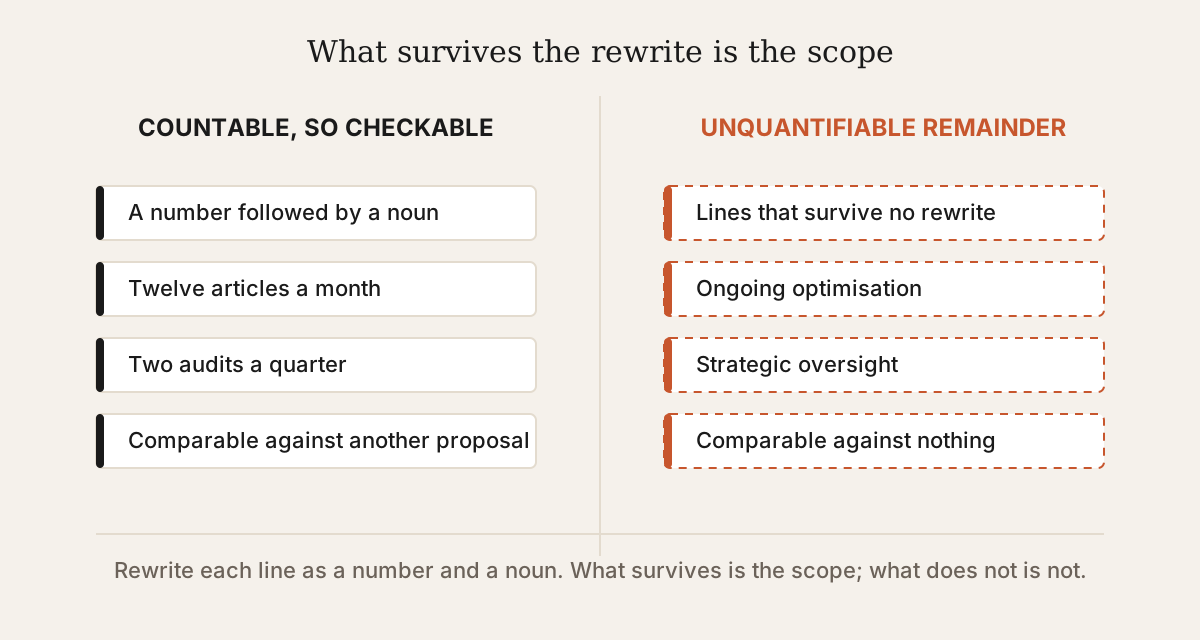
Take any proposal and rewrite each line as a number followed by a noun. Lines that survive the rewrite are the scope. Lines that cannot be rewritten are the part you are paying for without being able to check.
Then compare the surviving list against the other proposals you are holding. Two proposals reduced to countable units can be compared directly, including on price. Two that resist the exercise are not comparable at any price, which is usually the point of writing them that way.
Month one against month six
Ask for the scope split into the first month and a steady month, because they are almost never the same and the difference is where expectations break.
The first month is usually setup: research, technical review, planning. Very little of it is visible, and a buyer expecting output in month one against a proposal that quietly allocated it to onboarding will conclude the agency is slow when the agency is on plan.
A proposal that describes one undifferentiated monthly scope has either not planned the onboarding or is not telling you about it.
What belongs outside the scope
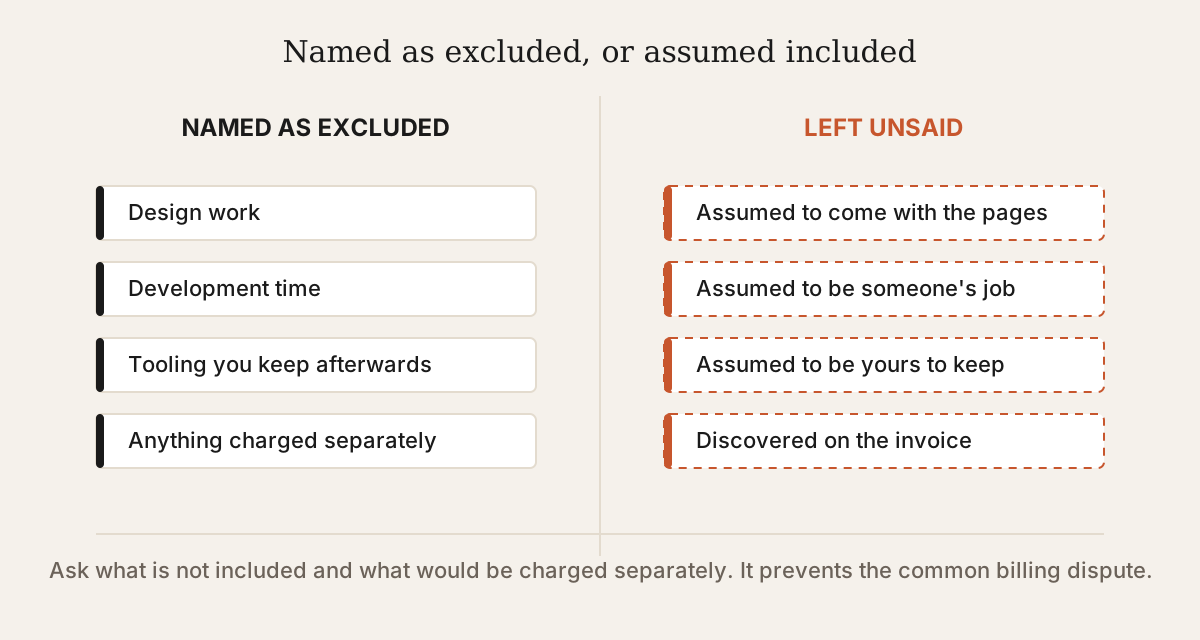
A good scope also names what is excluded, and the exclusions are more informative than the inclusions. Design work, development time, ad spend, tooling costs and translation are the common ones, and each is a line that can arrive later as an unexpected invoice.
Ask directly what is not included and what would be charged separately. The answer takes a minute and prevents the most common billing dispute in the category.
Our scope
We name the number of pieces, that every piece is reviewed by the person who sold the work, and the publication rhythm. The number is eight, twelve or twenty pieces a month depending on the tier, published two, three or five times a week. We separate month one from a steady month in the proposal, and we list what is excluded, which for us is design, development and any tooling you keep afterwards.
That specification exists because it makes us checkable, and a buyer should ask for the same from anyone else in the running rather than taking it as a distinguishing feature. A scope you can count is what makes the rest of the diligence possible, which is why the order these checks become answerable puts it first: nothing later can be compared until this one is.
SEO Is My Love Language was founded by Jose Villalobos, who has spent his career on a single discipline: getting businesses found, cited, and recommended by AI search. He has been a member of Koray Tuğberk Gübür’s Holistic SEO Community since 2022, is a graduate of the Topical Authority Course, holds the Google AI Professional Certificate, and is a member of Kyle Roof’s IMG. That combination, topical authority strategy paired with rigorous on-page execution, is what our team brings to every business we work with.
Frequently asked questions
What is included in SEO services?
That varies so widely that the question can only be answered by the specific scope in front of you. A usable scope names how many deliverables, how big each is, who reviews them before they reach you, and by when. Anything missing one of those four cannot be checked at month end.
How do I know if a scope of work is vague?
Apply one test: could a reasonable person point to something at the end of a month and say that was not done. Phrases like ongoing optimisation, technical improvements as needed and regular reporting all fail it, because none commits to an amount of anything.
How should I compare two agency proposals?
Rewrite every line of each as a number followed by a noun. The lines that survive are the real scope, and two proposals reduced this way can be compared directly including on price. Lines that cannot be rewritten are what you are paying for without being able to check.
Should the first month look different from later months?
Yes, and a proposal that describes one undifferentiated monthly scope has either not planned onboarding or is not disclosing it. The first month is usually research, technical review and planning, very little of which is visible as output.
What should a scope exclude?
It should say so explicitly, and the exclusions are often more informative than the inclusions. Design work, development time, advertising spend, tooling costs and translation are the common ones, and each can arrive later as an unexpected invoice if not settled at the start.
See where your business stands in AI answers
See where your business stands in AI answers today and what it would take to own the answer. Book a strategy call and we will show you.