What SEO and AI Search Visibility Actually Cost
The monthly figure is decided by four things: how much is produced, who produces it, how contested your market is, and whether measurement is included or sold separately. Each one changes how much of the fee becomes work on getting your business named for the searches that bring you jobs. Two quotes for the same nominal service can differ several times over on those four alone, which is why a headline rate compared against another headline rate tells you almost nothing.
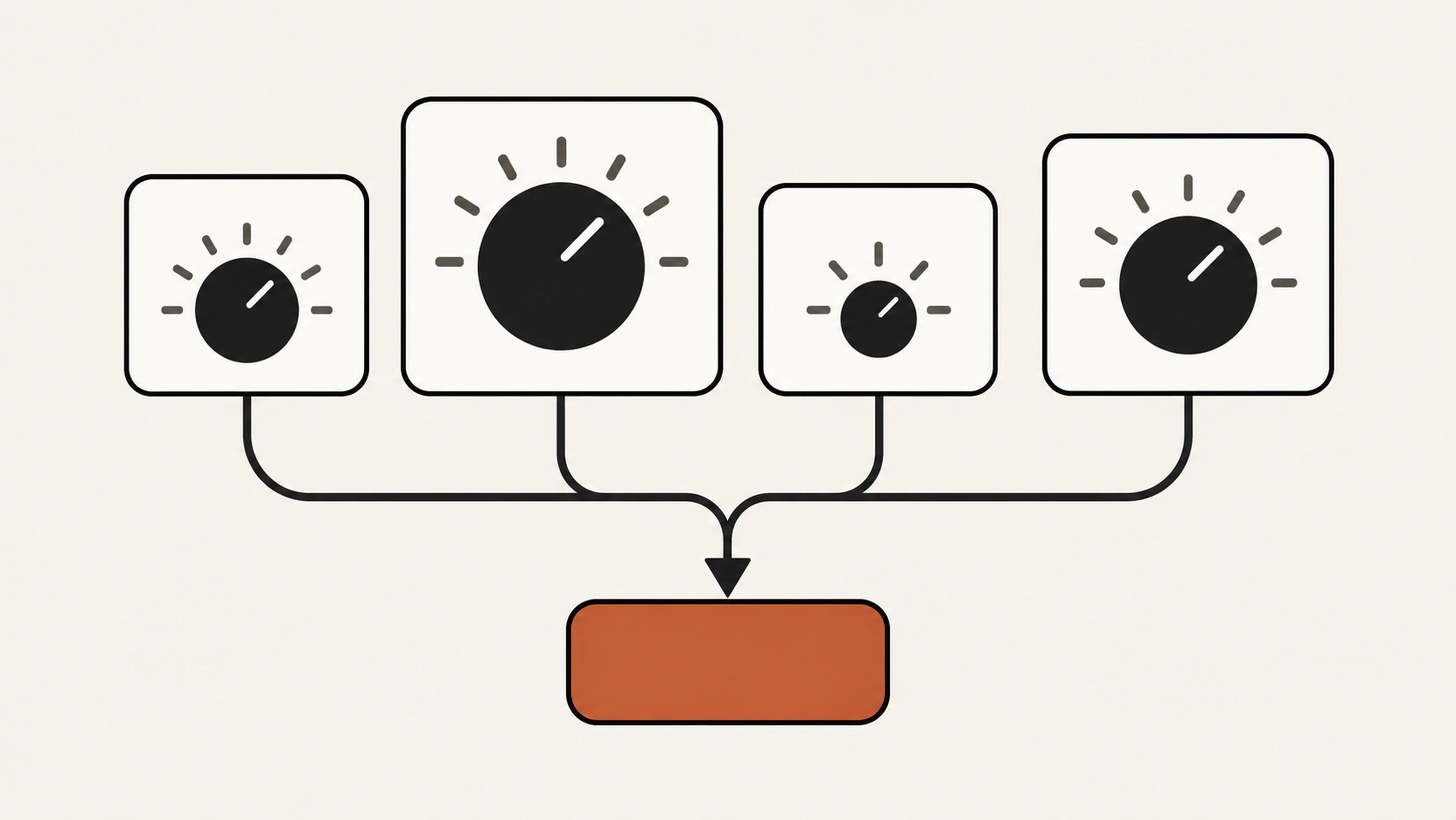
What the number is actually buying
The largest component of any content-led retainer is skilled hours, so the first question is how many hours and at what level of person. A retainer is a labour budget with a deliverable wrapped around it, and the arithmetic is unforgiving: at a realistic loaded cost per hour for an experienced practitioner, a low monthly figure buys very few hours no matter how the proposal is worded.
That arithmetic is the reason two proposals can name the same deliverable at very different prices without either being dishonest. One is describing four hours and the other forty.
The four drivers, in the order they move the number
Volume of production. How many pages, how long, how researched. This is the single largest lever and the easiest to compare, provided the scope names quantities.
Who does the work. Work done by the person who sold it costs more per hour than work routed to a junior or a subcontractor, and the output usually differs accordingly. This is why the question of who does the work belongs alongside the price question rather than after it.
How contested the market is. A market with entrenched incumbents needs more production and more evidence to move, so the same programme costs more to deliver a result in some categories than others.
Whether measurement is included. A programme that measures an outcome carries the cost of building and running the measurement. One that reports activity does not, because the reporting is a by-product of the work rather than a separate exercise.
Why the same words carry different prices
Proposals converge on the same vocabulary because buyers compare on vocabulary. Content strategy, technical optimisation and monthly reporting appear on almost every proposal, and none of the three specifies an amount of anything.
The comparison that works is to convert both proposals into countable units before looking at either price: how many pieces, of what length, reviewed by whom, and what specifically is delivered in month one against month six. Two proposals that survive that conversion can be compared. Two that do not are not comparable at any price.
Total commitment, not monthly rate
The number that matters is the monthly rate multiplied by the minimum term, plus any setup or onboarding fee, minus nothing. A lower monthly figure attached to a twelve month minimum can exceed a higher one on a rolling basis before the first year is out.
Ask for that total as a single figure. An agency confident in its pricing will produce it, and the request itself is informative, because the total is the number the buyer is actually agreeing to and the monthly rate is the number chosen for the brochure.
What a price cannot tell you
A price is not a quality signal in either direction. A high number can reflect overhead, a sales team, or an office, none of which appear in your content. A low number can reflect a small operation with low overhead and a practitioner doing the work directly, which is sometimes exactly what a small business needs.
What the price does tell you reliably is how many hours are available to spend on you. That is the honest reading of a quote, and it is why the arithmetic above is worth doing before the conversation rather than after.
What we charge, and why we publish it
Our programmes run from $2,000 to $5,750 a month, on a monthly retainer, and the range is set by production volume and market contestedness rather than by business size. We publish the range because a buyer cannot run the comparison above against an agency that will not name a number, and asking others to be specific while being vague ourselves would be incoherent.
We sell AI search visibility, so treat the argument here as coming from an interested party and check it against the arithmetic rather than against our authority. Price is the fourth question rather than the first, and deliberately so: the three checks that come before it establish what is being bought, and a number has no meaning until they have.
SEO Is My Love Language was founded by Jose Villalobos, who has spent his career on a single discipline: getting businesses found, cited, and recommended by AI search. He has been a member of Koray Tuğberk Gübür’s Holistic SEO Community since 2022, is a graduate of the Topical Authority Course, holds the Google AI Professional Certificate, and is a member of Kyle Roof’s IMG. That combination, topical authority strategy paired with rigorous on-page execution, is what our team brings to every business we work with.
The four drivers move differently by category, and the pages where we have published the trade-off are the ones to read the number against: buying flooring leads against earning them and what restoration marketing costs against what it returns.
Frequently asked questions
How much does SEO cost per month?
The figure is set by how much is produced, who produces it, how contested your market is, and whether measurement is included. Those four move the number several times over, so two monthly rates sitting side by side tell you nothing until both scopes have been converted into countable deliverables.
Why do agencies quote such different prices for the same service?
Because the vocabulary is identical and the quantities are not. Content strategy and monthly reporting appear on almost every proposal without specifying an amount of anything, so one proposal can describe four hours of work and another forty using the same words.
Is a more expensive agency better?
Not reliably. A high price can reflect overhead, sales staff or offices, none of which appear in your content, and a low price can reflect a small operation with a practitioner doing the work directly. What price does indicate is how many skilled hours are available to spend on your account.
What should I compare instead of the monthly rate?
Total commitment: the monthly rate multiplied by the minimum term, plus any setup fee. Ask for that as a single figure. A lower monthly rate on a twelve month minimum can cost more than a higher rate on a rolling arrangement before the first year ends.
What does SIMLL charge?
Our programmes run from $2,000 to $5,750 a month on a monthly retainer, with the range set by production volume and how contested the market is rather than by the size of the business. We publish it because asking buyers to demand specific numbers while declining to give one would be incoherent.
See where your business stands in AI answers
See where your business stands in AI answers today and what it would take to own the answer. Book a strategy call and we will show you.
What it takes to pay for itself
AI search visibility compounds, and what it builds stays on your site. Put your own numbers in and see what the programme has to return before it has paid for itself.
One customer is worth $3,200 in gross profit to you.
That is 0.9 a month, against $54,000 invested over 18 months.
The arithmetic is (monthly spend × months) ÷ (customer value × margin × purchases). Where a customer buys once, purchases is one. Where they come back, we use what they are worth across the whole relationship, because that is what you are acquiring.
This is an estimate from figures you supplied, not a forecast. It shows the point at which the programme has paid for itself, not what results to expect.