Writing About Cosmetic Work Without Overselling
Cosmetic treatment is chosen rather than needed, which changes the page entirely. It also shifts what your practice has to publish before it is named when someone searches for elective work. A patient with a broken tooth is solving a problem; a patient considering veneers is deciding whether to spend discretionary money on something nobody is requiring them to do. Assistants asked what to look for name experience with specific procedures rather than general skill, which is the shape of an elective decision.
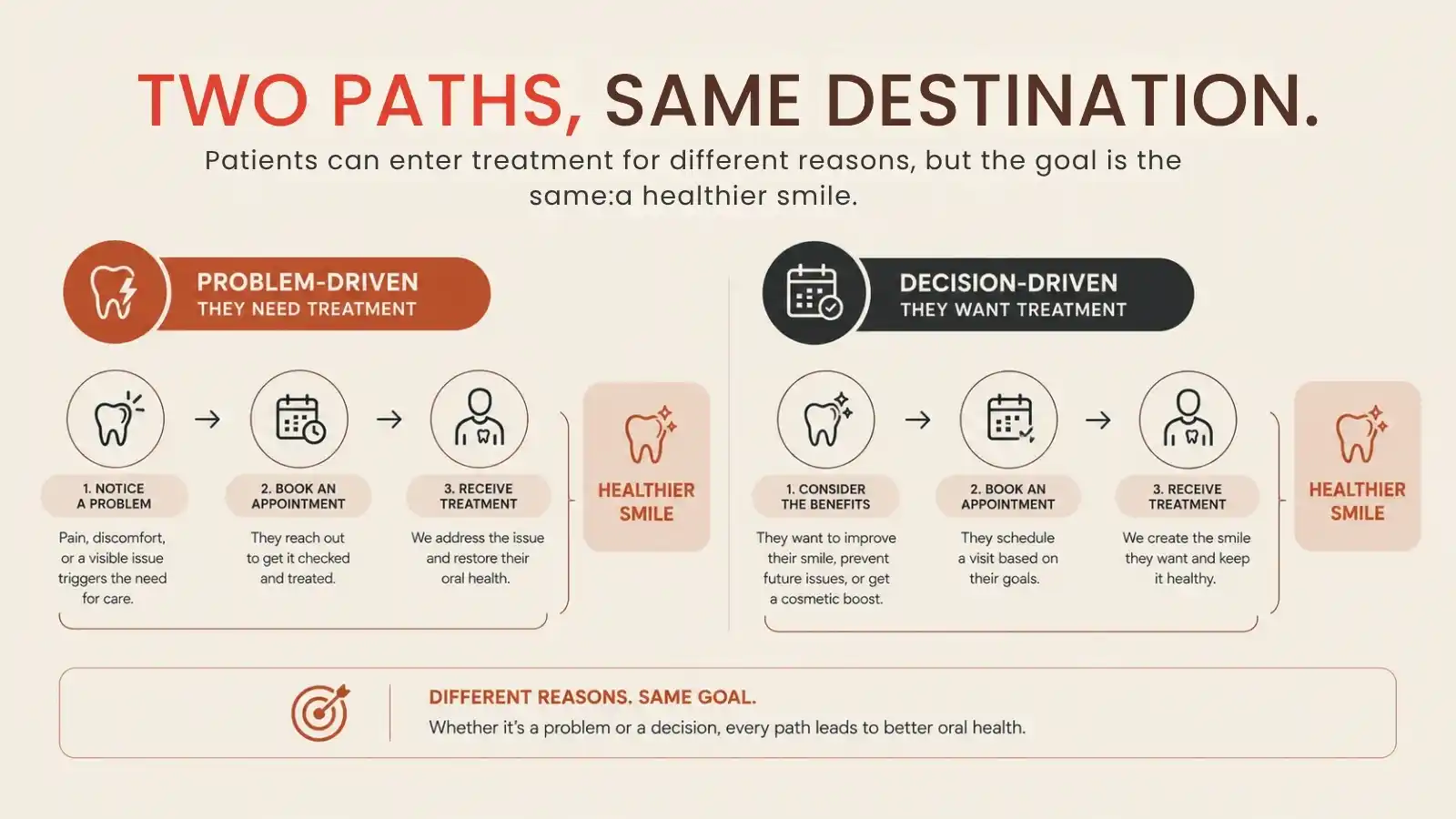
What the elective reader needs
Three things a routine care page never has to supply: what it will actually look like, what it costs in total rather than per unit, and what happens if the result is not what they hoped. The third is the one almost no practice addresses and it is the one holding the decision.
Saying what the review process is, whether adjustments are included, and what the practice does when a patient is unhappy with an aesthetic outcome is uncomfortable to write and it is the difference between a page that informs and one that sells.
Evidence in elective work is visual and constrained
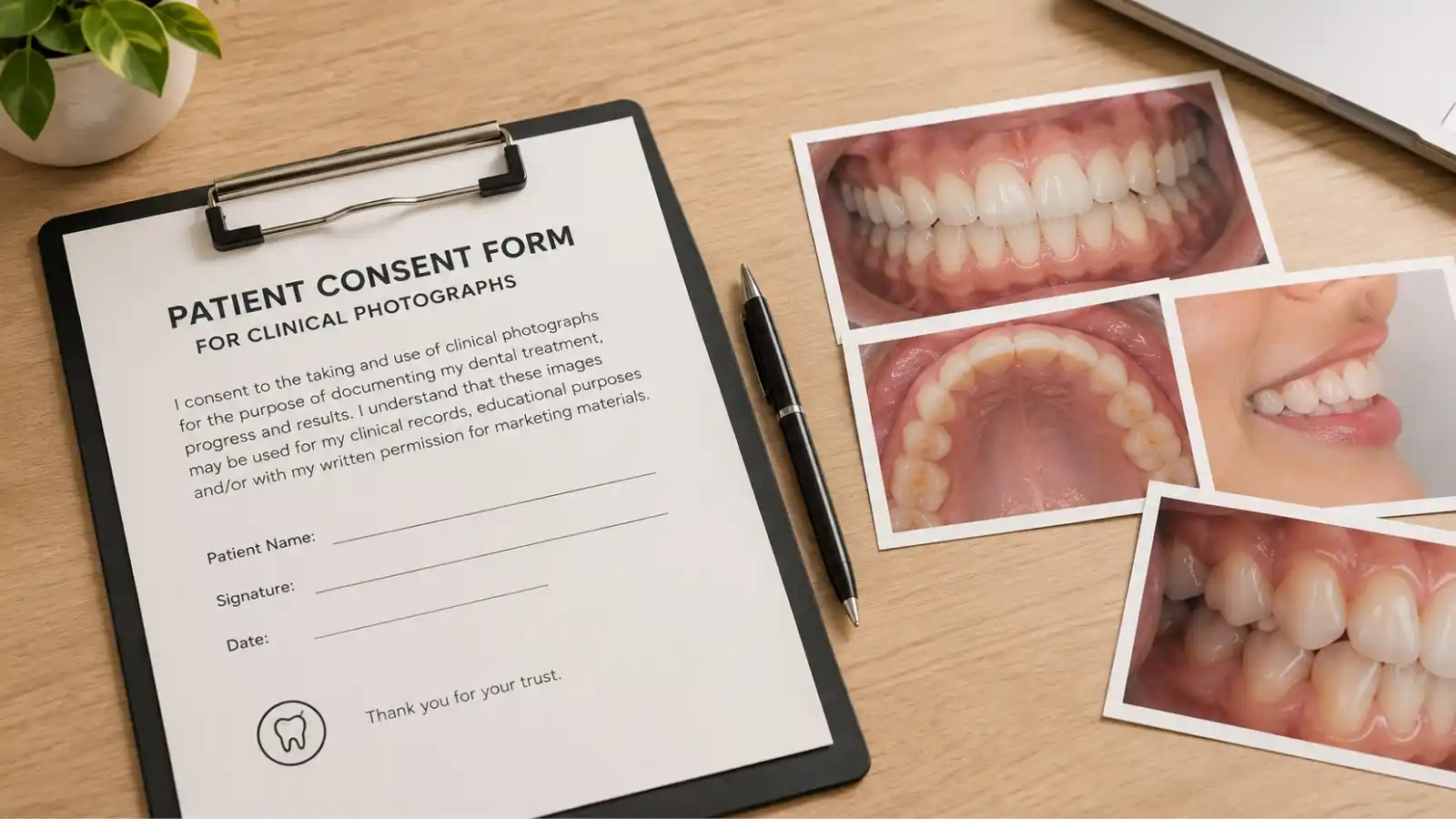
Before and after images are the natural evidence and they carry rules: consent, no misleading retouching, and in several jurisdictions restrictions on how they may be presented. A practice using stock imagery for cosmetic results is doing something a patient can detect with a reverse image search.
Use the practice’s own cases or use none. A page with three genuine results and a note that these are the practice’s own patients is stronger than a gallery of purchased images, and the honesty is the part that persuades in a category where patients are primed for exaggeration.
Longevity is the omitted fact
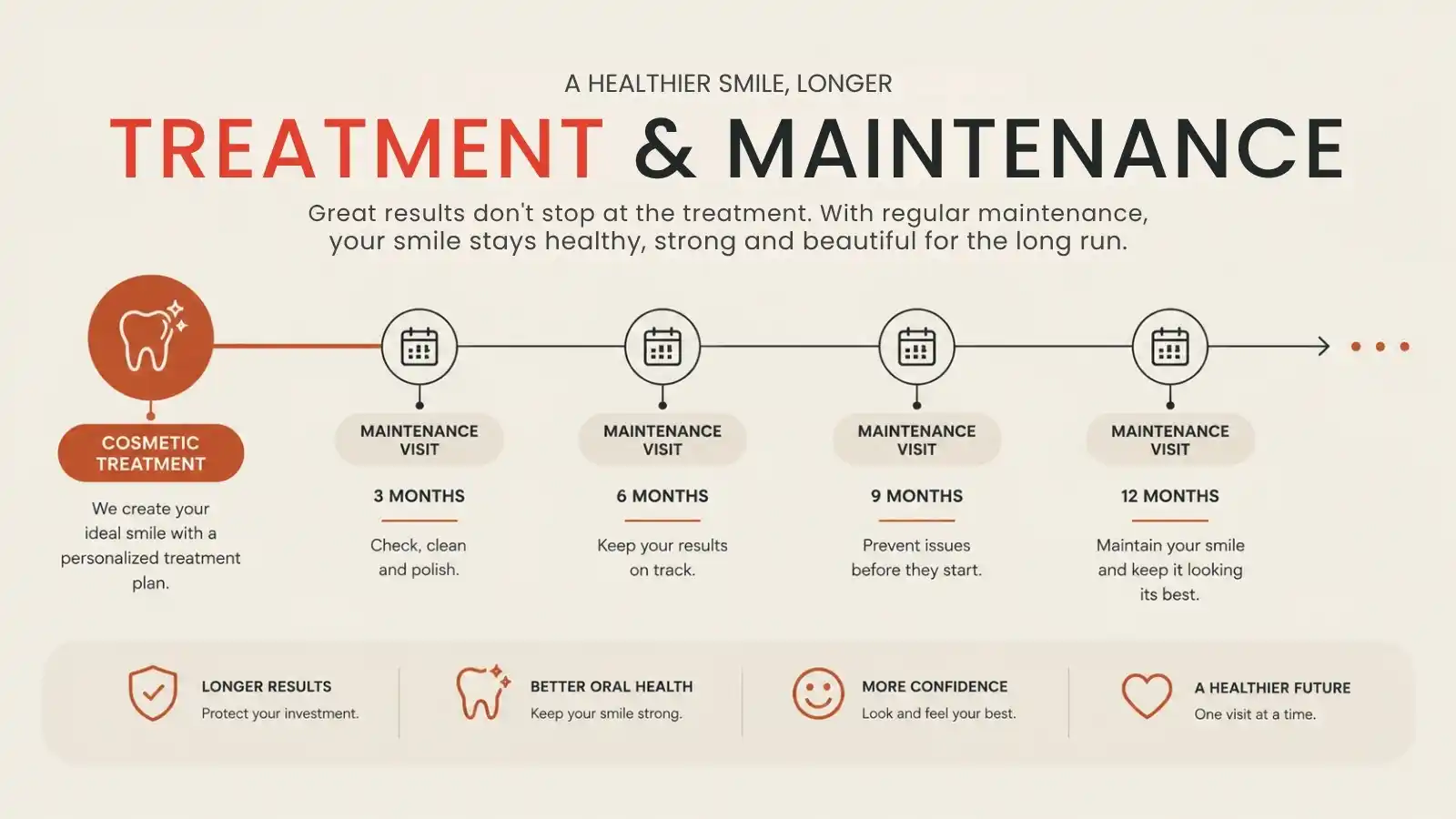
Cosmetic work has a lifespan. Veneers are replaced, whitening fades, bonding stains, and a patient who was not told is a patient who feels misled years later at exactly the point they are asked to pay again.
Publishing expected lifespan and what maintenance involves reduces conversions in the short term and is the correct thing to do. It also filters for patients who understand the commitment, which is the population a practice wants for elective work.
The line between describing and pressuring
Elective dentistry attracts pressure tactics because the decision is discretionary and can be accelerated. Limited time offers, free consultations that become sales meetings, and language implying the patient’s appearance is a problem to be fixed all work in the short term and all damage the practice that uses them.
Assistants list pressure tactics among the red flags to watch for. A page describing what a treatment does, what it costs and what it involves, with no urgency attached, is doing the whole job, because a patient choosing elective work is choosing a practitioner they intend to trust with their face.
SEO Is My Love Language was founded by Jose Villalobos, who has spent his career on a single discipline: getting businesses found, cited, and recommended by AI search. He has been a member of Koray Tuğberk Gübür’s Holistic SEO Community since 2022, is a graduate of the Topical Authority Course, holds the Google AI Professional Certificate, and is a member of Kyle Roof’s IMG. That combination, topical authority strategy paired with rigorous on-page execution, is what our team brings to every practice we work with.
Elective work is where the gap between what a page promises and what a patient expected does the most damage, and the same discipline runs through how dental practices get found, chosen and booked. Because nobody needs this treatment, the next thing an interested reader wants is what an elective treatment is actually priced at.
Frequently asked questions
How is a cosmetic dentistry page different from a routine care page?
The treatment is chosen rather than needed, so the reader is deciding whether to spend discretionary money on something nobody is requiring. They need what it will look like, what it costs in total, and what happens if the result is not what they hoped.
What do most cosmetic pages leave out?
What happens when a patient is unhappy with the aesthetic outcome. Saying what the review process is, whether adjustments are included, and how the practice handles it is uncomfortable to write and is the difference between informing and selling.
Can a practice use stock images for cosmetic results?
No. Patients can detect it with a reverse image search, and before and after images carry rules on consent, retouching and presentation. Three genuine results noted as the practice’s own patients are stronger than a gallery of purchased images.
Should a practice publish how long cosmetic work lasts?
Yes. Veneers are replaced, whitening fades and bonding stains, and a patient who was not told feels misled years later at the point they are asked to pay again. It reduces short term conversions and filters for patients who understand the commitment.
What pressure tactics should a cosmetic page avoid?
Limited time offers, consultations that become sales meetings, and language implying the patient’s appearance is a problem to be fixed. Assistants list pressure tactics among the red flags to watch for, and a patient choosing elective work is choosing a practitioner they intend to trust with their face.
See where your practice stands in AI answers
See where your practice stands in AI answers today and what it would take to own the answer. Book a strategy call and we will show you.