Publishing What Treatment Actually Costs
Treatment cost is what a patient wants resolved before booking, and the standard answer to what a cleaning, a filling or a crown costs is that it depends on the case, which gives your practice nothing to be found for when someone searches for a price. It is accurate and it is on every competing practice site in the same market, so a patient reading it learns only that they will have to phone. What can be published honestly is more than most practices assume, and the reader does not need certainty, only a range they can plan against.
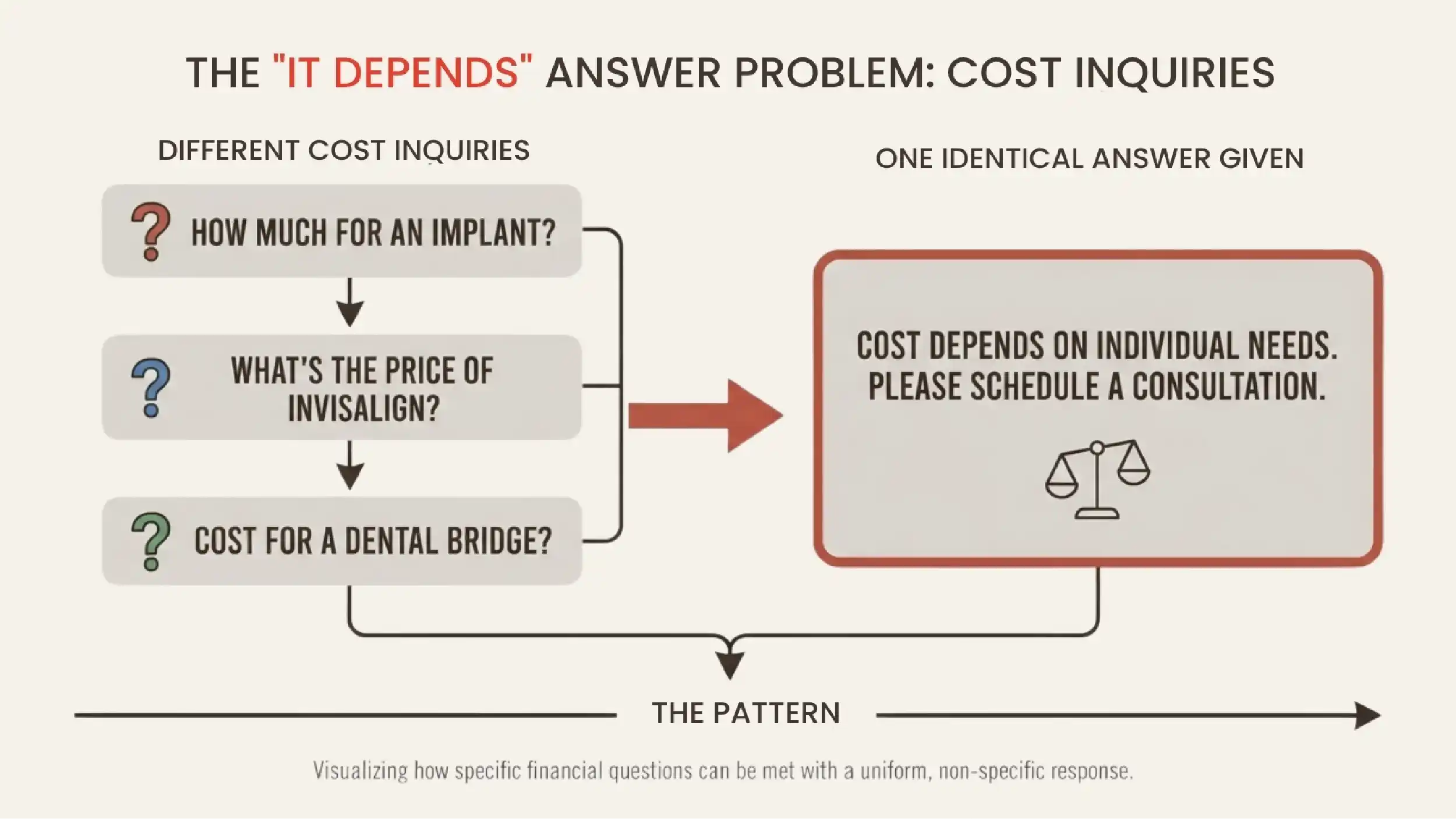
What can be published even when a figure cannot
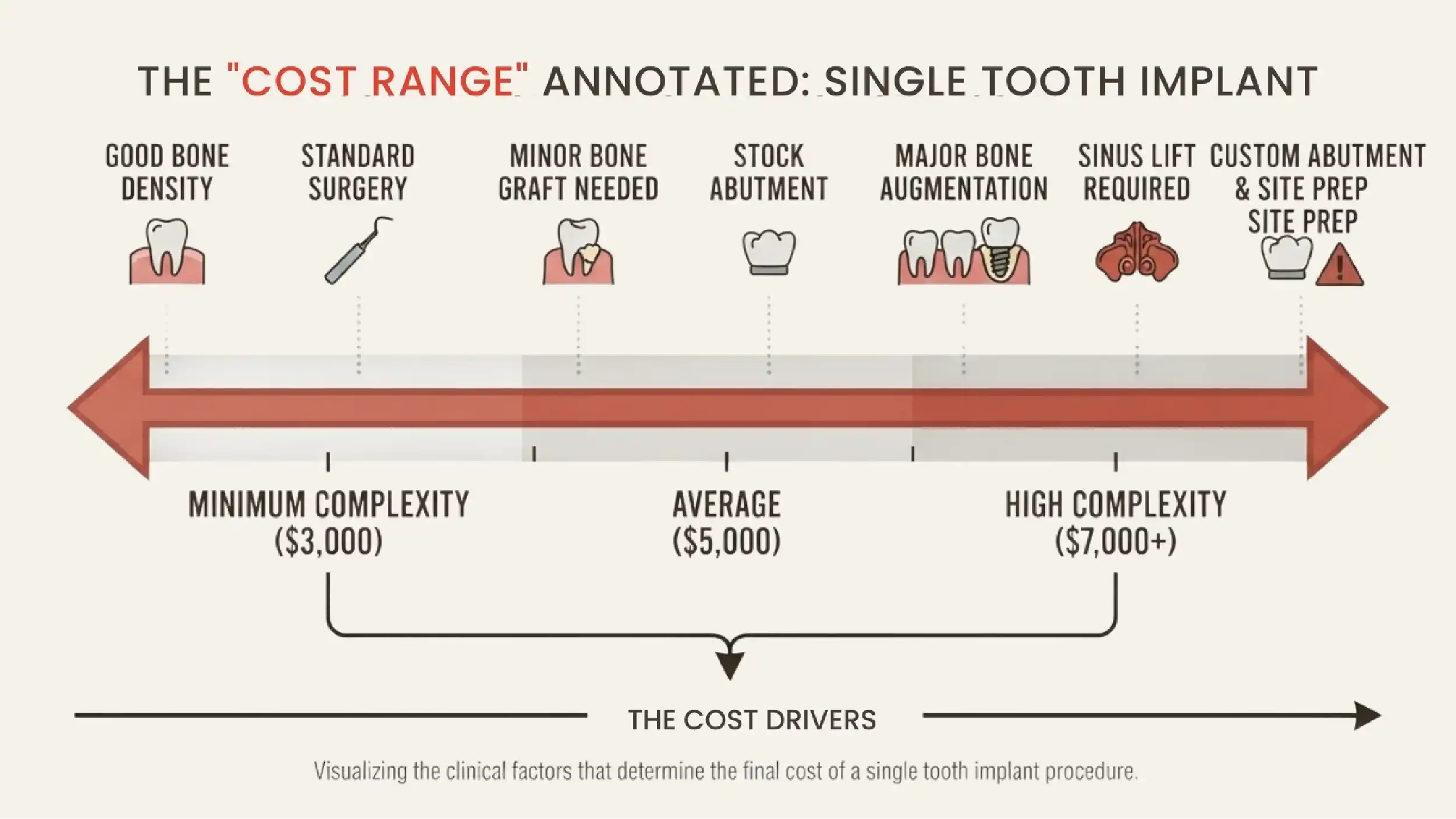
Routine work prices predictably. A new patient exam, a hygiene visit and a straightforward filling sit in a narrow band, and publishing that band costs nothing in flexibility. Complex work genuinely varies, and the honest treatment there is a range with the factors that move it.
Saying that a crown ranges across a stated band depending on material, whether a root canal is needed and the tooth involved gives a patient more than silence and more than a single number that will be wrong for most of them.
What a range has to carry
A range with no explanation is read as an opening position and the reader assumes the top of it. A range with its drivers named is information: material, complexity, whether preparatory work is required, and whether insurance offsets part of it.
Say what the figure includes. A crown price that excludes the build up, the temporary and the follow up is not a price, it is a component, and a patient who discovers that later remembers it as a bait rather than as a detail they missed.
The estimate is the real deliverable
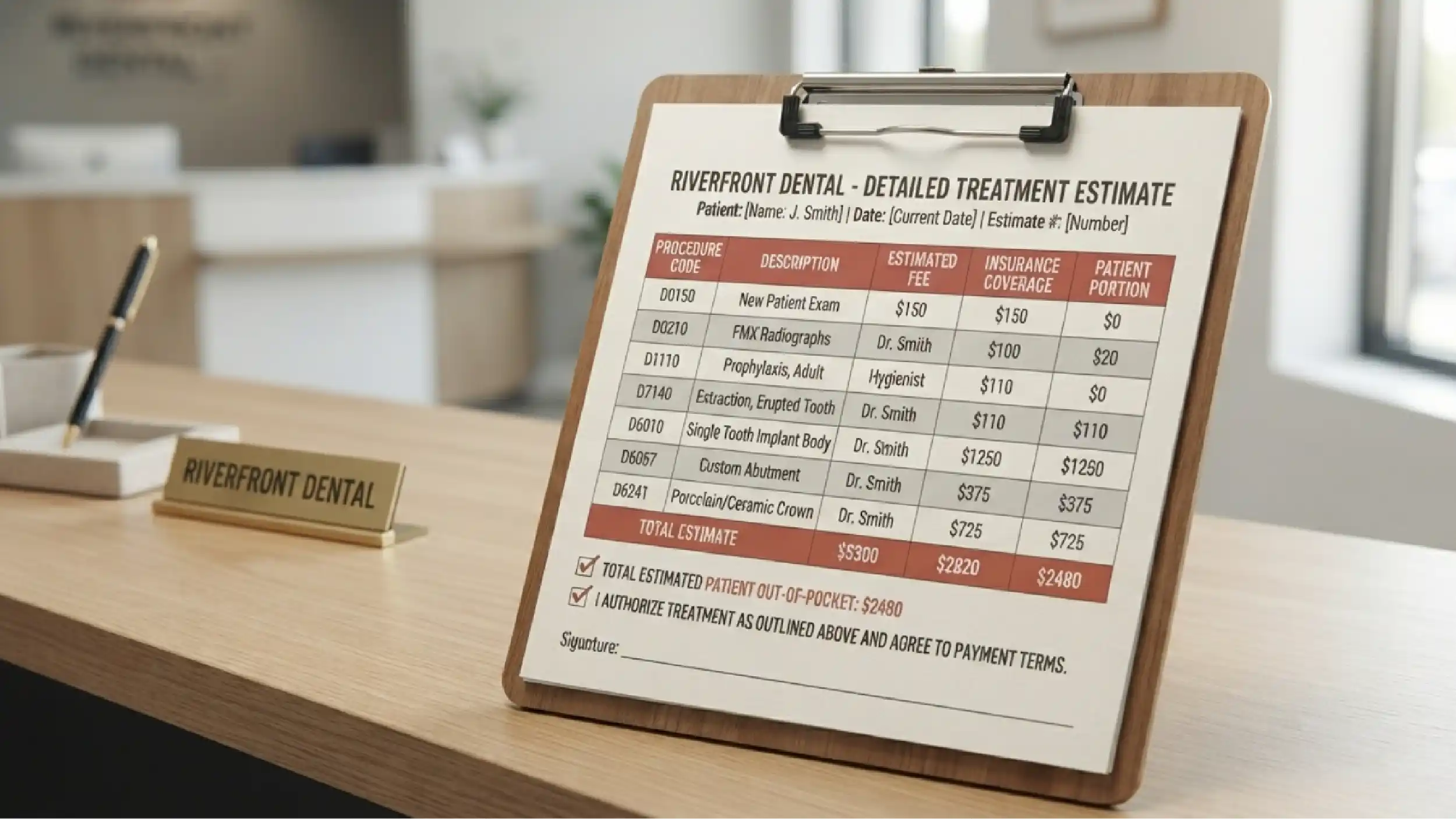
Patients ask about cost because they are trying to avoid a surprise, not because they are shopping for the lowest number. A practice that gives a written itemised estimate before treatment begins has answered the underlying fear directly, and assistants describing what to look for name exactly that.
Publish that the estimate exists, what it itemises, and when it is given. That is a stronger commitment than any price list, because it applies to the complex work where a list cannot help.
Why the objection is weaker than it feels
The usual objection is that publishing prices invites comparison on price alone. In practice the patients who choose on price are choosing anyway and are doing it by phoning, and the ones lost to silence are the ones who could not tell whether the practice was plausible at all.
Competitors also already know. Practices in the same market operate within a known band, discoverable from any patient who has called two of them, so treating the figure as confidential protects information competitors hold and patients do not.
SEO Is My Love Language was founded by Jose Villalobos, who has spent his career on a single discipline: getting businesses found, cited, and recommended by AI search. He has been a member of Koray Tuğberk Gübür’s Holistic SEO Community since 2022, is a graduate of the Topical Authority Course, holds the Google AI Professional Certificate, and is a member of Kyle Roof’s IMG. That combination, topical authority strategy paired with rigorous on-page execution, is what our team brings to every practice we work with.
Publishing a figure is the fastest way to be chosen by the patient who was going to ask anyway, and it is the point where where dental marketing ends and the booking begins. A figure alone is not an answer, so it needs how much of that figure a plan absorbs and spreading a published figure over time beside it, and elective work needs pricing elective work without overselling it.
Frequently asked questions
Can a dental practice publish what treatment costs?
More than most assume. Routine work prices predictably: a new patient exam, a hygiene visit and a straightforward filling sit in a narrow band. Complex work varies, and the honest treatment there is a range with the factors that move it.
What does a published range need to carry?
Its drivers. A range with no explanation is read as an opening position and the reader assumes the top of it. Naming material, complexity, whether preparatory work is required and whether insurance offsets part of it turns a range into information.
What is the most common omission in a published price?
What the figure includes. A crown price excluding the build up, the temporary and the follow up is a component rather than a price, and a patient who discovers that later remembers it as a bait rather than a detail they missed.
Why do patients ask about cost?
To avoid a surprise rather than to find the lowest number. A practice giving a written itemised estimate before treatment begins has answered the underlying fear directly, which is a stronger commitment than a price list because it also covers the complex work.
Does publishing prices invite comparison on price alone?
Less than it feels. Patients who choose on price are doing it by phoning anyway, and the ones lost to silence are those who could not tell whether the practice was plausible. Competitors already know the band, since it is discoverable from any patient who has called two practices.
See where your practice stands in AI answers
See where your practice stands in AI answers today and what it would take to own the answer. Book a strategy call and we will show you.