Showing Training Without Listing Every Course
Continuing education appears in assistant answers about choosing a dentist as a thing to check, phrased as whether the clinician keeps up with current techniques. Tied to the treatments it actually changed, it becomes evidence that can get your practice named when someone searches for one of those treatments. It is also the credential most easily padded, because attendance certificates accumulate and a list of them looks like evidence while telling a patient nothing about what changed in the surgery.
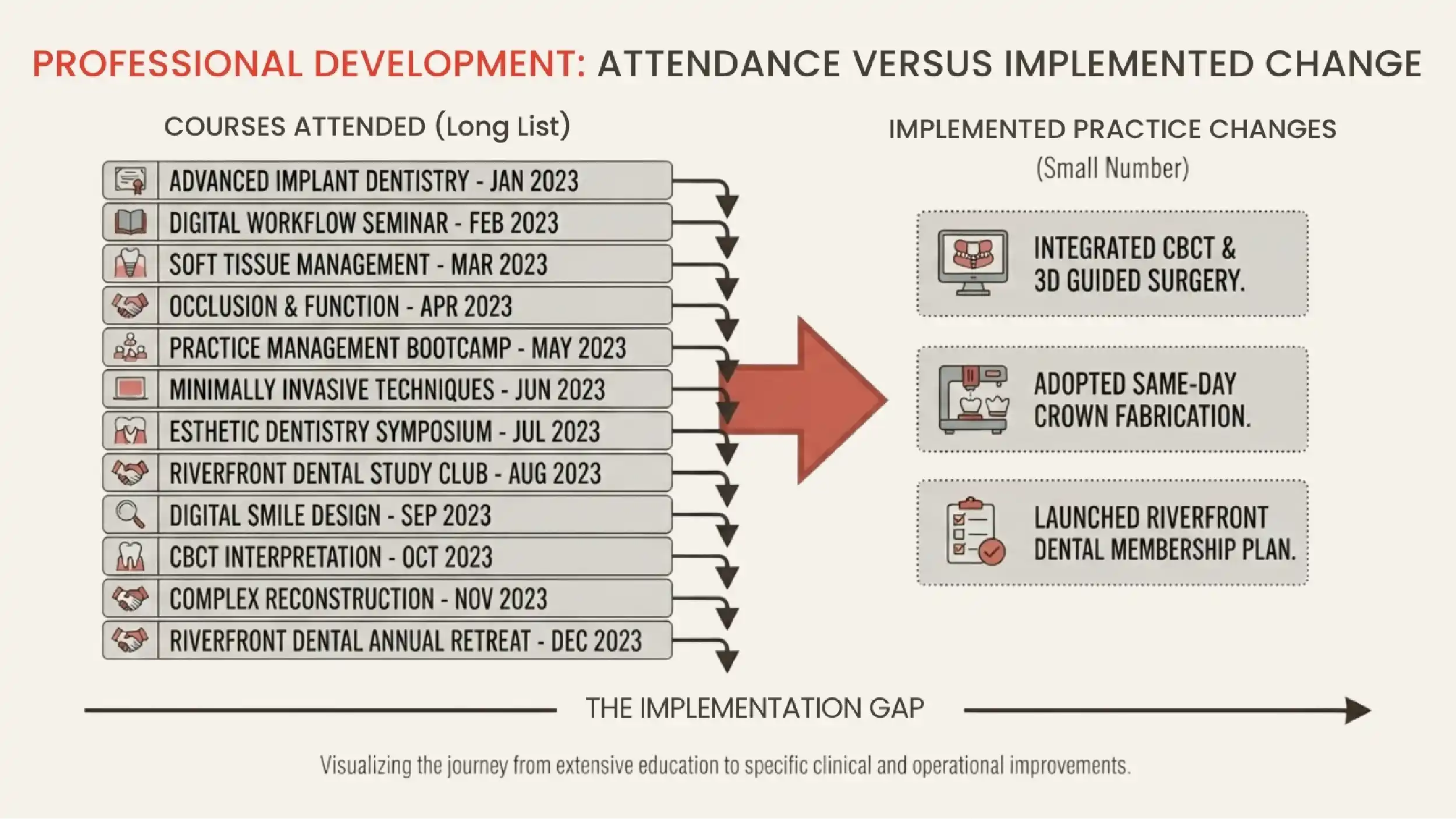
Why the list format fails
Twenty course titles with dates is a record of attendance. A patient reading it cannot tell which were a weekend and which were a year, which changed how the practice works, or which are relevant to the treatment they need.
The useful version is shorter and answers a different question: what the clinician trained in, and what the practice does now that it did not do before. One paragraph naming two or three genuine developments is worth more than a page of certificates.
Tie training to treatment
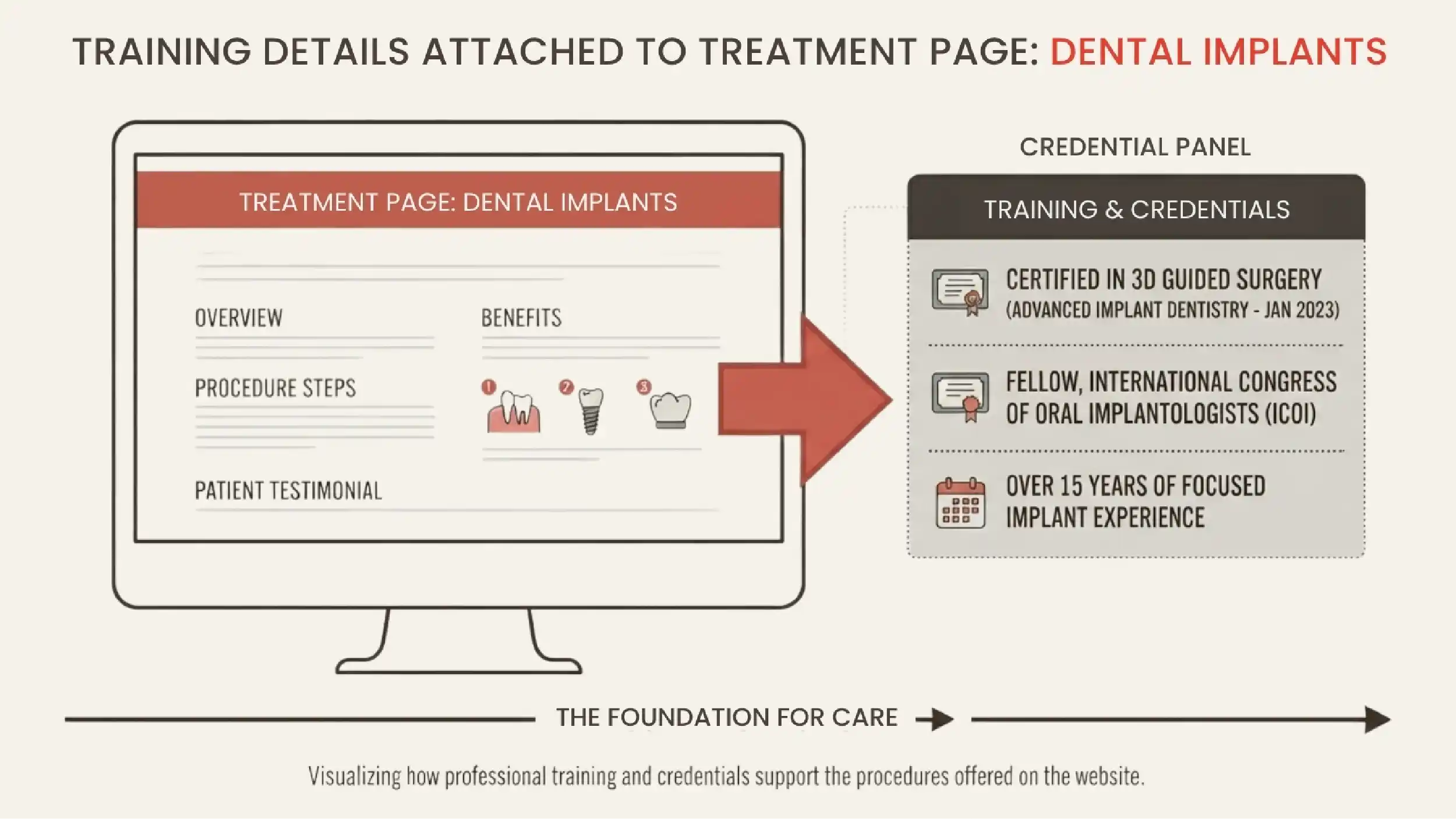
A patient looking at implants wants to know about implant training specifically, not about the practice’s overall commitment to learning. Training belongs on the treatment page it supports rather than collected on a credentials page nobody visits.
That placement also disciplines the claim. Training that cannot be attached to a treatment the practice offers is training that did not change anything, and noticing that is useful internally as well as externally.
What distinguishes serious training
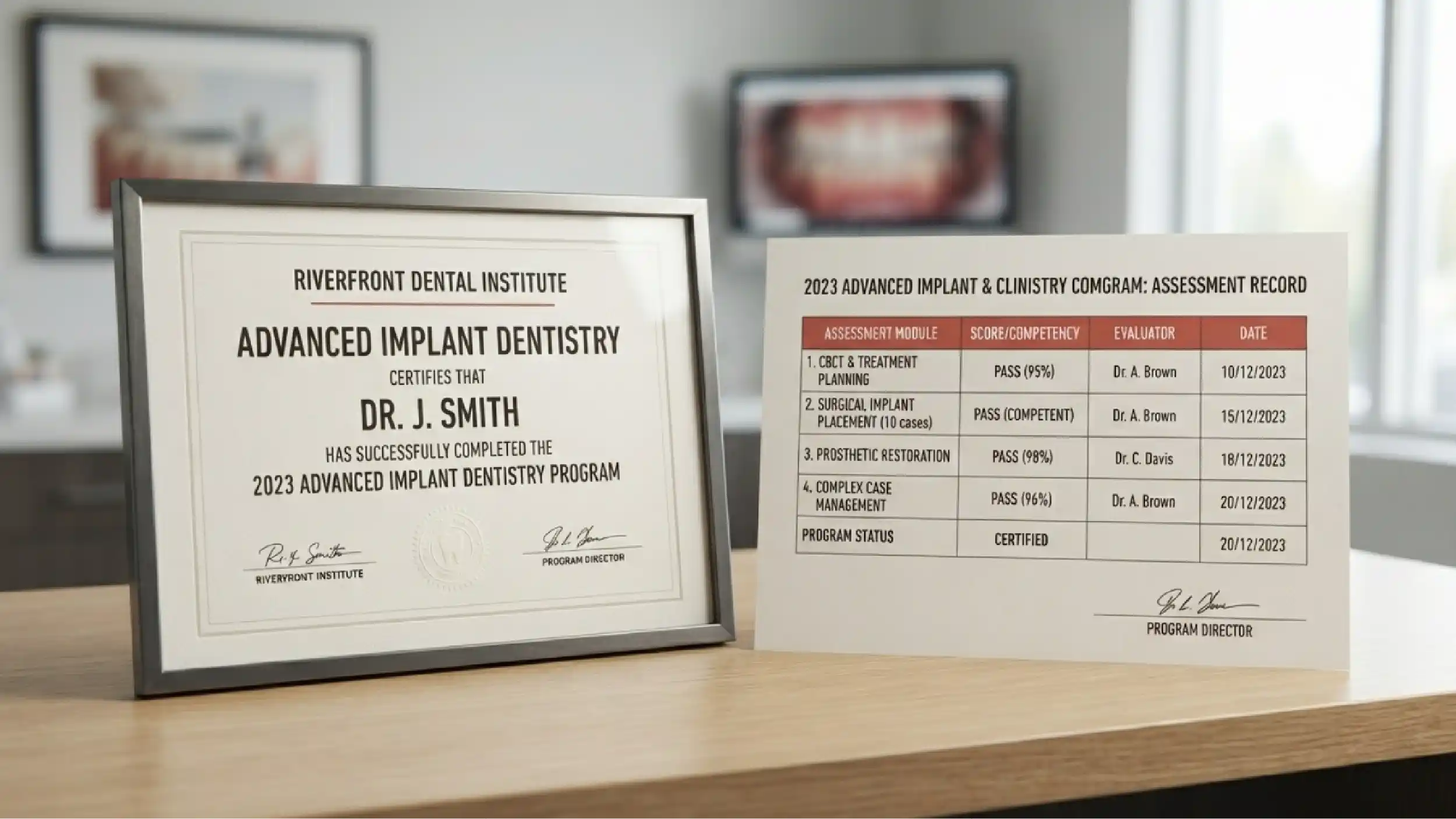
Duration, assessment and who awarded it. A programme lasting a year with an examination is a different object from a two day course, and both are legitimately continuing education. Saying which is which lets a patient weigh it and protects the substantial one.
Naming the institution is worth doing where it is recognisable and worth omitting where it is a commercial provider whose name means nothing. Listing a provider that is unknown to the reader adds length without adding weight.
The mandatory minimum is not a selling point
Most jurisdictions require a minimum number of hours to maintain registration, and meeting it is a condition of practising rather than a distinction. A practice presenting compliance as commitment is claiming credit for the floor.
Say what exceeds it, or say nothing. A clinician who has pursued a specific interest beyond the requirement has something to report, and a clinician who has not is better served by a page that spends its space on something else.
SEO Is My Love Language was founded by Jose Villalobos, who has spent his career on a single discipline: getting businesses found, cited, and recommended by AI search. He has been a member of Koray Tuğberk Gübür’s Holistic SEO Community since 2022, is a graduate of the Topical Authority Course, holds the Google AI Professional Certificate, and is a member of Kyle Roof’s IMG. That combination, topical authority strategy paired with rigorous on-page execution, is what our team brings to every practice we work with.
Training is raised by assistants as something to check, and checking is one part of the whole business of being found and chosen. A course record proves nothing on its own without the registration a course record sits beside.
Frequently asked questions
Should a dental practice publish continuing education?
Yes, but not as a list. Assistants raise it as something to check, and a list of twenty course titles is a record of attendance that tells a patient nothing about which were a weekend, which were a year, or which changed how the practice works.
What is the useful format?
A short paragraph naming what the clinician trained in and what the practice does now that it did not do before. Two or three genuine developments are worth more than a page of certificates.
Where should training be published?
On the treatment page it supports rather than a credentials page nobody visits. A patient looking at implants wants implant training specifically. That placement also disciplines the claim, since training that cannot be attached to a treatment offered is training that changed nothing.
How can a patient tell serious training from a short course?
Duration, assessment and the awarding body. A year long programme with an examination is a different object from a two day course, and both are legitimately continuing education. Saying which is which protects the substantial one.
Is meeting the mandatory minimum worth mentioning?
No. Most jurisdictions require a minimum to maintain registration, so meeting it is a condition of practising rather than a distinction. Say what exceeds it, or spend the space on something else.
See where your practice stands in AI answers
See where your practice stands in AI answers today and what it would take to own the answer. Book a strategy call and we will show you.