Reputation Management for Law Firms: Reviews, Search Results, and What AI Says About You
Attorney reputation management is the work of shaping what a potential client finds when they look into your firm, across reviews, search results, and now the answers AI assistants give about you. It bears on whether the firm is named when someone searches, and on what is said about it when it is. For a law firm it is unusually high-stakes, because clients are making an anxious, high-trust decision and a single damaging review or search result can send them to a competitor before they ever call. Reputation management for law firms used to mean two things: keeping your reviews healthy and controlling what appeared on the first page of Google. Both still matter. But a third front has opened that most firms have not noticed yet, which is what an AI assistant says about your firm in a single sentence when someone asks. That new front is where this page spends its attention, because it is where the next reputation battles will be won and lost.
We are an AI-search visibility firm, so we look at reputation through a particular lens: not just the reviews and links a person scrolls past, but the summary an AI system now delivers on your behalf, often before a prospect sees anything else. What follows covers the full picture honestly, the three problems firms face, who handles each of them, and why the AI layer is becoming the one that matters most.
The Three Reputation Problems
Reputation management sounds like one job but is really three, each with different tools and different specialists. Confusing them leads firms to spend on the wrong fix.
Reviews and ratings
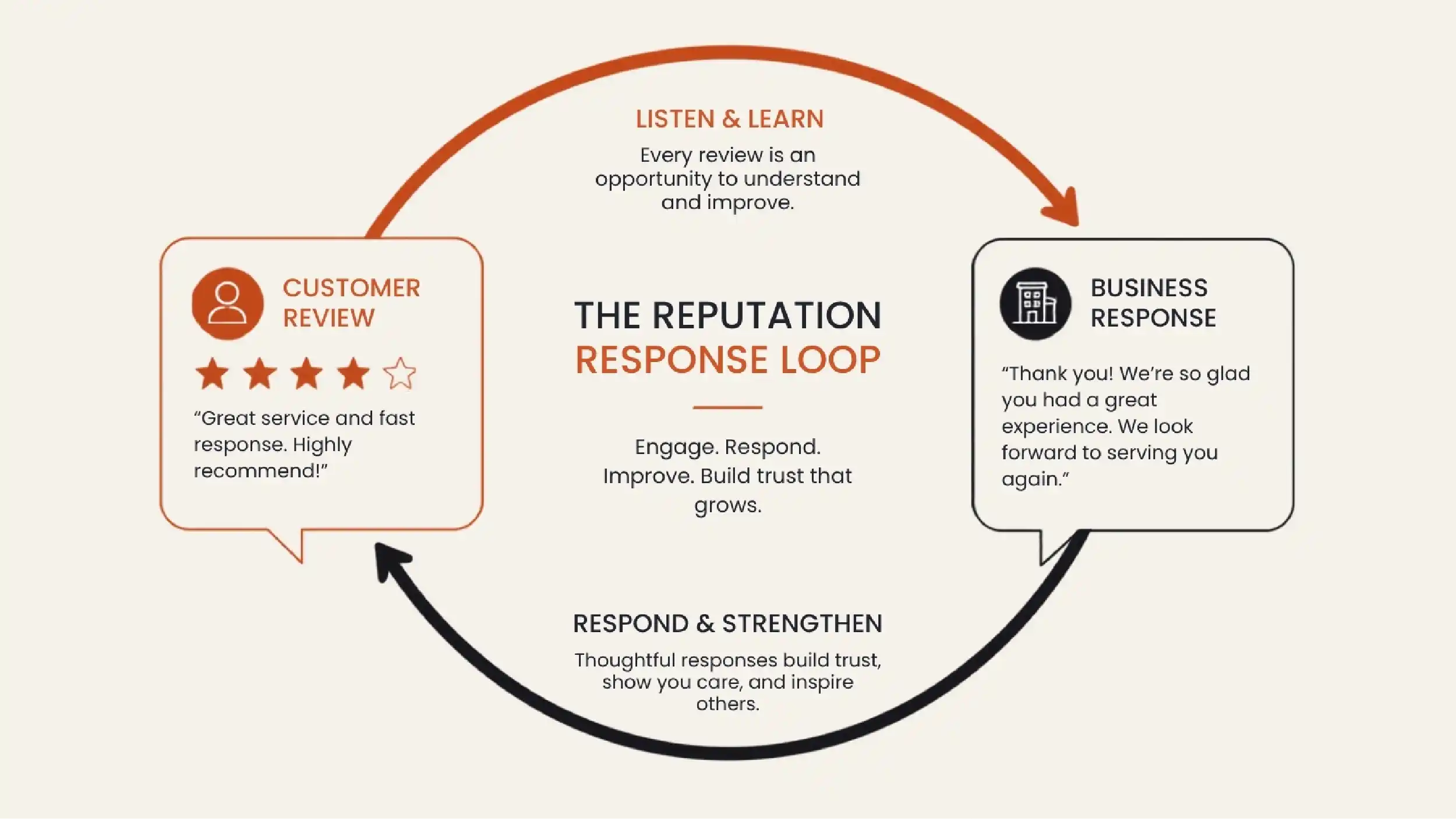
Reviews and ratings are your firm’s public scorecard on Google and the major review platforms. The most visible layer is reviews. Prospective clients read them, and Google weighs them in local rankings, so a steady flow of genuine, positive reviews lifts both your credibility and your visibility. The work here is disciplined and ongoing: making it easy for satisfied clients to leave reviews, responding professionally to the ones you receive, and handling negative reviews with composure rather than defensiveness. A single angry review answered gracefully often reassures readers more than a wall of five-star ratings. What firms cannot do is fake it, and buying reviews is both against platform rules and a fast way to lose the trust the reviews were meant to build.
Search-result control
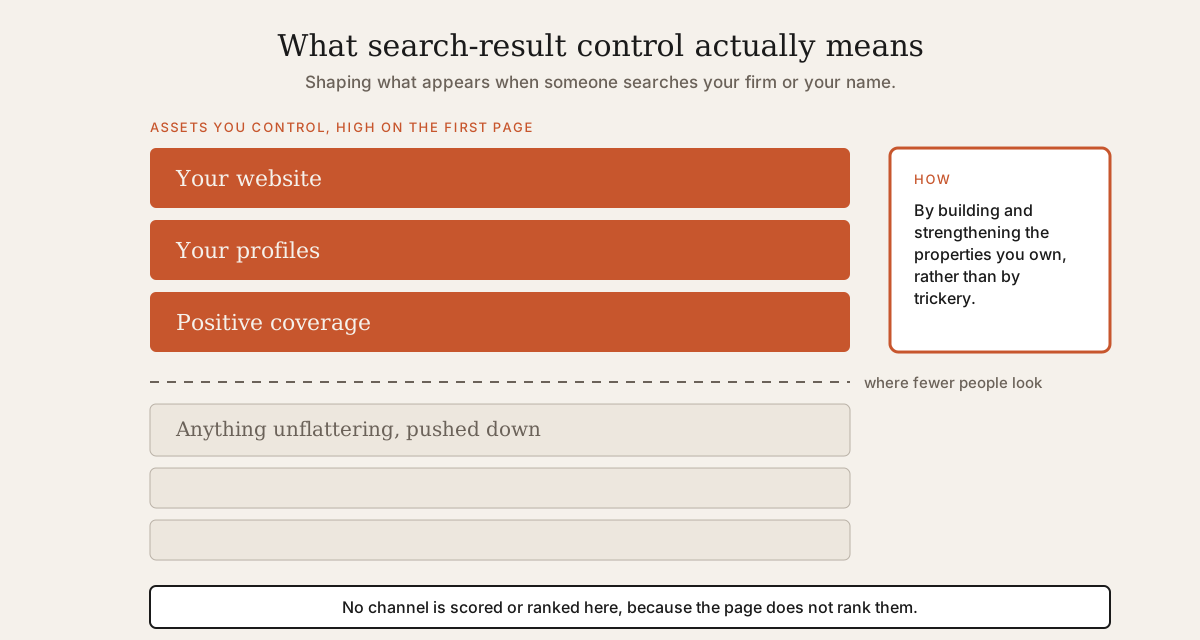
Search-result control means shaping what appears when someone searches your firm or your name. The goal is that the first page is populated with assets you control and content that reflects well on you, your website, your profiles, positive coverage, so that anything unflattering is pushed down where fewer people look. This is done by building and strengthening the properties you own rather than by trickery, and it overlaps heavily with ordinary search visibility work. A firm with a strong, well-optimized presence naturally controls more of its own search real estate.
Defamation and false statements
Defamation and false statements are the most serious reputation problem, covering genuinely false and damaging content, fake reviews, and defamatory posts. This is a legal matter, not a marketing one, and it is handled by attorneys who practice in defamation and internet law, who can pursue removal or legal remedies. It is worth naming this layer clearly because firms sometimes try to solve a legal problem with a marketing tactic, or the reverse. Knowing which of the three problems you actually have is the first step to fixing it.
SEO Is My Love Language was founded by Jose Villalobos, who has spent his career on a single discipline: getting firms found, cited, and recommended by AI search. He has been a member of Koray Tuğberk Gübür’s Holistic SEO Community since 2022, is a graduate of the Topical Authority Course, holds the Google AI Professional Certificate, and is a member of Kyle Roof’s IMG. That combination, topical authority strategy paired with rigorous on-page execution, is what our team brings to every law firm we work with. We focus on the newest reputation front, what AI assistants say about your firm, because it is the one most firms have not yet realized is being decided without them.
Who Handles It
Reputation management for law firms is handled by several kinds of providers, from review-building services to defamation attorneys, and matching the provider to the problem avoids paying the wrong specialist. Those are really three different problems, and the right provider depends on which one you have.
ORM firms, defamation attorneys, and review tools
Online reputation management firms handle the marketing side: building and monitoring reviews, strengthening the properties that fill your search results, and tracking what is being said. Review management tools automate parts of the review process, making it easier to request and monitor feedback at scale. Defamation and internet-law attorneys handle the legal side, pursuing removal or remedies for genuinely false and damaging content. Each does a real job, and none does all three. A firm with a review problem needs a different partner than a firm facing defamation, and spending on one when you need the other is a common and costly mistake.
What each can and cannot do
Each kind of reputation provider has firm limits, and no single one fixes reviews, search results, and defamation all at once. The honest limits matter. ORM firms and review tools can improve and protect a reputation over time, but they cannot force a lawful negative review to disappear, and any provider who promises to erase all criticism is selling something that does not exist. Defamation attorneys can pursue removal of unlawful content, but they are not the answer to an ordinary bad review from a genuinely unhappy client. And none of these traditional providers is built for the newest layer, the AI summary, because it did not exist when their playbooks were written. That gap is exactly why reputation management is changing.
What the Confidentiality Constraint Actually Covers
A law firm cannot run a review programme the way a restaurant can, because the fact of representation is often itself confidential and the outcome usually is. Most review advice is written for businesses without that constraint, which is why firms either ignore it or follow it into a problem.
Confidentiality attaches to the representation and to what the client told you, not to the client’s own opinion of your service. A client is free to say they were treated well. A firm is not free to confirm the matter, describe it, or respond in a way that reveals it.
That asymmetry is the whole of the problem. The firm can ask and cannot corroborate, which makes a review a one sided artefact in a way it is not for other businesses, and it changes what a firm should ask for.
What to Ask For, and How
Ask about the experience rather than the outcome: responsiveness, whether things were explained, whether the client knew what was happening. Those are answerable without disclosing anything and they are also what a prospective client is actually trying to assess.
Timing matters more here than elsewhere. The end of a matter is the obvious moment and it is not always the right one, because a client whose outcome disappointed them may be evaluating the result rather than the service. A request after a milestone the client experienced as progress is both fairer and more accurate.
Who Not to Ask
Do not ask a client whose matter is ongoing to review the firm, because the request carries an implicit pressure from someone holding their case. Do not offer anything of value for a review, which several jurisdictions treat as improper and platforms treat as a violation regardless.
Do not ask a client whose matter you are still adverse to anyone about. And do not ask through a third party service that writes on the client’s behalf, which is a misrepresentation whoever is holding the pen.
Volume, Recency and the Shape of a Good Profile
A profile of many reviews spread over time reads as a practice; a cluster of reviews in one week reads as a campaign, and platforms treat it that way too. Steady beats sudden, and it is also easier to sustain.
An imperfect average is more credible than a perfect one. A firm with a small number of critical reviews among many good ones is read as real, and the response to those reviews carries more weight with a prospective client than the reviews themselves. That is covered separately, because responding under confidentiality is a different problem from generating.
This is one attribute of the firm described in the reputation layer reviews are gathered for.
Answering a Bad Review: What You Cannot Do, Whatever the Provocation
A negative review that describes a matter puts a firm in a position no other business faces: the facts that would answer it are confidential, and confidentiality survives the client’s decision to talk publicly. The client can waive it for themselves and cannot waive it for you unilaterally in the way most people assume.
You cannot confirm that the person was a client. You cannot correct their account of the matter, even where the correction is documented. You cannot cite the file, and you cannot allude to facts in a way that lets a reader infer them.
Bar authorities have disciplined lawyers for replies that seemed measured and still disclosed. The safe assumption is that anything that makes your version more persuasive is the thing that creates the problem, which inverts the instinct every business owner has.
What a Compliant Reply Looks Like
Short, non specific, forward looking. Acknowledge that the person is dissatisfied without confirming who they are, state the firm’s general standard, and offer a route to discuss it directly. Three sentences is usually the whole of it.
The audience is not the reviewer. It is the next reader, who is judging temperament rather than facts, and a brief restrained reply reads better to them than a detailed one would even if the detail were permitted.
The Reply That Damages More Than the Review
The pattern that causes harm is the one that engages: correcting a date, noting what the client was told, mentioning fees, or observing that the person did not follow advice. Each is a disclosure and each also reads to a stranger as a firm arguing with a former client.
Length is the visible signal. A long reply tells a reader the firm is aggrieved, and a reader deciding whether to hand over a legal problem is asking how the firm behaves under stress. The review answers less about you than the reply does.
Reviews That Are Not From Clients
Some negative reviews come from opposing parties, from people the firm declined, or from nobody connected to the practice at all. Those can often be removed under platform rules, and the route is a factual report that the reviewer was not a client rather than a rebuttal of what they said.
Where removal fails, the same restraint applies. A firm cannot say the reviewer was an opposing party, because that is itself information about a matter, which is the trap in the situation that feels most unfair.
This is one attribute of the firm described in the injury firm reputation a reply is defending. That practice area sits inside the content and citations a reputation is built from. The channel that depends on it is managing the layer that review sits in.
The Legal Directories, and What Each Tier Is Worth
Legal directories are the layer most reputation work skips, and they matter because they are where a prospective client checks a firm they have already been told about. A directory profile rarely wins the case on its own. An absent or inconsistent one loses it, because the person looking has been given a reason to doubt what they were told.
The tiers, and why they are not equal
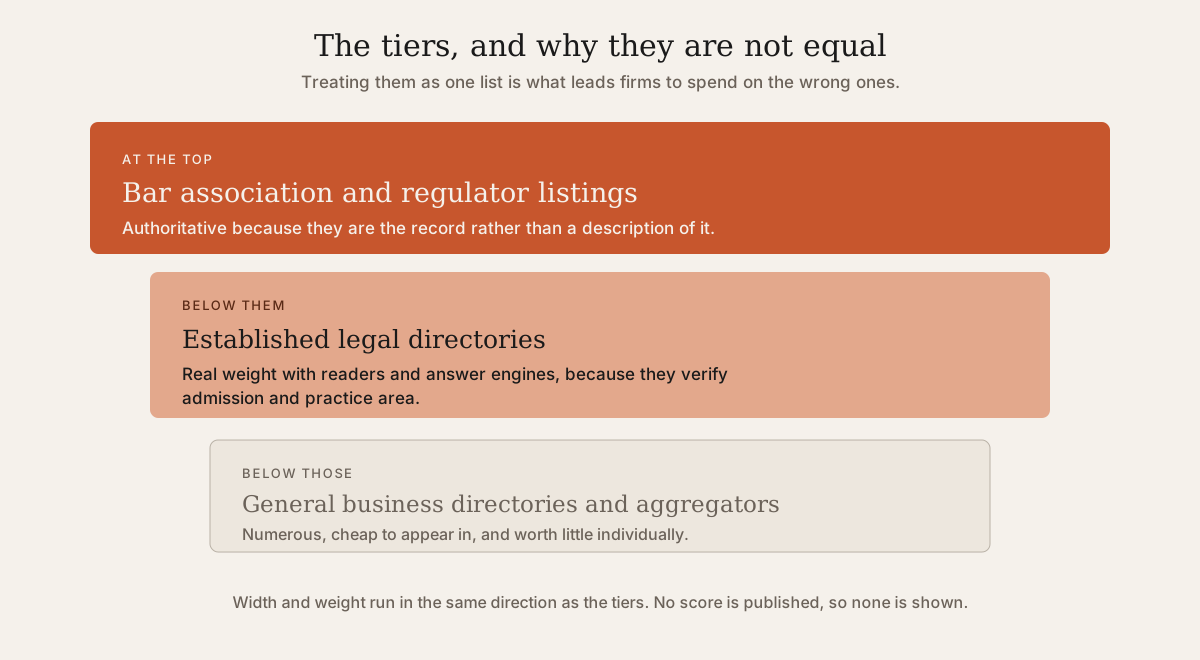
Directories fall into tiers that carry different weight, and treating them as one list is what leads firms to spend on the wrong ones. At the top sit the bar association and regulator listings, which are authoritative because they are the record rather than a description of it. Below them sit the established legal directories, which carry real weight with both readers and answer engines because they verify admission and practice area. Below those sit general business directories and aggregators, which are numerous, cheap to appear in and worth little individually.
What to do at each tier
Accuracy at the top tier is not optional and is usually free. A regulator listing that shows a lapsed status, an old firm name or a wrong address is the single most damaging inaccuracy in this whole area, because it is the one a careful person checks last and trusts most. The established directories are worth a complete, current profile and are rarely worth paid placement, because the paid tier buys position rather than credibility. The bottom tier is worth consistency and nothing else: the same firm name, address and phone number, so that nothing contradicts the tiers above it.
Why directories feed the answer layer
Assistants read directories as corroboration rather than as a source of opinion. When an assistant is asked about a firm, a directory profile is one of the places it can confirm that the firm exists, is admitted to practise, and works in the area claimed. Contradictions between tiers are the problem: a firm listed under two names, or at two addresses, gives an assistant a reason to hedge or to name a competitor whose record is consistent. Consistency across the tiers is therefore reputation work, not administrative tidying.
The New Front Line, What AI Says About Your Firm
What AI says about your firm is the new front line of reputation, because assistants now compress a firm’s reputation into a single spoken answer. This is the layer that changes the whole discipline, and the reason an AI-search firm has something urgent to say about reputation. Increasingly, a prospective client does not scroll through your reviews and search results at all. They ask an assistant, and they act on the sentence it gives back.
Why AI now summarizes reputation in one sentence
When someone asks an AI assistant whether your firm is any good, or who the best lawyer for their situation is, the system does not hand them ten links to evaluate. It gives an answer, assembled from what it has read across the web and judged to be true about your firm. That single summary can carry more weight than a page of reviews, because it arrives as a trusted recommendation rather than raw information to sift. If that summary is positive, it does the selling for you. If it is thin, wrong, or unflattering, it does damage you may never see, because the prospect simply moves on without ever visiting your site. Reputation is no longer only what people find. It is what the machine says on your behalf.
Earning a positive AI narrative through authority and citations
A positive AI narrative is earned through genuine authority and citations, the same way real reputation always has been. The reassuring part is that it cannot be gamed or tricked. AI systems build their summary of your firm from sources they trust: your own thorough, accurate content, credible third-party coverage, consistent information about who you are and what you do, and the overall footprint that signals a real and expert firm. A firm that has published complete, authoritative content about its practice and maintained a consistent presence gives the AI a clear, favorable basis for its summary. A firm that is thin and inconsistent leaves the AI to guess, and its guesses are not always kind. Shaping the AI narrative is not about gaming a system. It is about being the clear, credible, well-documented source the system draws from, which is the same work that earns rankings and citations, and it is one part of a complete legal leads for attorneys strategy.
Frequently Asked Questions
Can a law firm ask clients for reviews?
Yes, but not the way a business without confidentiality constraints can. The fact of representation is often confidential and the outcome usually is, so a firm can ask and cannot corroborate, which makes a review a one sided artefact in a way it is not elsewhere.
What does confidentiality actually cover?
The representation and what the client told you, not the client’s own opinion of your service. A client is free to say they were treated well. The firm is not free to confirm the matter, describe it, or respond in a way that reveals it.
What should a firm ask a client to comment on?
The experience rather than the outcome: responsiveness, whether things were explained, whether they knew what was happening. Those are answerable without disclosing anything and they are what a prospective client is trying to assess.
When is the right moment to ask?
Not always the end of the matter, because a client whose outcome disappointed them may be evaluating the result rather than the service. A request after a milestone the client experienced as progress is both fairer and more accurate.
Who should never be asked?
A client whose matter is ongoing, because the request carries implicit pressure from someone holding their case. Never offer anything of value for a review, which several jurisdictions treat as improper and platforms treat as a violation, and never use a service that writes on the client’s behalf.
Can a law firm respond to a negative review with the facts?
No. You cannot confirm the person was a client, correct their account even where the correction is documented, cite the file, or allude to facts in a way that lets a reader infer them. Confidentiality survives the client’s decision to talk publicly.
What does a compliant reply look like?
Short, non specific and forward looking. Acknowledge that the person is dissatisfied without confirming who they are, state the firm’s general standard, and offer a route to discuss it directly. Three sentences is usually the whole of it.
Who is the reply actually for?
The next reader rather than the reviewer. They are judging temperament rather than facts, and a brief restrained reply reads better to them than a detailed one would even if the detail were permitted.
Which reply patterns cause the most damage?
Ones that engage: correcting a date, noting what the client was told, mentioning fees, or observing that the person did not follow advice. Each is a disclosure and each reads to a stranger as a firm arguing with a former client. Length itself signals that the firm is aggrieved.
What about reviews from people who were never clients?
Those can often be removed under platform rules, and the route is a factual report that the reviewer was not a client rather than a rebuttal. Where removal fails the same restraint applies, because saying the reviewer was an opposing party is itself information about a matter.
What is attorney reputation management?
It is the work of shaping what prospective clients find and hear about your firm across three areas: your reviews and ratings, the search results that appear for your name, and, increasingly, the summary AI assistants give when asked about you. The first two are the traditional discipline of protecting reviews and controlling search real estate. The third is the emerging front, and for many firms it is becoming the most consequential, because it reaches the client before anything else does.
How do you manage a law firm’s online reviews?
By making it easy for satisfied clients to leave genuine reviews, responding professionally to every review including the negative ones, and doing so consistently over time. A graceful response to a critical review often reassures readers more than a perfect rating ever could. What you cannot do is fabricate reviews or buy them, which violates platform rules and destroys the trust reviews are supposed to create. Healthy reviews are earned steadily, not manufactured.
Can you remove negative search results about a lawyer?
Sometimes, and it depends entirely on the type of content. Genuinely false and defamatory material can be pursued for removal through defamation and internet-law attorneys. Lawful but unflattering content, such as an honest negative review, generally cannot be forced off the internet. The realistic strategy for that is to strengthen the positive, credible properties you control so they occupy the first page and push the unflattering material down. Anyone promising to erase all criticism is overpromising.
How much does reputation management cost for a law firm?
It depends on which of the three problems you are solving. Ongoing review management and search-presence work is typically a recurring marketing expense that scales with how much monitoring and content it involves. Defamation matters are legal work, priced accordingly. The most valuable investment for many firms now is building the authoritative content and presence that shapes both their search results and their AI summary, because that single foundation improves reputation on every front at once.
What does AI say about your firm, and can you influence it?
AI assistants summarize your firm based on what they have read and judged credible across the web, and yes, you can influence it, though not by tricks. The summary is built from trusted sources: your own complete and accurate content, consistent information about your firm, and credible coverage. A firm that documents its expertise thoroughly gives the AI a clear, favorable basis for its answer, while a thin or inconsistent presence leaves the system to guess. Influencing the AI narrative is a matter of being the clear, credible source it draws from.
Get Found by AI Search
Reviews and search results still matter, but the reputation battle is moving to a single sentence, the one an AI assistant delivers when a prospect asks about your firm. Making that sentence accurate and favorable is earned the same way real authority always has been, and it is the work we do. See how we would shape what search engines and AI assistants say about your firm. Book a strategy call and we will show you where your firm stands today and what it would take to own your market.