Veterinary Marketing: Where Specialist Is a Protected Word
Veterinary marketing has a constraint most categories do not: specialist is a protected word, so a practice that uses it loosely is making a claim it may not be entitled to, and a practice entitled to use it often fails to say which college certified it. Either way it weakens the practice’s chance of being named when a pet owner searches for a specialist. The word does the opposite of what the practice intends in both directions.
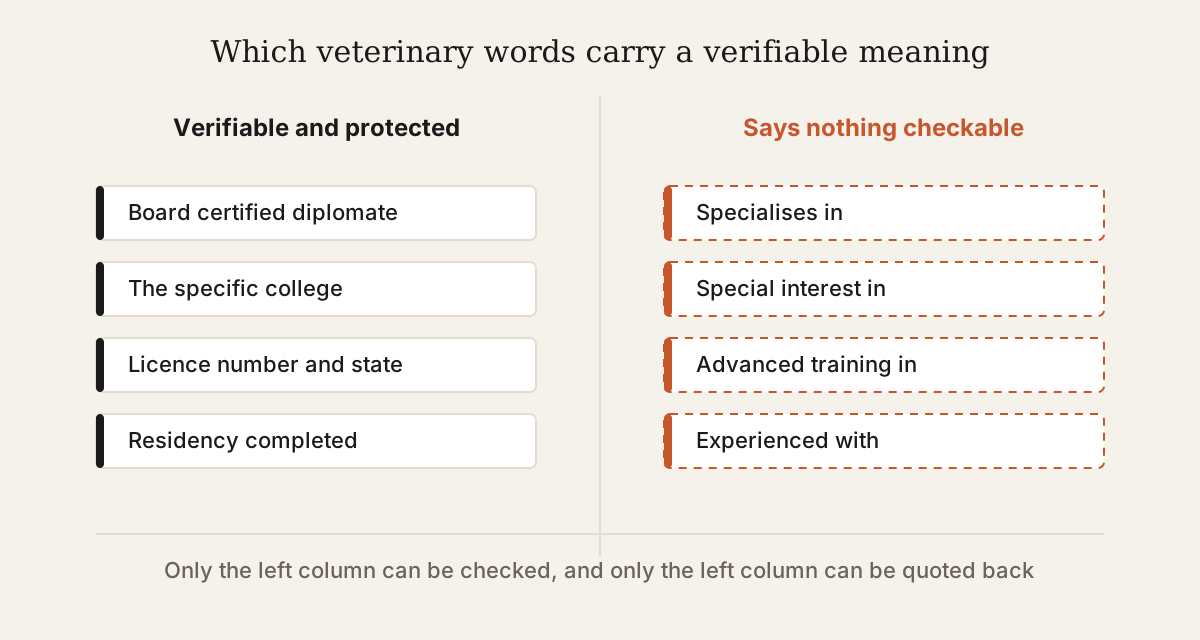
Specialist is protected, so the loose version is worse than saying nothing
In veterinary medicine, board certification runs through recognised colleges and the title that follows it is regulated. A practice describing itself as specialising in a discipline, without naming a college or a diplomate, is using a word whose protected meaning it is not claiming and whose loose meaning carries no information.
The safer and stronger move is to be specific. Naming the college, the diplomate and the residency turns an unverifiable adjective into a fact a pet owner can check, and a fact an assistant can quote when asked who to see for a particular condition.
The owner is buying sight of a room they cannot enter
A pet owner hands over an animal and waits. Almost everything that follows happens out of view, which makes veterinary care one of the few purchases where the buyer cannot observe the thing they are paying for, even after the fact.
That is why transparency about the building does more work here than in most categories. Publishing who is licensed, who monitors anaesthesia, what happens overnight and when an owner is called changes the purchase from an act of trust into something a reader can assess. Practices that publish it are answering the question the category is actually built on.
Who is licensed in the building is rarely on the website
Most veterinary websites name the lead veterinarians and stop. The technicians, the credential each holds, and who is present during a procedure are usually absent, even though those are the people an owner is asking about when they ask who will be with their animal.
This is the same question we ask of a marketing agency, where the person who sold the work is often not the person who does it. In a veterinary practice the stakes are higher and the answer is easier to publish, because the credentials already exist and only need writing down.
What we would publish instead
We would name the credential behind every clinical claim, and we would use the protected word only where the college can be named alongside it. We would publish what happens in the parts of the building the owner does not see, in plain sentences, because that is the actual product.
We would also publish what the practice does not do and where it refers out. A practice that names its limits is describing a real scope, and it is the clearest signal available that a recommendation to stay is clinical rather than commercial.
Where to go from here
The questions an owner asks before hiring anybody are the same across trades, so they are answered once rather than repeated here: how long before an assistant names a business, what a measurement actually measures, and how agencies charge. The guides carry the rest.
For the shape of a finished programme, the maps we have published show one built page by page for five trades, and our method is the process behind them.
Veterinary practice shares its structure with the human-health categories here. The protected-title problem is exactly dental specialist status and titles, the credential question matches dental licensure and credentials, and the referral boundary runs like what a dental practice refers out.
Frequently asked questions
Why does using specialist loosely hurt a veterinary practice?
Because the word is protected, so a loose use is both a compliance risk and an empty claim. A reader who checks finds nothing behind it, and an assistant asked for a specialist has no basis to name the practice.
What should a practice publish about its team?
The credential each clinician holds, the college behind any board certification, and who is present during procedures. A name and a photograph does not answer the question owners are asking.
Is publishing referral limits bad for business?
It costs a few enquiries and improves the rest. Naming what you refer out is the strongest available evidence that a recommendation to treat in house is a clinical judgement.
How does this affect being recommended by AI search?
Assistants answer from what pages state. Credentials and scope are among the most checked and least published facts in the category, so a practice that publishes them is answerable where its competitors are silent.
Is this different from ordinary veterinary SEO?
Yes. Ordinary veterinary SEO targets service and location keywords. This starts from the questions owners ask about people and process, which is where the answers are missing.
Get Found by AI Search
The veterinary practices that win their markets in the next few years will be the ones the AI answer names when an owner asks who is qualified to treat their animal, not the ones whose credentials are true but unpublished. Naming the college and the diplomate is what makes a practice quotable. See how we would get your practice found, cited and recommended by AI search. Book a strategy call and we will show you where you stand today and what it would take to be the practice the answer names.