What an AI Visibility Measurement Actually Measures
An AI visibility measurement counts how often an assistant names your business in answers to questions your customers actually ask. It is not a ranking, not a traffic number, and not a share of anything until someone defines the denominator. Most of what is sold as AI visibility measurement is one of three different things wearing one label, and the differences decide whether the number means anything.
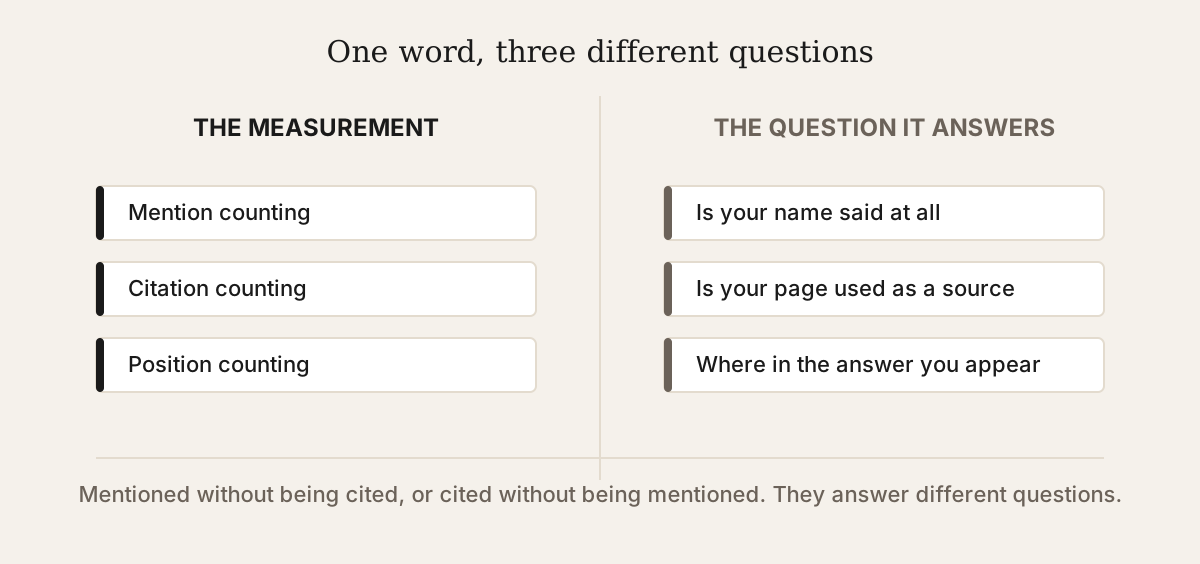
The three things the word measurement is doing
The word measurement covers mention counting, citation counting and position counting, and they answer different questions. Mention counting asks whether your name appears in the text of an answer. Citation counting asks whether the answer links to you or attributes a claim to you. Position counting asks where you sit when several businesses are named together.
A business can be mentioned without being cited, which happens when an assistant knows of you but is not using your page as a source. A business can be cited without being mentioned by name, which happens when a link appears with no accompanying description. These are not degrees of the same thing. They come from different parts of how an answer gets assembled, and a tool that reports one while implying the other is not measuring what its buyer thinks.
What a defensible measurement has to record
A measurement is defensible when an identical re-run is possible, which requires the prompt, the engine, the model identifier and the full response text to be stored. The prompt matters because a reworded question is a different question. The model identifier matters because engines ship new models continuously and a change in the number can come from a change in the model rather than a change in you.
The full response text matters most. A count that survives without its underlying text cannot be re-examined when the definition changes, and the definition will change. We keep the verbatim response for every reading for exactly that reason. The buyer-side version of this list is the questions that establish whether a vendor keeps one.
The denominator problem
A percentage is meaningless until the set of questions it is drawn from is stated, because the questions are chosen by whoever is selling the number. Twenty percent visibility across five questions a vendor picked is not comparable to twenty percent across fifty questions you picked. Neither is wrong, and neither is a market share.
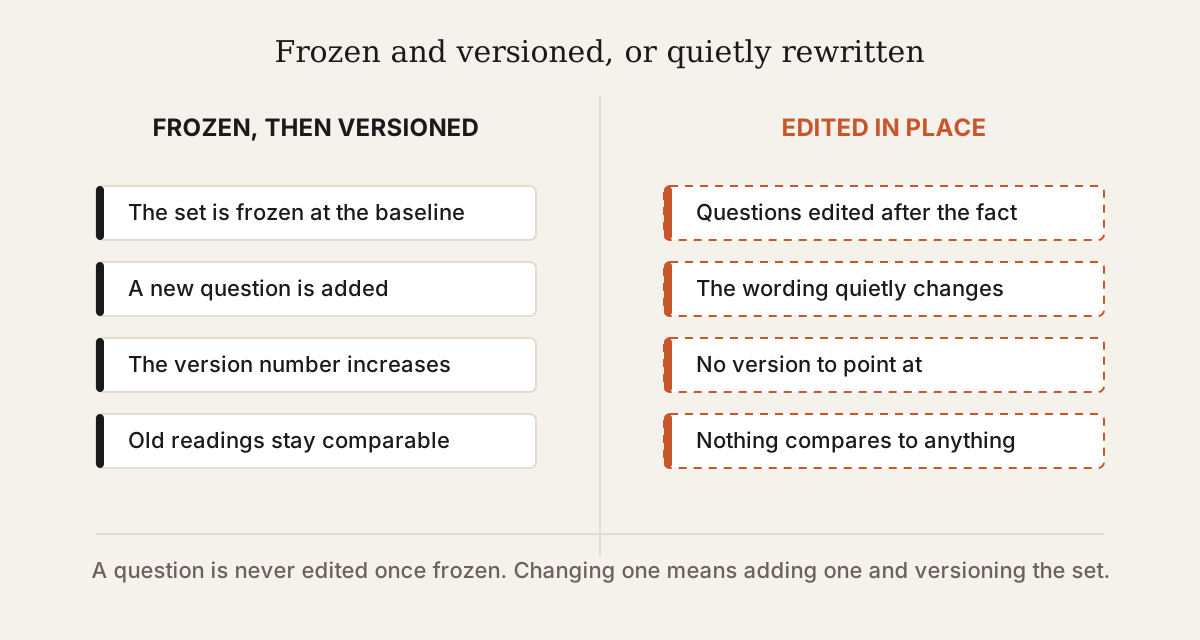
The honest form is a count against a named, frozen set of questions, published in full. Ours is frozen at the point of the baseline reading, and a question is never edited afterwards. If a question needs changing, a new one is added and the set version increases, so the old readings stay comparable.
What it cannot tell you
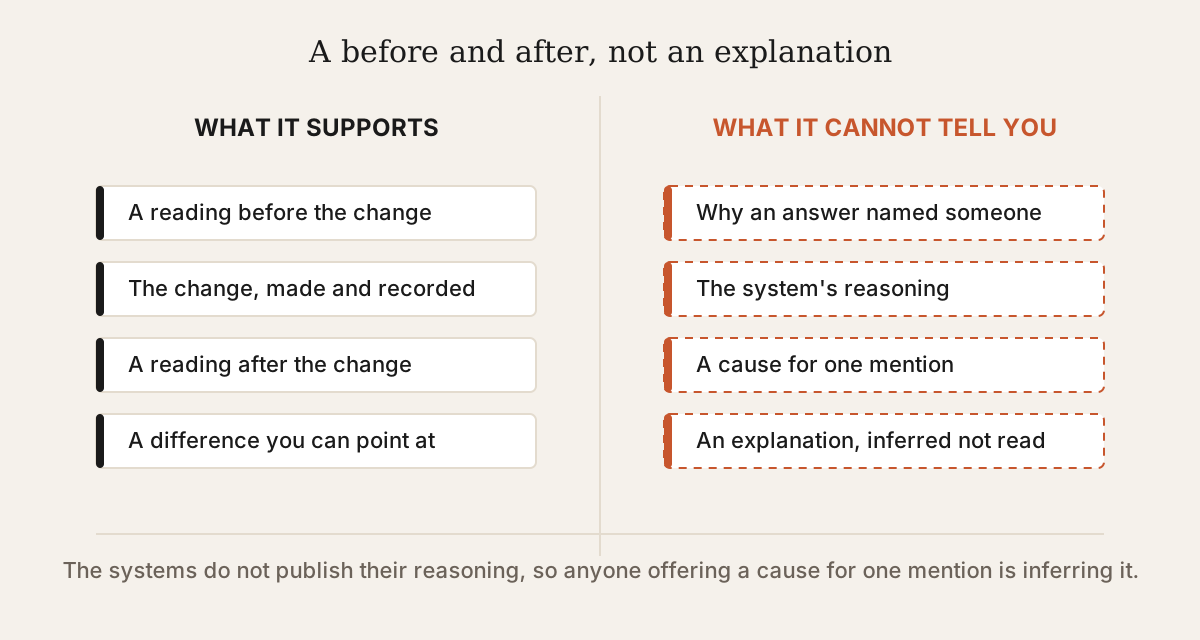
An AI visibility measurement cannot tell you why an answer named someone, because the systems producing these answers do not publish their reasoning. Anyone offering a causal explanation for a specific mention is inferring it. The same opacity is why placement in an answer cannot be guaranteed by anyone.
What the measurement supports is a before and after against a change you made and recorded. How long to wait before the after is worth taking is a separate question, and the honest answer to it is that nobody knows yet. That is weaker than an explanation and it is the strongest thing available, which is why we treat it as the outcome rather than as a diagnostic. Knowing what a reading can and cannot support is the third check a buyer runs, and it is only worth running once capability and evidence have already been settled.
SEO Is My Love Language was founded by Jose Villalobos, who has spent his career on a single discipline: getting businesses found, cited, and recommended by AI search. He has been a member of Koray Tuğberk Gübür’s Holistic SEO Community since 2022, is a graduate of the Topical Authority Course, holds the Google AI Professional Certificate, and is a member of Kyle Roof’s IMG. That combination, topical authority strategy paired with rigorous on-page execution, is what our team brings to every business we work with.
Two of the categories we publish maps for turn on the same problem of measuring something the buyer cannot observe directly: what a dental practice would be measuring, what a roofing company would have measured, and, in its sharpest form, the veterinary version, buying sight of a room you cannot enter.
Frequently asked questions
What does AI visibility measurement actually measure?
It measures how often an assistant names your business in answers to a fixed set of questions. Three different things travel under that name: mention counting, whether your name appears; citation counting, whether the answer links to or attributes a claim to you; and position counting, where you sit when several businesses are named together. They come from different parts of how an answer is assembled, so a tool reporting one while implying another is not measuring what its buyer thinks.
Is AI visibility a percentage or a count?
A count against a named, frozen set of questions is defensible. A percentage is not, until the denominator is published, because the questions are chosen by whoever sells the number. Twenty percent across five vendor-chosen questions is not comparable to twenty percent across fifty of your own, and neither is a market share.
What has to be recorded for a measurement to be repeatable?
The prompt, the engine, the model identifier the engine reports, and the full verbatim response. The prompt matters because a reworded question is a different question. The model identifier matters because engines ship new models continuously, so a change in the number can come from the model rather than from you. The full text matters because a count without it cannot be re-examined when the definition changes.
Can an AI visibility tool tell me why I was or was not mentioned?
No. The systems producing these answers do not publish their reasoning, so any causal explanation for a specific mention is an inference. What the measurement supports is a before and after against a change you made and recorded, which is weaker than an explanation and is the strongest thing available.
How often should the measurement be re-run?
On a fixed interval with the questions unchanged, so that movement is attributable to what you did rather than to a reworded question. We re-run monthly and never edit a question in place. If a question needs to change, a new one is added and the set version increases, so earlier readings stay comparable.
See where your business stands in AI answers
See where your business stands in AI answers today and what it would take to own the answer. Book a strategy call and we will show you.